21 Unfinished Basement Ideas to Turn Concrete Into Comfort
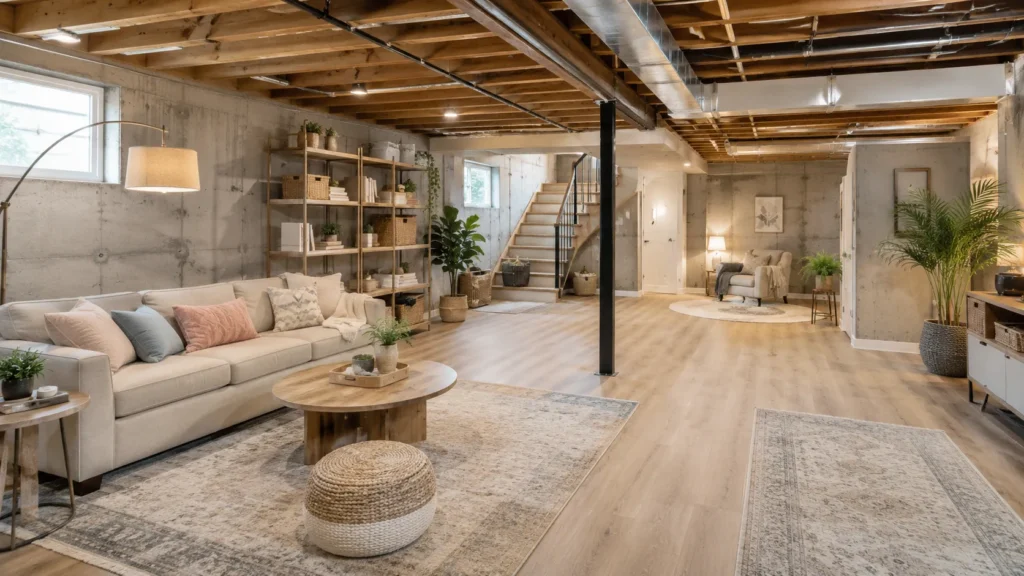
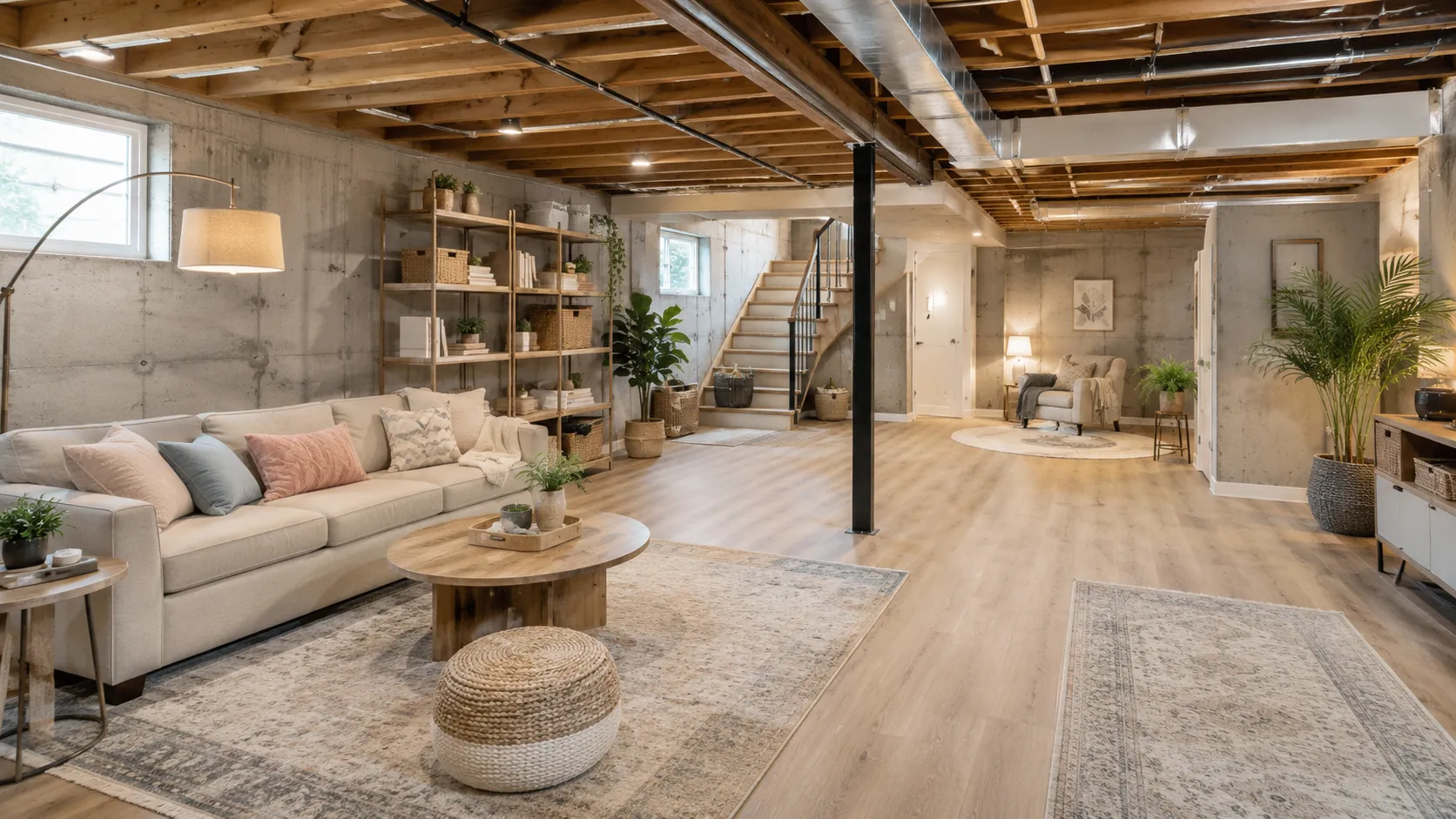
An unfinished basement does not have to feel cold, forgotten, or difficult to use. These Unfinished Basement Ideas show how exposed concrete, open ceilings, and visible pipes can become part of a comfortable, intentional design. With the right furniture, lighting, rugs, storage, and color, even a basic lower level can feel welcoming.
This article explores practical ways to create reading corners, family rooms, play areas, home gyms, workspaces, guest zones, and entertaining spots without hiding every unfinished feature. In my experience, the biggest improvement often comes from adding softness and purpose rather than attempting an expensive full renovation. You will find realistic inspiration for different budgets, layouts, and needs, along with simple details that help a basement feel brighter, warmer, and easier to enjoy every day.
1. Basement Coffee Bar with Floating Wood Shelves
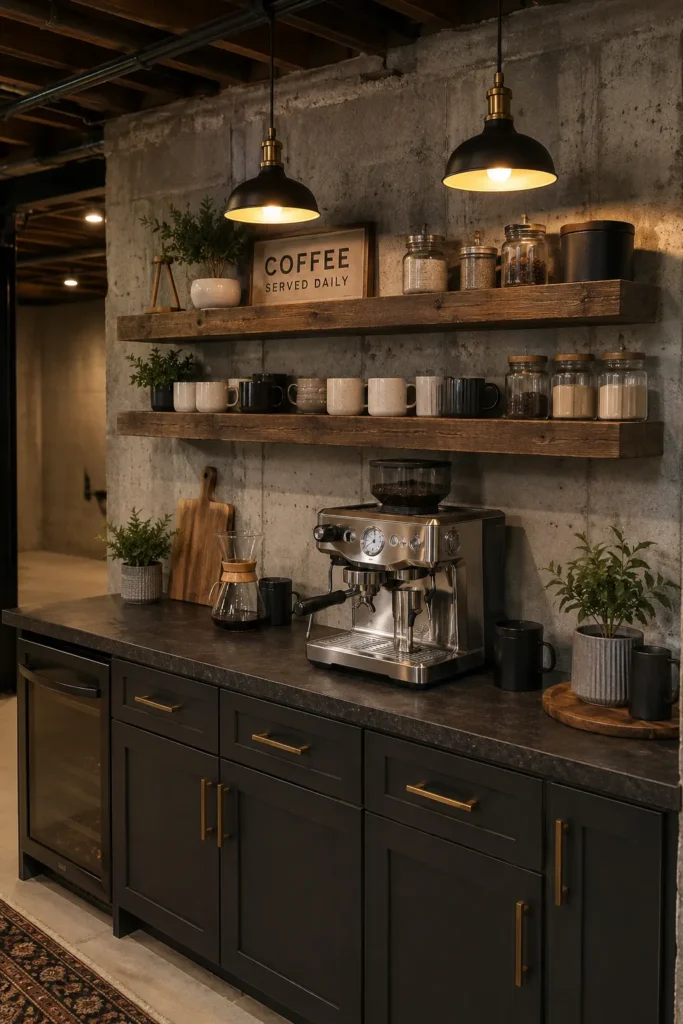
A dedicated coffee station can make an unfinished basement feel instantly more welcoming. Black cabinetry, concrete walls, warm pendant lights, and thick wood shelves create a strong industrial look, while neatly arranged mugs, jars, plants, and a compact beverage fridge keep everyday essentials easy to reach.
The layout works well because everything stays along one wall, leaving the rest of the basement open for seating or entertainment. Copy the mix of closed lower storage and open shelving, but avoid crowding every surface; a few repeated finishes will keep the setup polished rather than busy.
2. Basement Game Room with Retro Arcade Style Decor
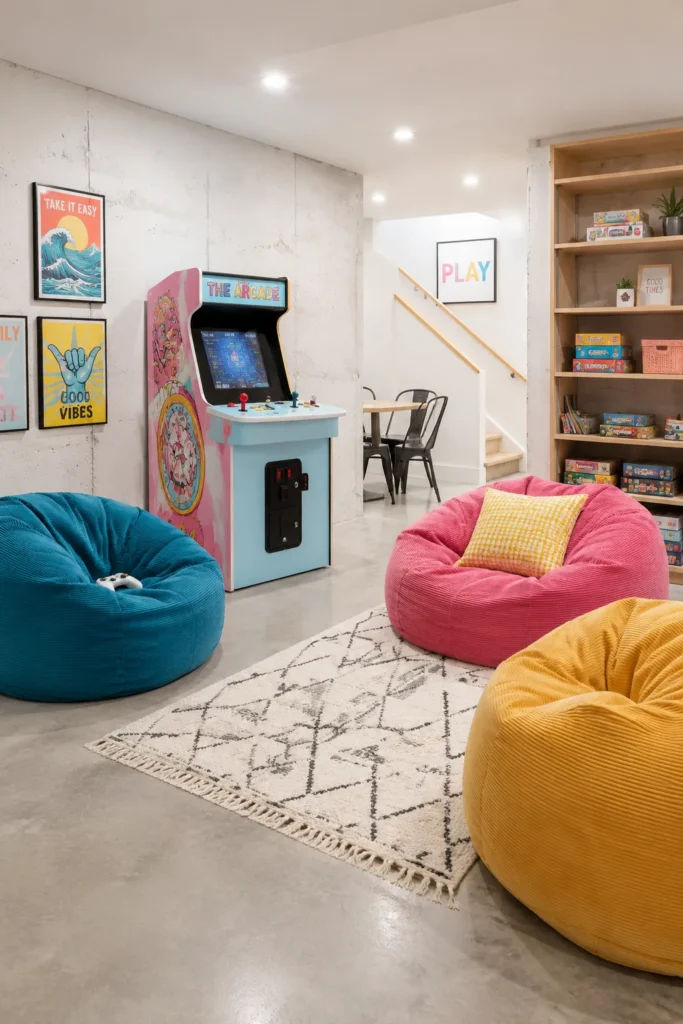
Bright color changes the mood of a concrete basement faster than almost anything else. Oversized teal, pink, and mustard beanbags, a retro arcade machine, playful wall art, and a patterned rug turn a plain lower level into a cheerful hangout that feels relaxed rather than unfinished.
This approach suits family rooms, teen zones, and casual game areas where flexible seating matters more than formal furniture. Keep the larger surfaces neutral, then add color through movable pieces so the room can evolve easily; built-in shelves help store games without letting the floor become cluttered.
3. Basement Music Studio with Industrial Style Details
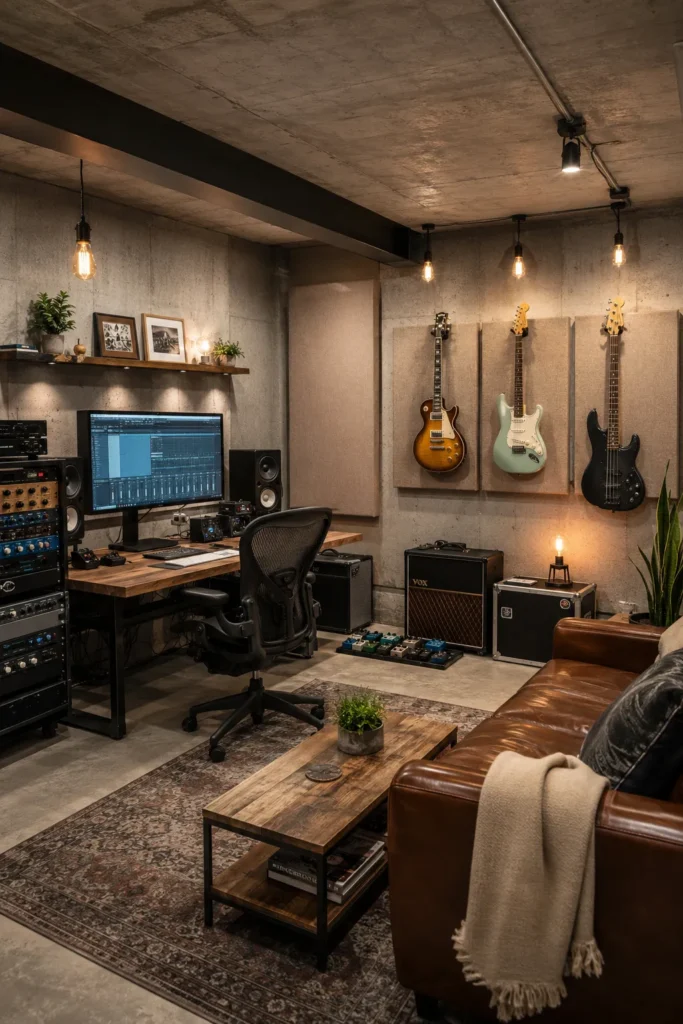
A raw basement can become a serious creative workspace without losing its industrial character. Concrete walls and ceilings, exposed track lighting, acoustic panels, wall-mounted guitars, studio monitors, and warm wood furniture give this music room a professional feel while still looking comfortable enough for long sessions.
The smartest idea here is zoning: recording equipment sits near the desk, instruments remain visible and accessible, and the leather sofa creates a separate listening area. Use rugs, padded wall panels, and upholstered seating to soften sound and temperature, while keeping cables grouped and pathways clear.
4. Basement Wet Bar with Floating Wood Shelves
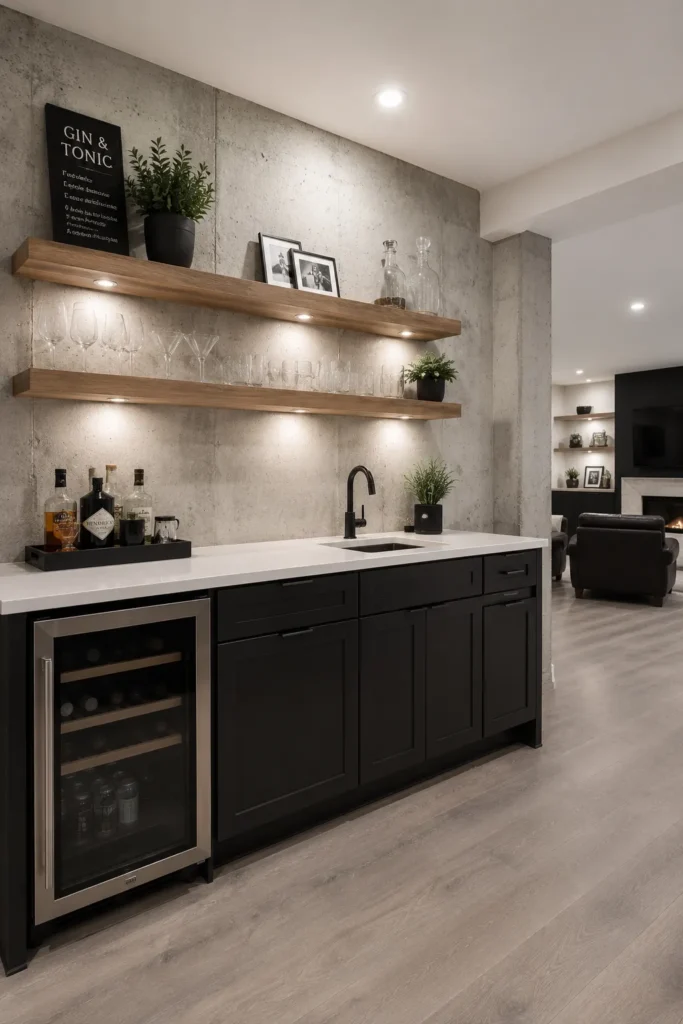
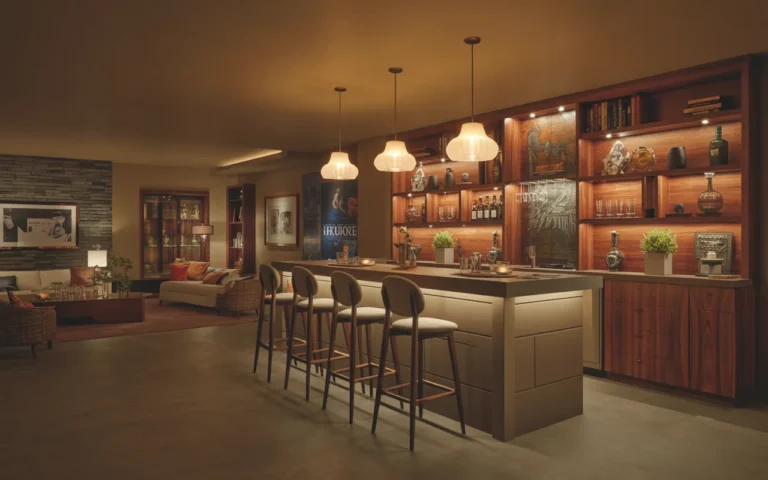
Simple materials make this basement bar feel refined without making it overly formal. Matte black cabinets, a white counter, pale wood shelves, clear glassware, small plants, and focused shelf lighting create a clean contrast against the concrete wall and connect the bar naturally to the nearby lounge.
For real homes, the single-wall arrangement is especially practical because it requires little floor space and keeps plumbing concentrated. Place frequently used glasses on the lower shelf, reserve the upper shelf for display pieces, and use a compact beverage cooler instead of adding unnecessary full-size appliances.
5. Basement Wine Room with Concrete and Wood Finishes
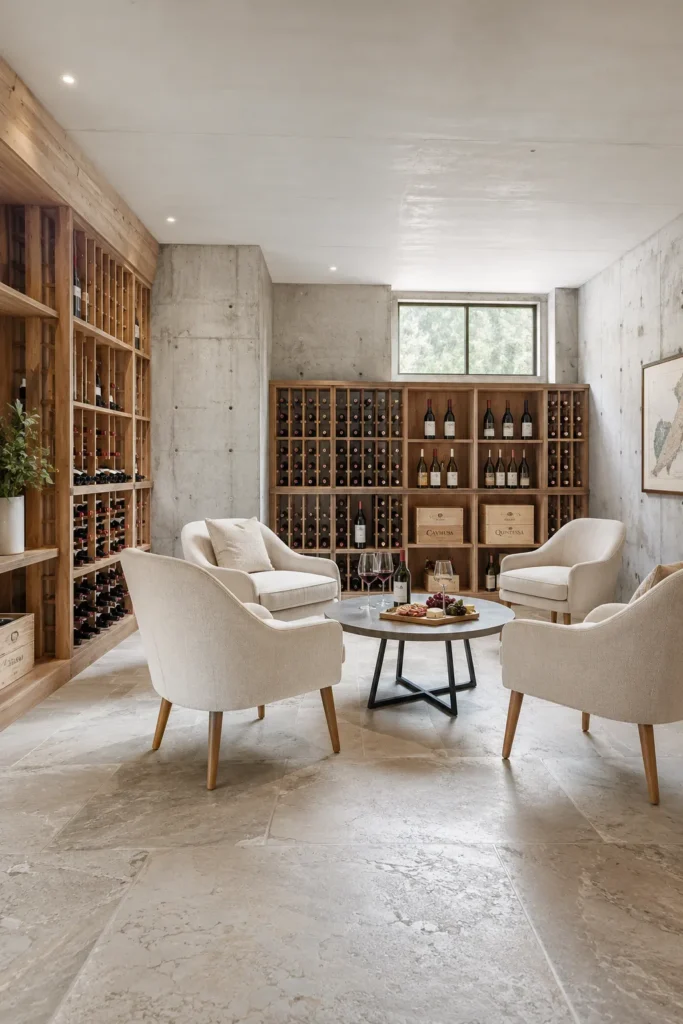
Wine storage becomes part of the architecture in this calm, concrete-lined basement retreat. Floor-to-ceiling wood racks warm the hard surfaces, while four cream armchairs and a round table create an inviting tasting area that feels balanced, open, and comfortable rather than crowded with decorative accessories.
The seating arrangement encourages conversation because every chair faces the center, and the low table keeps sightlines open. For a smaller version, use one wall of modular bottle storage with two chairs; consistent wood tones and soft upholstery will make Unfinished Basement Ideas like this feel intentional.
6. Bright Craft Room Ideas for an Unfinished Basement
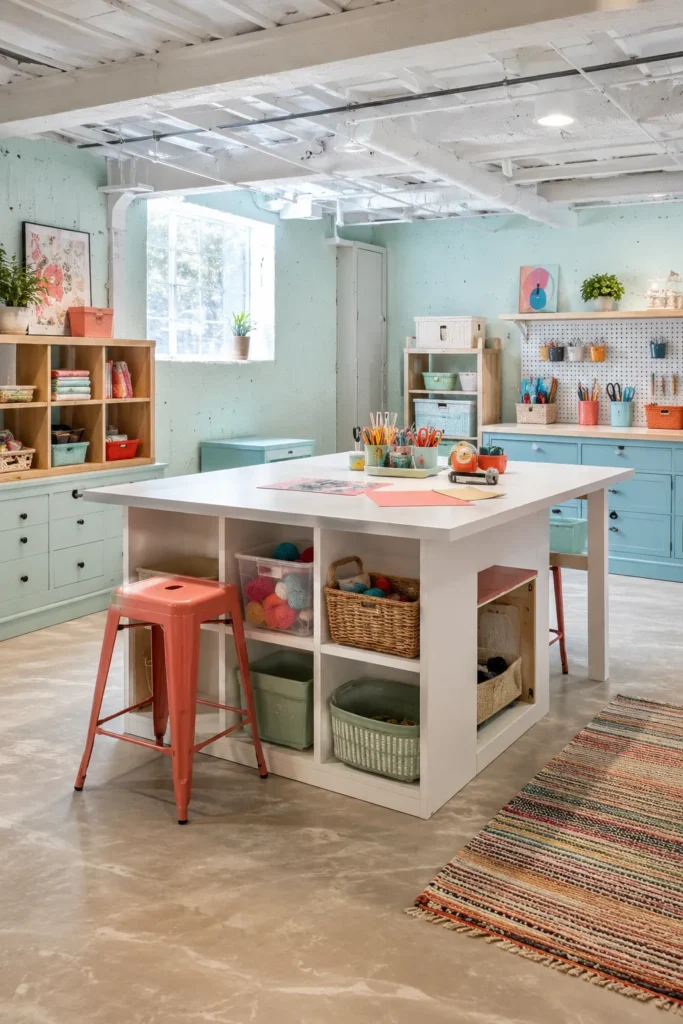
Creative rooms benefit from clear surfaces, visible supplies, and color that feels energizing rather than distracting. A large white work island anchors this basement craft room, while pastel blue cabinets, open cubbies, pegboard storage, coral stools, and a striped rug give every material an easy-to-find place.
The center island works because it supports projects from several sides and stores bulky baskets underneath. Keep tools near the main work zone, use transparent bins for frequently used supplies, and leave part of the tabletop empty; too many permanent displays would reduce the room’s practical value.
7. Bright Study Corner Ideas for an Unfinished Basement
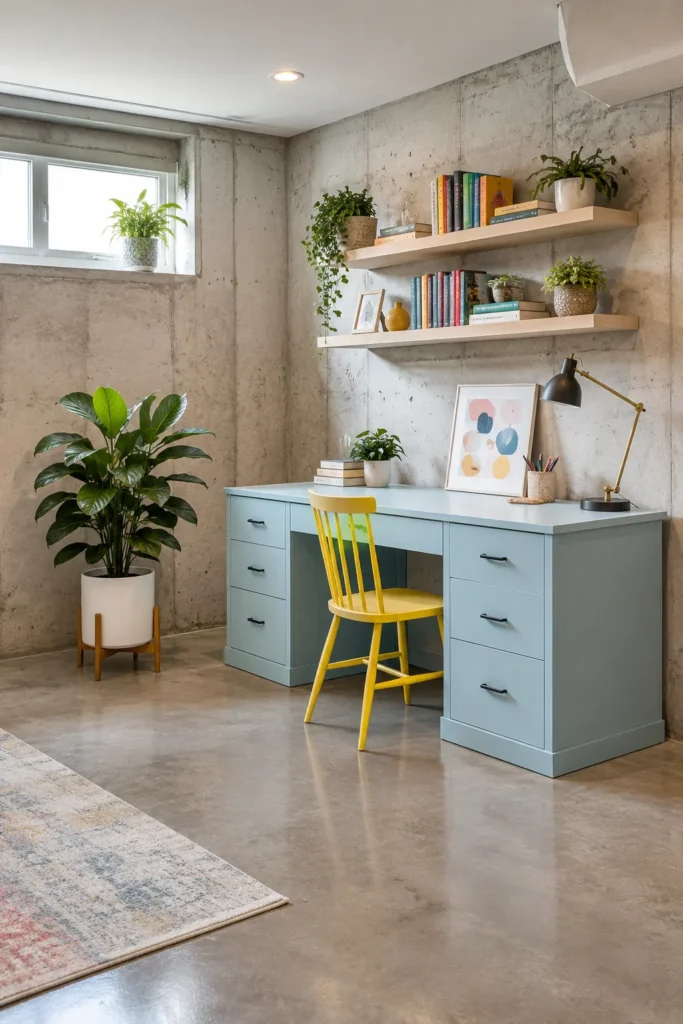
A small study corner can feel fresh and focused even against unfinished concrete walls. The pale blue desk, bright yellow chair, simple floating shelves, black task lamp, books, framed art, and several plants create a useful workspace with enough personality to feel motivating every day.
This setup is easy to adapt because it relies on freestanding furniture and wall shelves rather than a full renovation. Choose a desk with drawers for hidden storage, position it near a basement window when possible, and limit the palette to two accent colors so the corner stays calm and organized.
8. Colorful Living Space with Exposed Concrete Walls
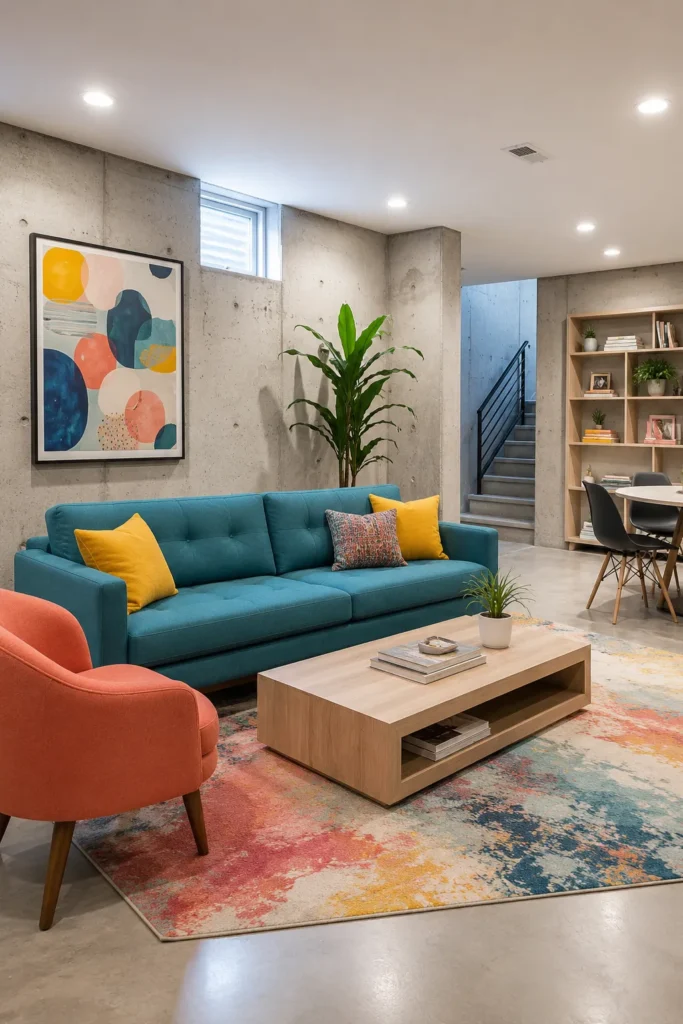
Color can do the heavy lifting when concrete walls make a basement feel cold. A teal sofa, coral chair, yellow cushions, bold artwork, and a multicolored rug create energy without hiding the unfinished surfaces, while pale wood furniture and greenery keep the palette grounded and comfortable.
Use one large rug to define the seating zone, then repeat two or three accent colors across pillows, artwork, and chairs. The result feels planned rather than random, and the open shelving near the dining area adds useful storage without closing off the room.
9. Concrete Basement Living Room Design
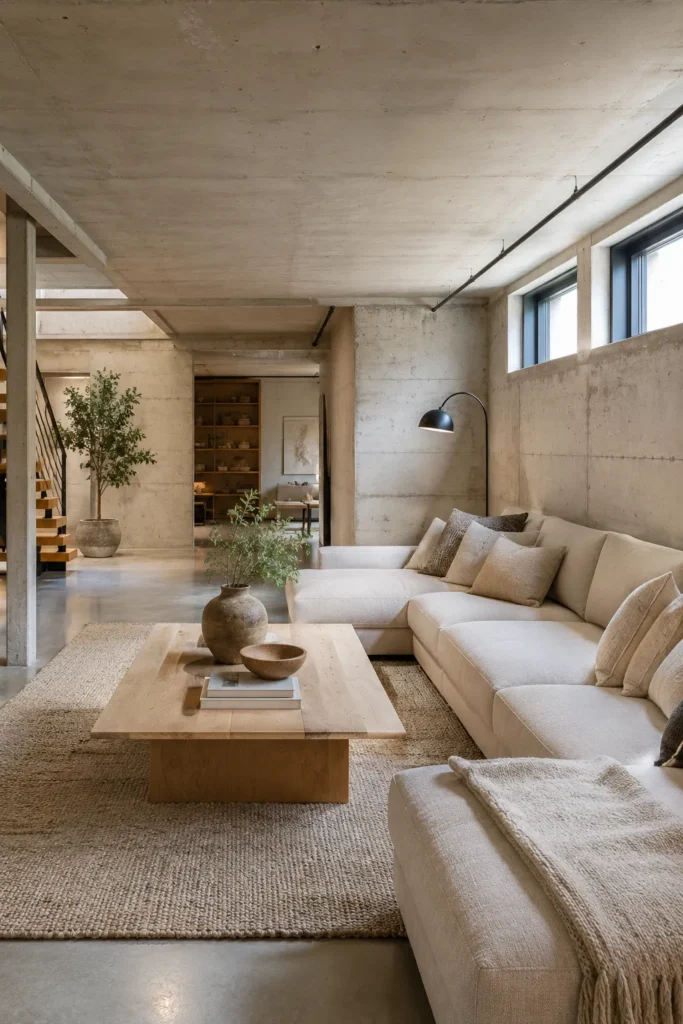
Raw concrete can feel surprisingly calm when paired with soft, oversized furniture. A cream sectional, textured neutral rug, low wood table, sculptural lamp, and simple pottery create a relaxed living room where natural materials soften the hard ceiling, walls, and polished floor.
This layout works best in a long basement because the sectional anchors one side while leaving a clear walkway toward the stairs and adjoining rooms. Choose warm whites instead of stark white, and layer woven textures so the restrained palette still feels inviting.
10. Cozy Reading Nook for an Unfinished Basement
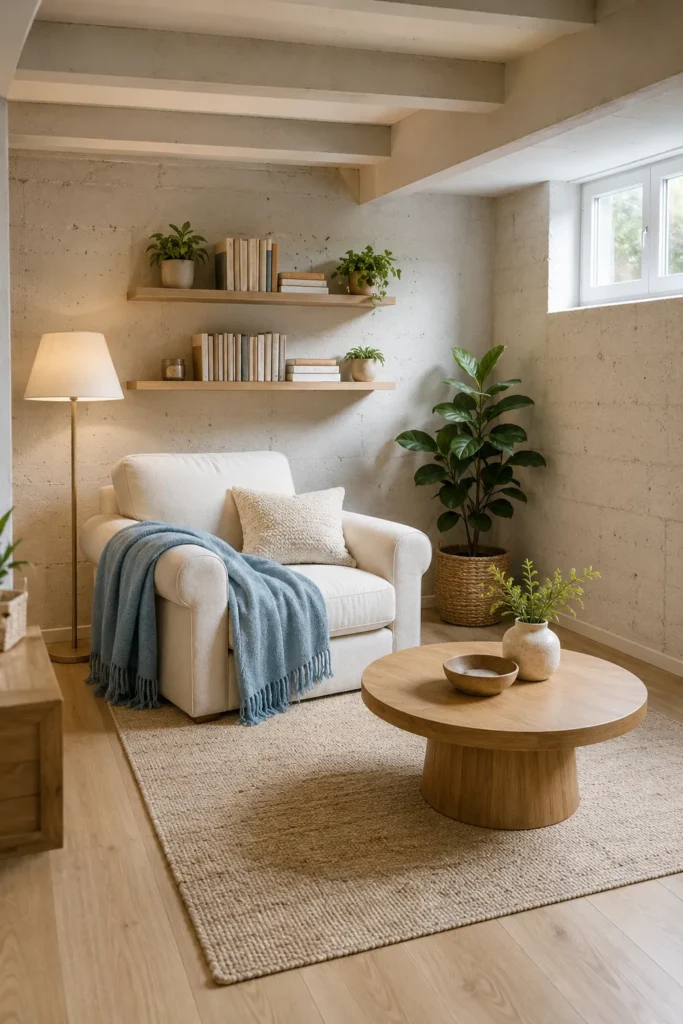
A quiet corner is often all an unfinished basement needs to become genuinely useful. The deep armchair, pale blue throw, round wood table, floor lamp, floating shelves, and leafy plants turn a small area beneath exposed beams into a comfortable place for reading or resting.
Keep the furniture compact so the nook does not interrupt circulation around the basement. A washable rug and freestanding lamp are practical, renter-friendly additions, while books and plants on two simple shelves add personality without making the walls feel crowded.
11. Cozy String Light Living Room for an Unfinished Basement
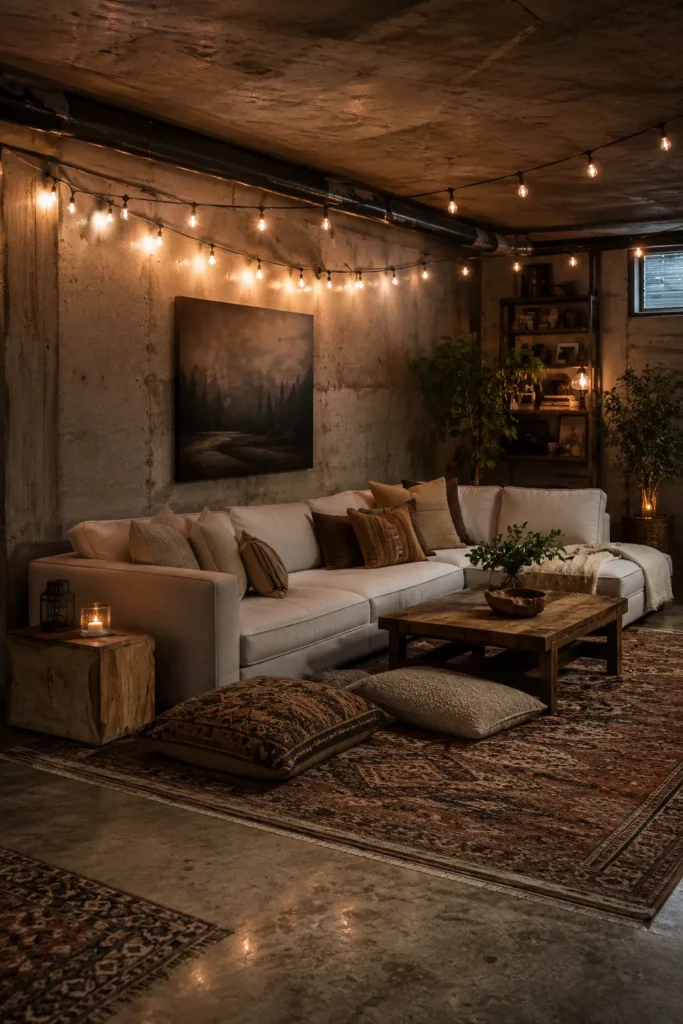
Warm string lights instantly change the character of a dark concrete basement. Draped bulbs, a large cream sofa, layered brown pillows, rustic wood tables, and richly patterned rugs create a snug lounge that feels intimate, even with visible ductwork and unfinished walls.
Use this approach in basements with limited daylight, but combine decorative bulbs with brighter tasks or ceiling lighting for everyday use. Keep the upholstery light to balance the darker ceiling, and repeat warm brown tones through wood, textiles, and small accessories for a cohesive finish.
12. Family-Friendly Unfinished Basement Playroom Ideas
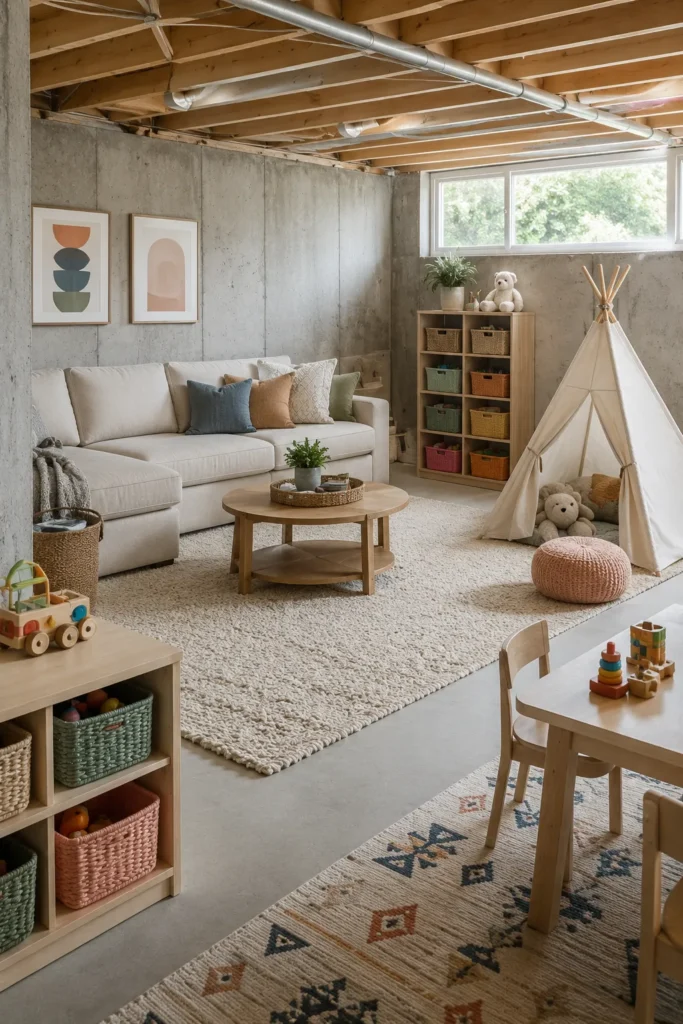
An unfinished basement can handle family life beautifully when comfort and storage come first. A soft sectional, low round table, play tent, child-size activity table, thick rugs, and open cubbies create separate areas for relaxing, imaginative play, and easy cleanup.
Low storage makes toys accessible to children and simplifies end-of-day tidying. Leave a broad path between the sofa and play zones, secure tall units to the wall, and choose baskets in a few coordinated colors so practical storage also contributes to the room’s calm appearance.
13. Home Gym Design for an Unfinished Basement
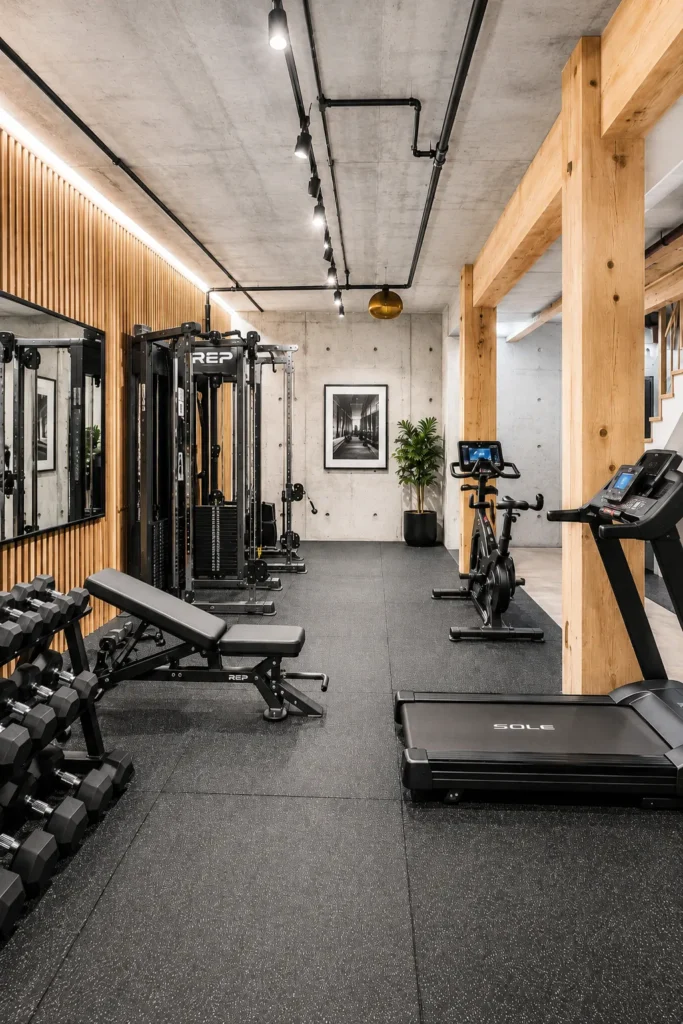
A home gym feels right at home against exposed concrete and visible pipes. Black rubber flooring, a mirrored slat wall, strength equipment, treadmill, exercise bike, and focused track lights create a durable, well-organized training zone with a clean, professional edge.
Place heavier machines along the perimeter and preserve open floor area for stretching or mat work. Rubber tiles protect the concrete and reduce noise, while mirrors improve light and help with form; adding one plant or framed print prevents the equipment-heavy room from feeling overly commercial.
14. Indoor Plant Corner for an Unfinished Basement
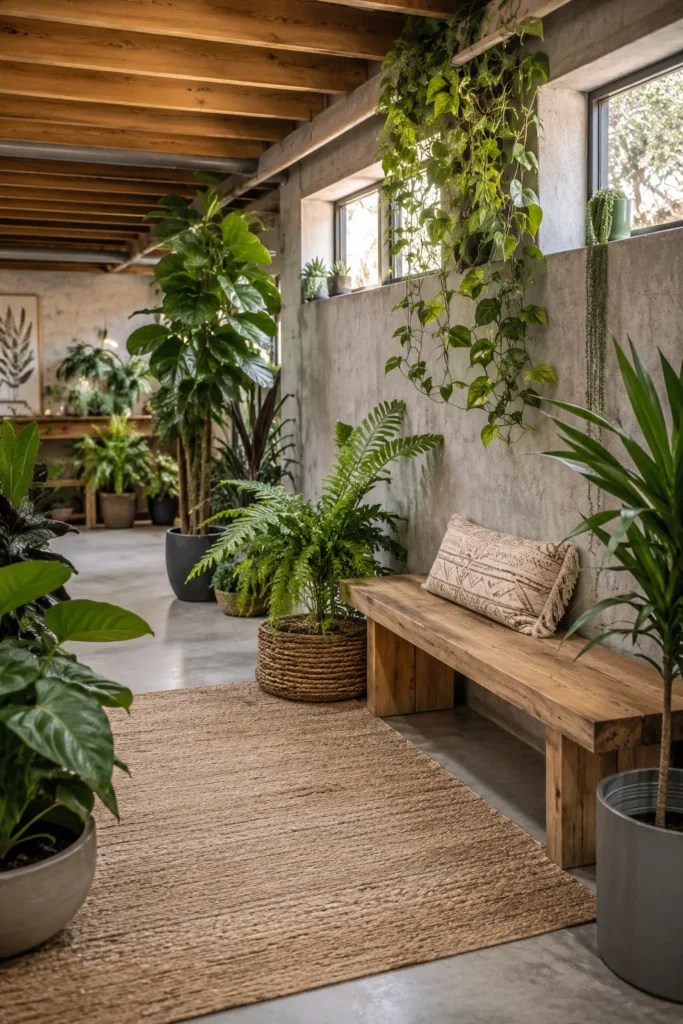
Greenery can make exposed concrete feel intentional rather than incomplete. Large floor plants, trailing vines, smaller pots, a rustic wood bench, and a woven rug soften the hard surfaces while keeping the open ceiling and visible pipes part of the basement’s relaxed, natural character.
Place moisture-tolerant plants near the windows and use sturdy pots with saucers to protect the floor. Mixing tall, medium, and trailing varieties creates depth without extra furniture, making this approach especially useful for a narrow walkway, unused wall, or quiet transition area.
15. Industrial Basement Lounge with Exposed Ductwork
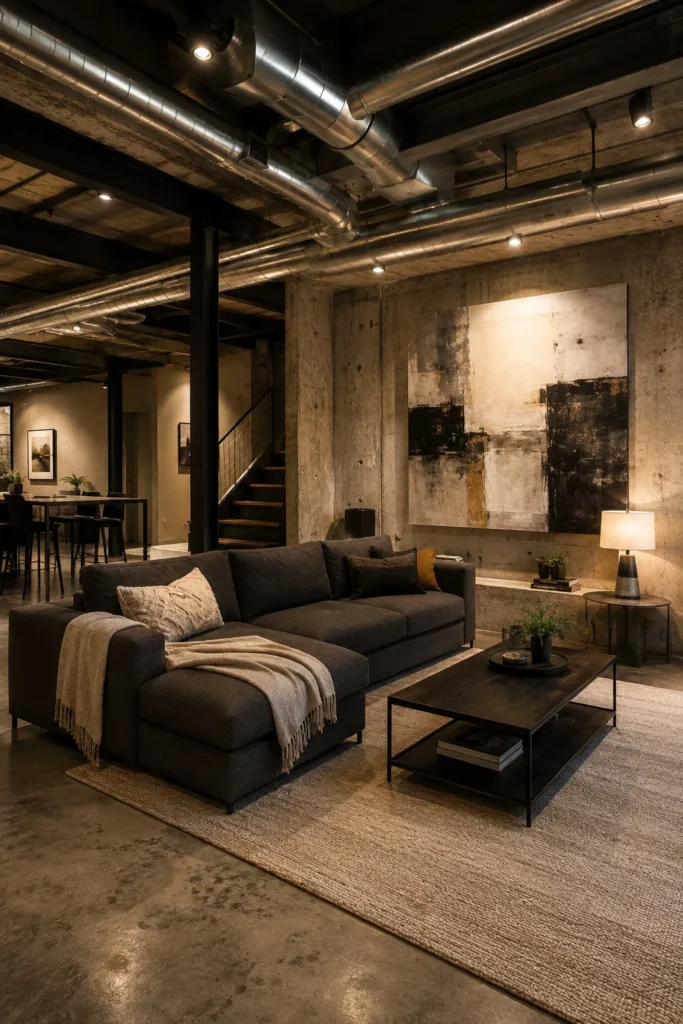
Exposed ductwork becomes a striking design feature when the rest of the room follows the same industrial language. A charcoal sectional, black metal table, abstract artwork, concrete walls, and warm lamps create a polished lounge that feels sophisticated without disguising the basement’s structure.
Keep seating low and substantial so it balances the busy ceiling overhead. A large neutral rug helps define the conversation area and reduces echo, while focused lamps add warmth where needed; avoid filling every wall, since the concrete and oversized art already provide strong visual interest.
16. Light Neutral Unfinished Basement with Scandinavian Style
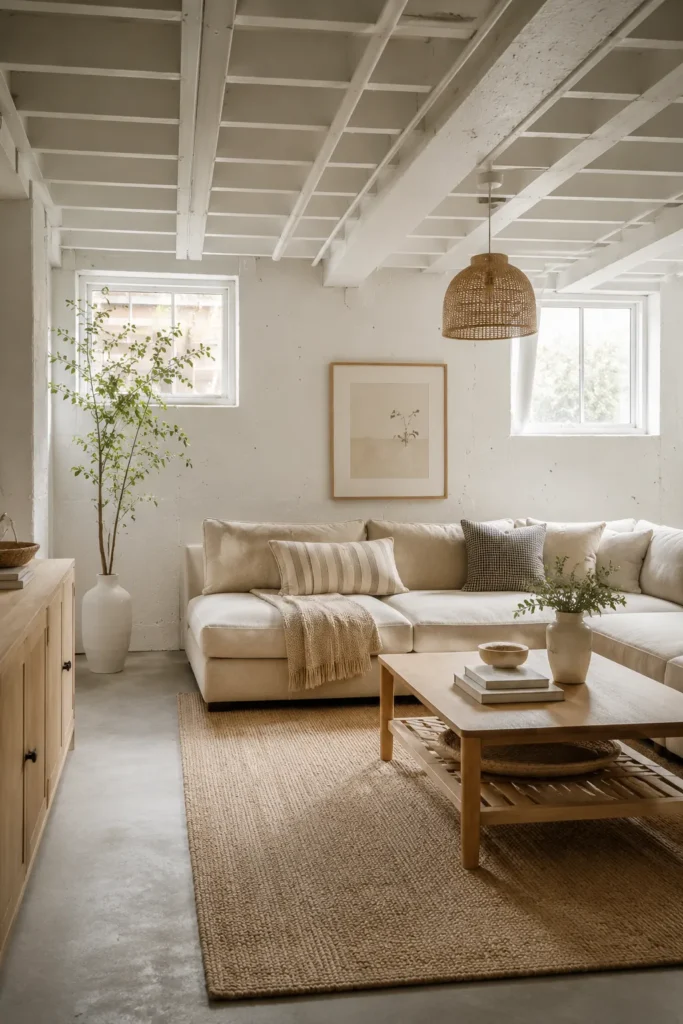
A pale palette can brighten an unfinished basement without making it feel sterile. Cream seating, light wood furniture, a woven rug, soft textiles, white-painted joists, and a rattan pendant create an airy Scandinavian mood while leaving the concrete floor and simple wall texture visible.
Repeat warm neutrals through cushions, throws, pottery, and natural fibers instead of introducing many colors. Painting the exposed ceiling white is a practical way to reflect light and visually raise the room, while a few leafy branches keep the clean arrangement from feeling flat.
17. Modern Basement Media Room with Concrete Walls
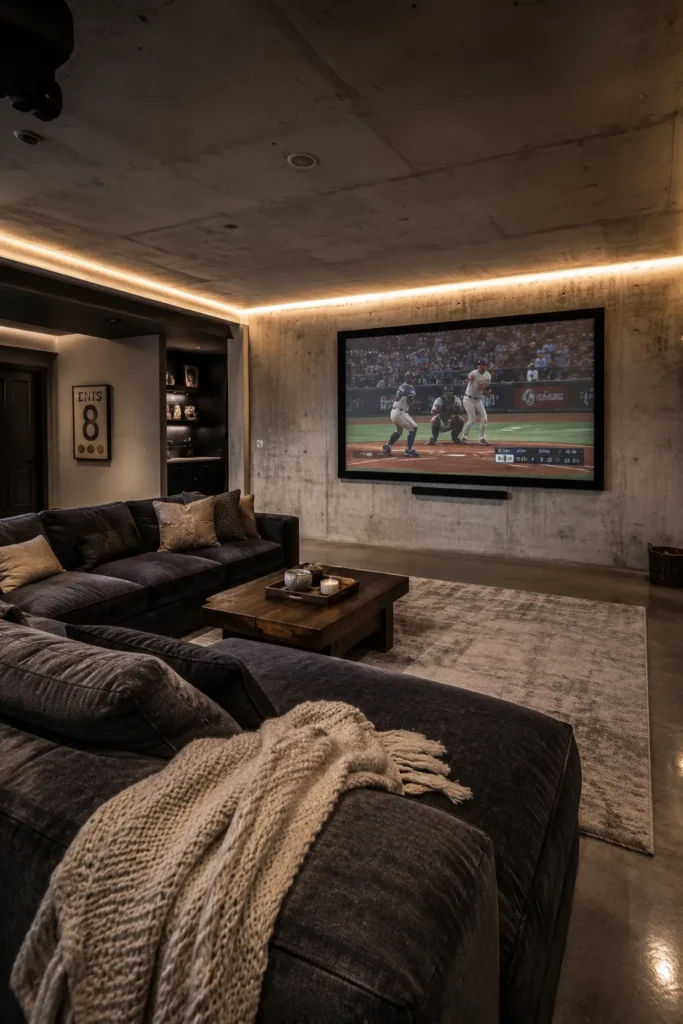
A large screen and deep sectional can turn bare concrete into a dedicated movie-and-sports retreat. Dark upholstery, a rustic coffee table, soft rug, concealed perimeter lighting, and a wall-mounted display keep the layout focused, comfortable, and free from unnecessary decorative clutter.
Arrange seating far enough from the screen for comfortable viewing and preserve a clear path around the sectional. Dimmable lighting is essential here because it reduces glare during movies but still provides safe circulation; textured throws and pillows also improve acoustics and soften the darker palette.
18. Open Concept Unfinished Basement Apartment Layout
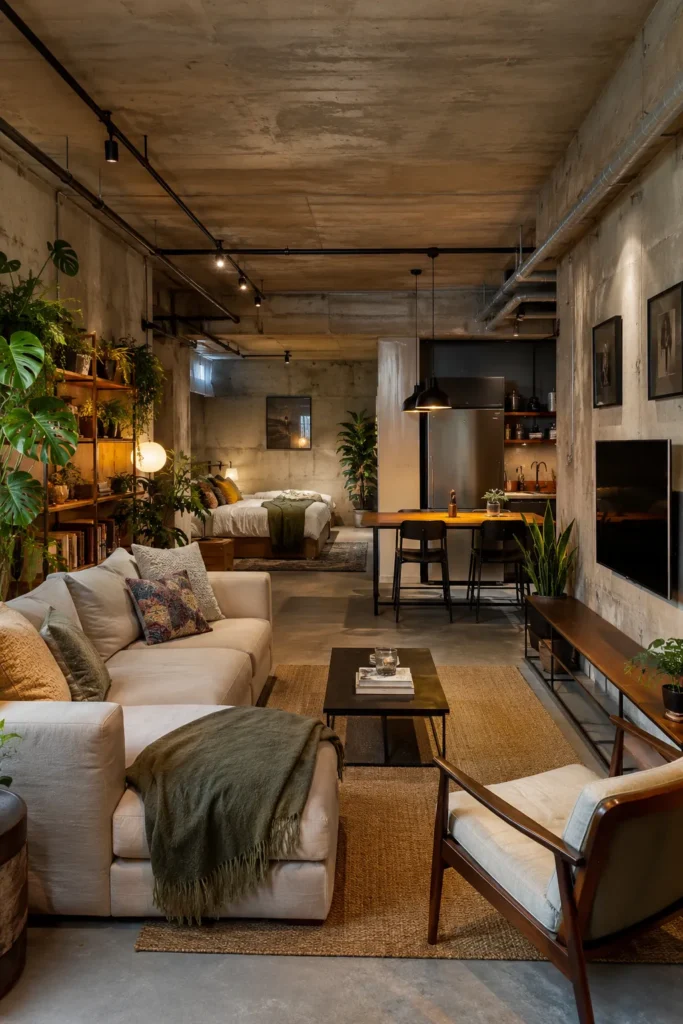
Open planning allows one unfinished basement to support lounging, dining, sleeping, and cooking without permanent dividing walls. Pale seating, layered rugs, compact tables, abundant plants, and warm wood accents visually separate each zone while the concrete shell keeps the entire apartment feeling connected.
Use furniture placement rather than bulky partitions to define each function, and keep the main walkway uninterrupted from front to back. Among the most practical unfinished basement ideas, repeating wood, black metal, greenery, and soft neutral fabrics across every zone creates continuity, especially when several daily activities share one long room.
19. Organized Workshop Setup for an Unfinished Basement
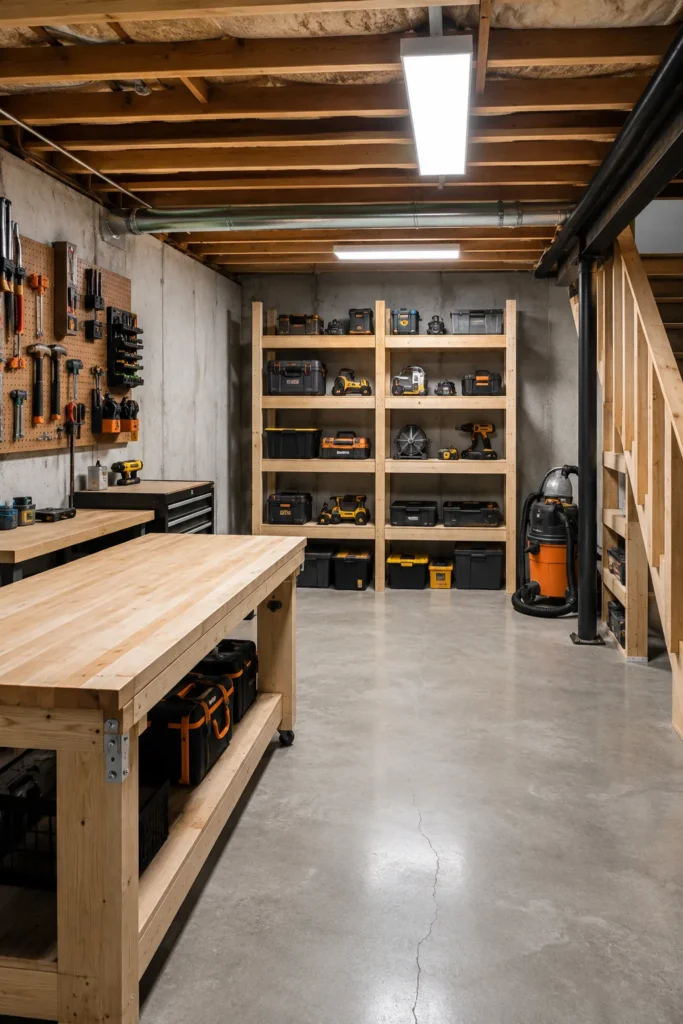
A well-organized workshop makes an unfinished basement more useful without requiring decorative finishes. Large wood worktables, open shelving, pegboards, toolboxes, bright overhead fixtures, and clearly grouped equipment create an efficient setup where supplies remain visible, accessible, and easy to return after each project.
Keep frequently used hand tools on the wall and heavier cases on lower shelves for safer access. Leave generous clearance around the central bench, add task lighting above detailed work areas, and use labeled bins for small parts so the exposed room stays practical rather than becoming a storage catchall.
20. Rustic Farmhouse Seating Area in an Unfinished Basement
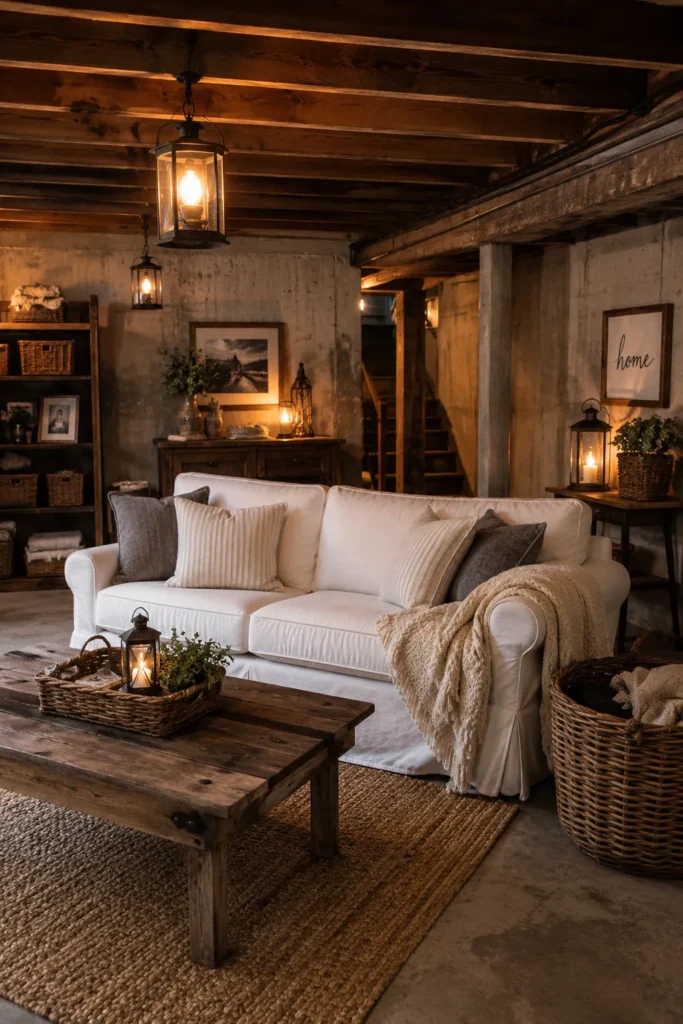
Warm farmhouse details can make raw basement walls feel welcoming almost instantly. A white slipcovered sofa, reclaimed wood table, woven baskets, lantern-style lights, neutral pillows, and layered natural rugs create a relaxed gathering spot that embraces the exposed beams instead of competing with them.
Choose washable covers and sturdy baskets if the basement is used by children or pets, since both handle everyday messes well. Keep the color scheme restrained to cream, brown, and charcoal, then use candles or warm bulbs for atmosphere without relying on heavy décor that could crowd the seating area.
21. Soft Neutral Bedroom in an Unfinished Basement
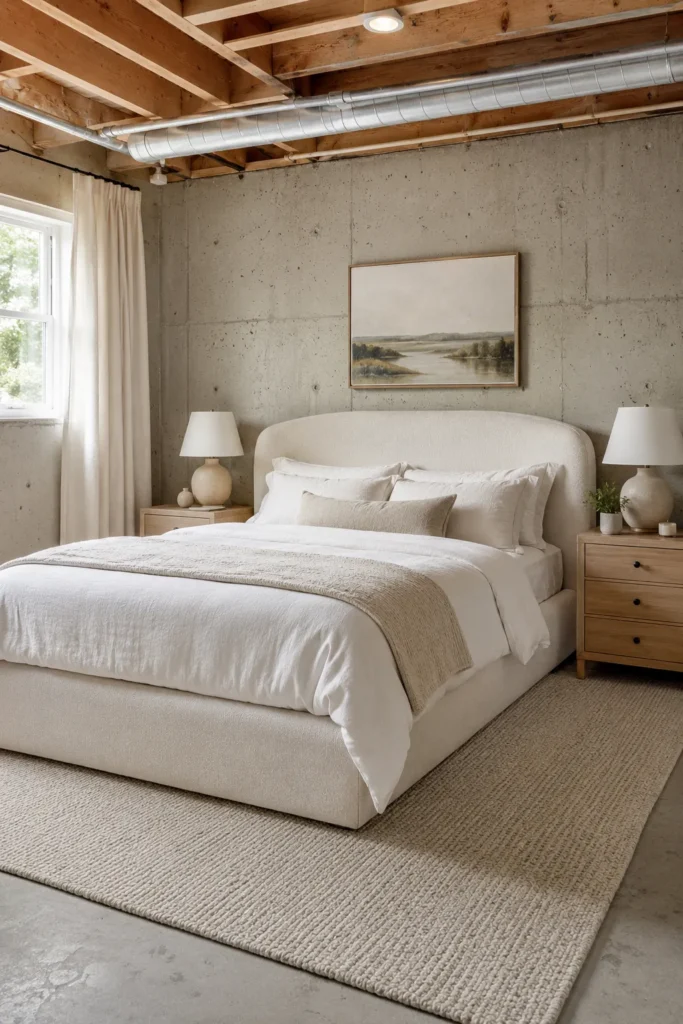
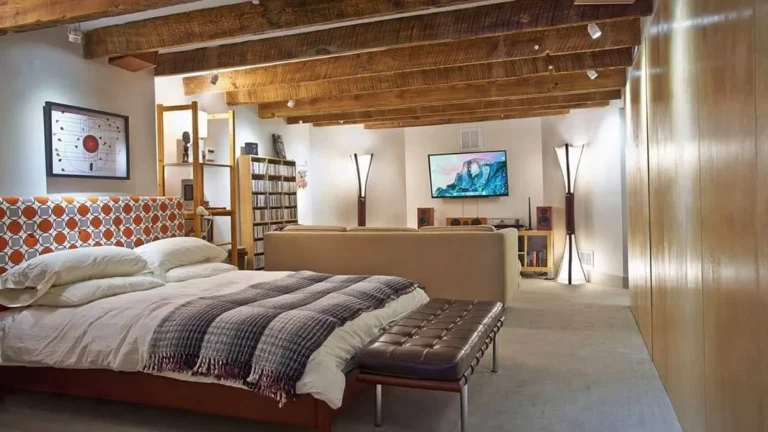
An unfinished basement bedroom can still feel calm, polished, and deeply comfortable. Soft white bedding, a curved upholstered headboard, matching wood nightstands, woven flooring, and balanced table lamps create a restful retreat, while exposed joists, visible ductwork, and concrete walls preserve the room’s honest architectural character.
Warmth comes from layering texture rather than adding strong color. Choose breathable linens, a substantial rug, lined curtains, and softly shaded lamps to reduce echo and coldness; then keep furniture low and symmetrical so the bed remains the clear focal point without making a compact lower-level room feel crowded.
Practical Ways to Make an Unfinished Basement Feel Complete
- Start with the atmosphere you want. Instead of copying every feature from one room, decide whether your basement should feel cozy, creative, relaxed, or family-friendly. Let that feeling guide each choice.
- Choose one clear focal point. A comfortable sectional, statement rug, colorful desk, media wall, or large piece of artwork can give the entire room direction without requiring a full renovation.
- Keep the main foundation simple. Neutral furniture, natural wood, and practical storage work well beside concrete walls, visible pipes, and open ceilings. A quiet base also makes future updates easier.
- Bring in color gradually. Pillows, throws, baskets, artwork, chairs, and plant pots can brighten the basement without making it feel busy or overly themed.
- Use low, open furniture where possible. Short bookcases, coffee tables, benches, and simple seating keep sightlines clear and help lower ceilings feel less restrictive.
- Try flexible, renter-friendly additions. Freestanding shelving, plug-in wall lights, removable hooks, washable rugs, and fabric curtains can add comfort without permanent construction.
- Leave some breathing room. Avoid filling every wall and corner. Open floor space makes an unfinished basement feel calmer, cleaner, and easier to use.
- Repeat a limited palette. Using two or three colors alongside recurring materials, such as wood, woven fibers, and soft fabric, creates a polished result.
A welcoming basement does not need to look fully renovated. With thoughtful layers and a few personal choices, it can still feel simple, comfortable, and easy to live with.