
22 Basement Bedroom Ideas to Turn Downstairs Into a Retreat
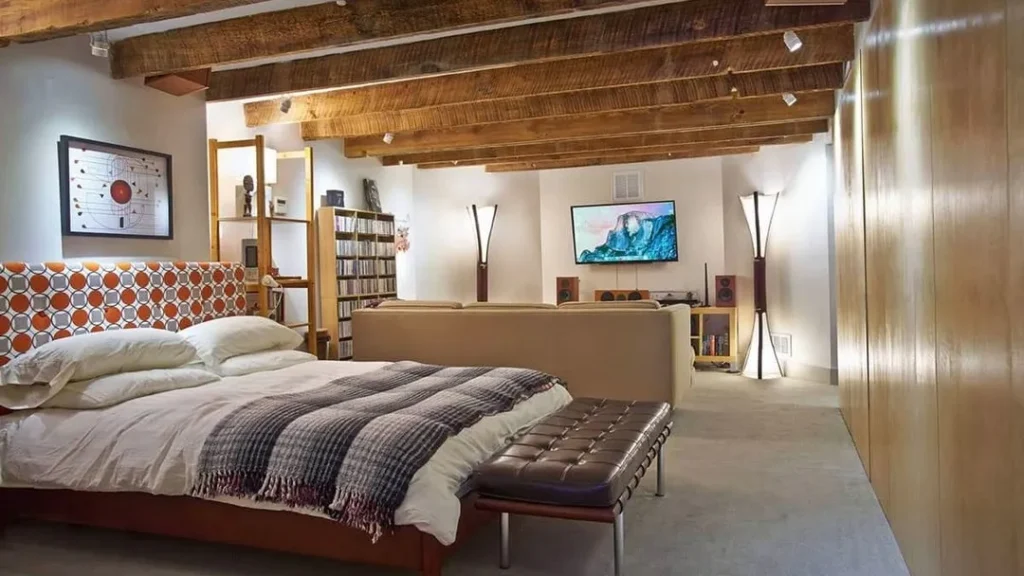
A downstairs room can feel just as inviting as any bedroom upstairs when light, warmth, and layout work together. These Basement Bedroom ideas show how to turn low ceilings, limited daylight, and awkward corners into a calm retreat that feels comfortable rather than forgotten.
You will find practical inspiration for choosing lighter finishes, layering lamps, adding soft textiles, using storage wisely, and creating a clear focal point around the bed. In my experience, the biggest improvements often come from simple changes: a warmer bulb, a larger rug, better bedside lighting, or one confident wall color. Whether you are preparing a guest room, a teen space, or a private suite, these ideas will help you create a bedroom that feels polished, personal, and easy to live with.
1. Art Deco Basement Bedroom in Emerald and Gold
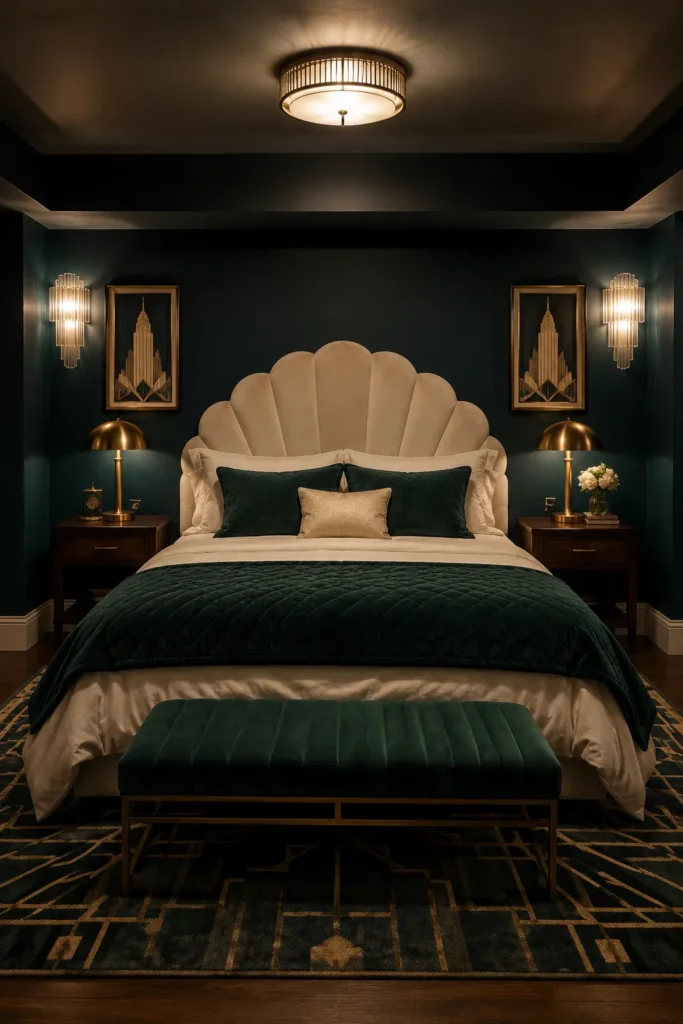
Rich emerald walls and a sculptural shell-shaped headboard make this bedroom feel dramatic without becoming heavy. Cream bedding softens the dark palette, while brass lamps, framed Art Deco prints, and symmetrical nightstands create a polished sense of order that suits a windowless downstairs retreat.
Copy the balance rather than every decorative detail: choose one bold wall color, one statement headboard, and warm metallic lighting. Keep bedding mostly light so the room does not feel closed in, then repeat emerald and gold through two or three accents for a controlled, elegant finish.
2. Basement Bedroom With Black Walls and Leather Accents
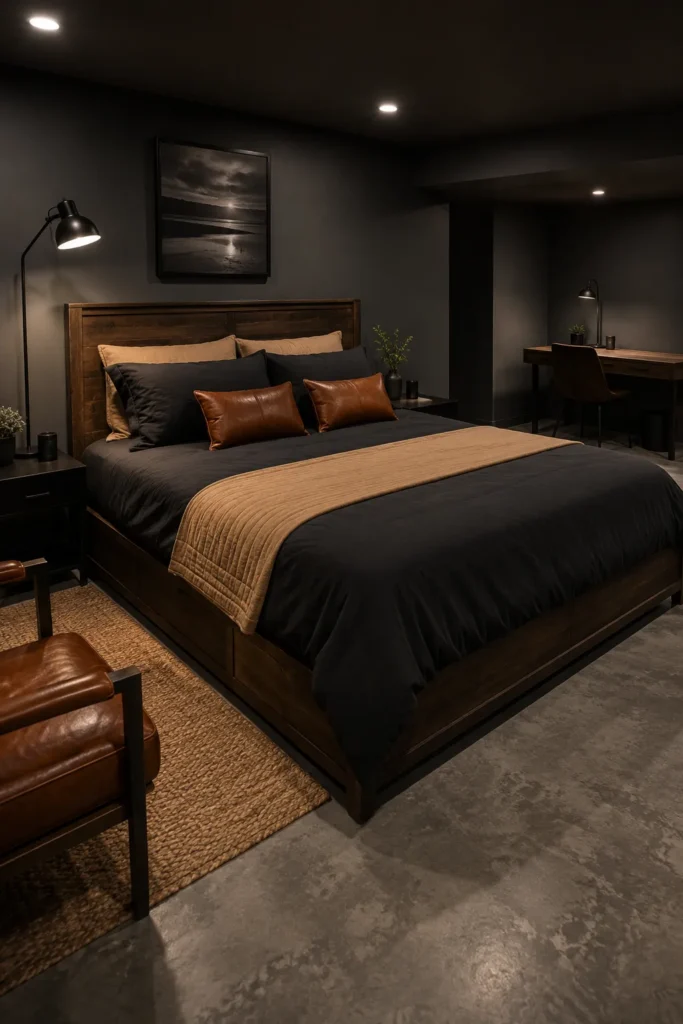
A dark palette can feel surprisingly restful when warm wood and cognac leather break up the black. Here, the substantial bed, simple floor lamps, woven rug, and compact desk create a practical room that works for sleeping, reading, and occasional work without looking crowded.
Use layered lighting instead of relying only on ceiling fixtures, especially in rooms with limited daylight. A wooden headboard and tan textiles add enough warmth to prevent flatness, while keeping the desk visually slim protects circulation and makes the layout easier to live with every day.
3. Basement Bedroom With Built-In Reading Nook and Desk
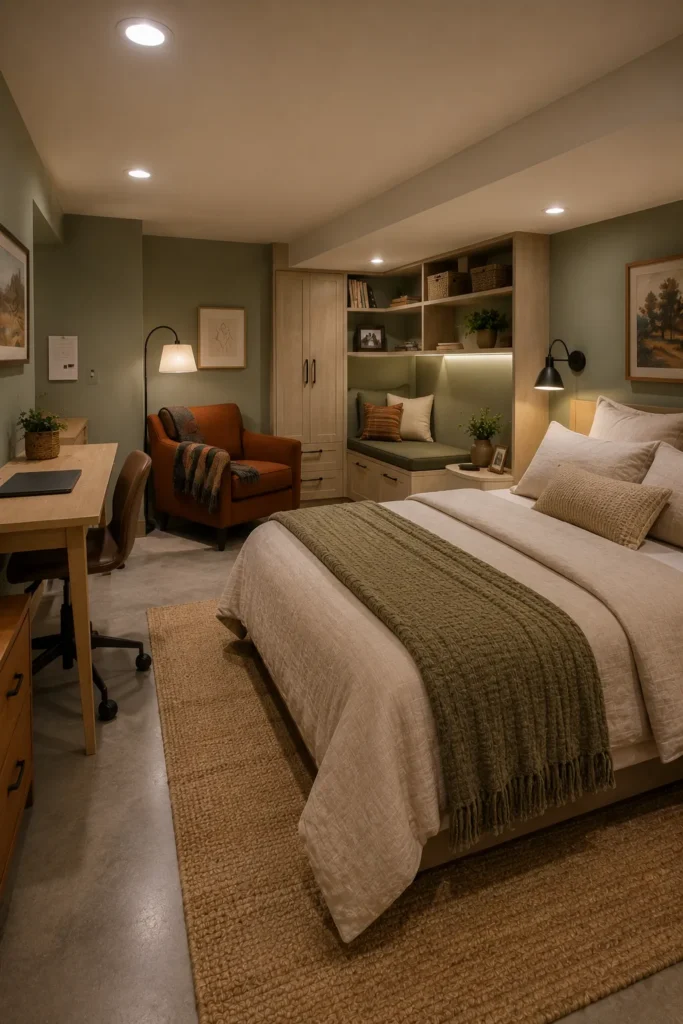
Built-in storage turns a compact sleeping area into a genuinely useful multipurpose room. The desk, wardrobe, reading nook, open shelves, and bed all share one coordinated palette, helping the layout feel calm even though several functions sit close together in one compact footprint.
Place the bed on the least interrupted wall, then use surrounding corners for storage and seating rather than adding freestanding pieces everywhere. Soft olive walls, light wood, and warm task lighting keep the Basement Bedroom comfortable, while a rust armchair gives the neutral scheme a focused accent.
4. Boho Basement Bedroom With Warm Coral Walls
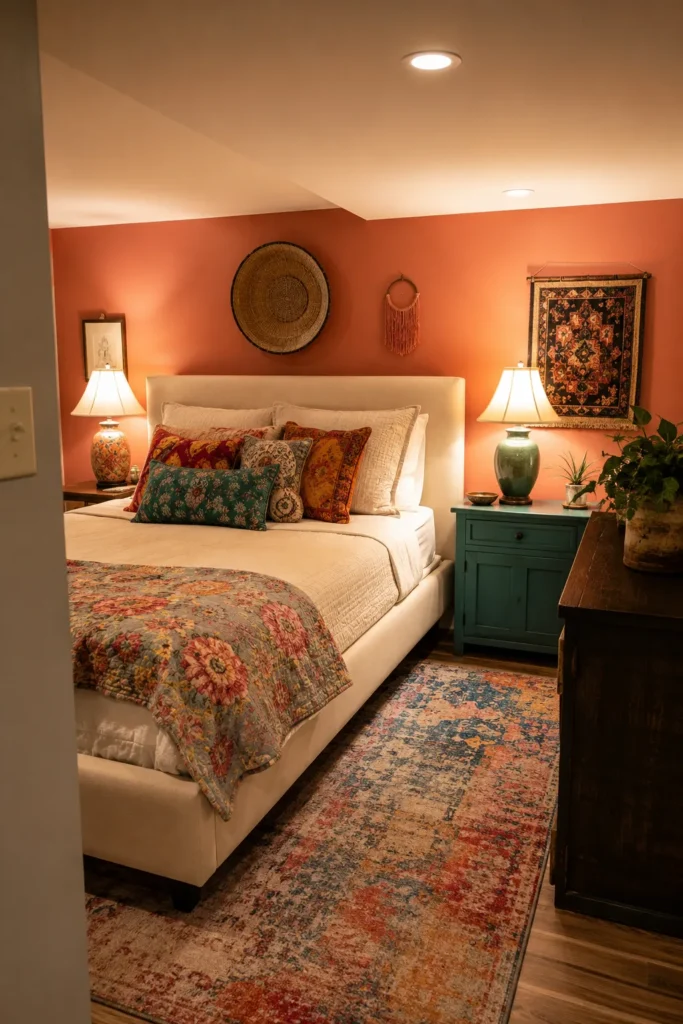
Warm coral walls instantly give this bedroom personality, while layered textiles keep the color from feeling sharp. The cream upholstered bed, patterned pillows, teal nightstand, woven wall pieces, and vintage-style rug create a collected look that feels relaxed rather than overly matched.
Choose two supporting colors from the rug and repeat them in smaller accents, such as pillows, lamps, or bedside furniture. Leave some surfaces plain so the patterns have breathing room, and use warm bulbs to bring out the earthy tones instead of making coral appear too bright.
5. Coastal-Inspired Basement Bedroom in Soft Blue Tones
Soft blue walls and pale bedding make the room feel fresh, while the deep grey blanket adds enough contrast to anchor the bed. Natural wood furniture, woven textures, and simple landscape artwork bring warmth, creating a calm coastal mood without relying on obvious themed decor.
For a similar effect, start with a light blue-grey base and add darker grey through one substantial layer, such as a quilt or rug. Keep accessories understated, choose warm wood over glossy white furniture, and use textured fabrics to make a lower-level room feel softer and more inviting.
6. Cottage-Inspired Basement Bedroom With Floral Bedding
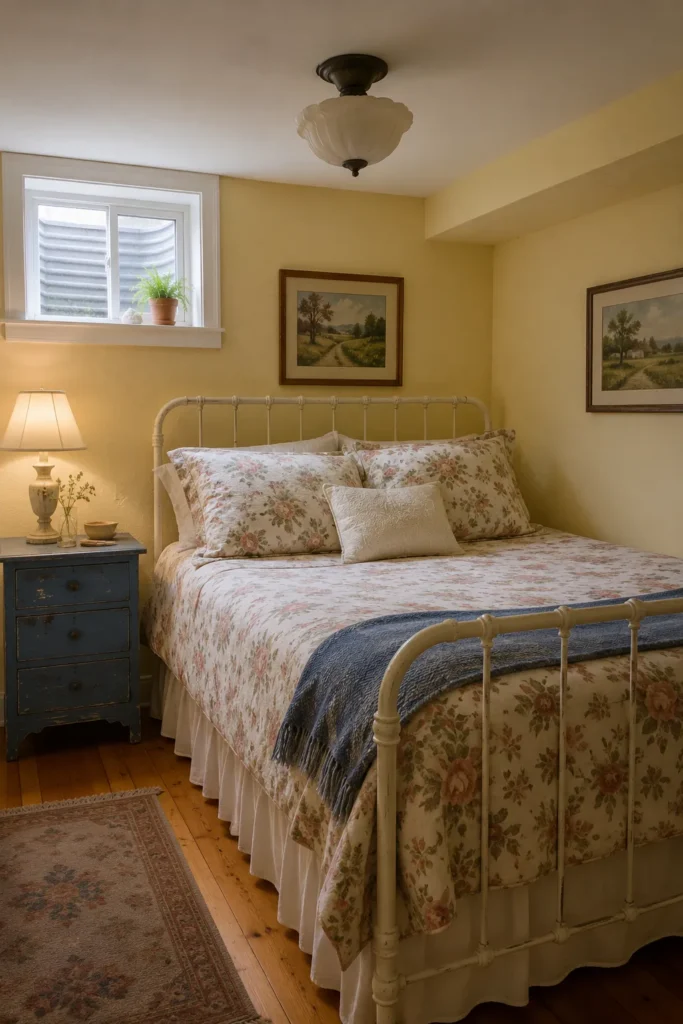
Floral bedding gives this small room an immediate cottage character, especially beside the cream metal bed and distressed blue nightstand. Soft yellow walls, framed landscape prints, wood flooring, and a small basement window create a cheerful, familiar atmosphere that feels personal rather than staged.
Let one floral pattern lead the palette, then pull out only one or two secondary colors for the throw, rug, and furniture. Avoid adding competing prints on every surface; the vintage charm works because the shapes stay simple and the lighting remains warm, gentle, and practical.
7. Dark Wood Basement Bedroom With Boutique Hotel Style
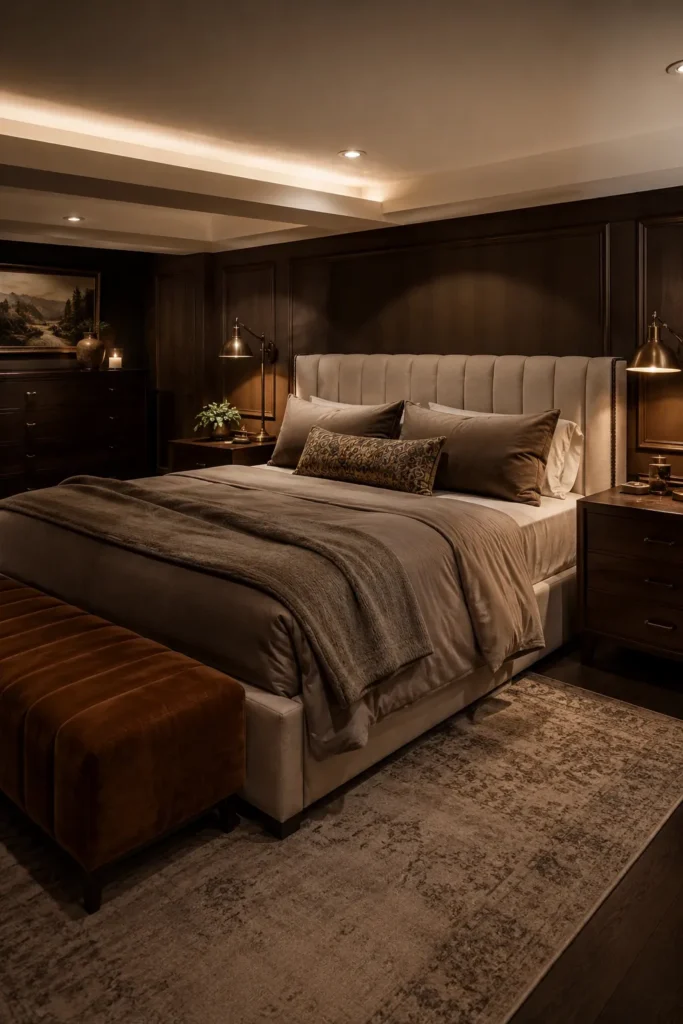
Dark wood paneling and a tall channel-tufted headboard give this bedroom the tailored mood of a boutique hotel. Matching nightstands, slim brass lamps, taupe bedding, a leather bench, and a large muted rug create depth while keeping the overall arrangement balanced and easy to read.
Symmetry is especially useful in a basement where limited natural light can make furniture feel visually heavy. Repeat lamps and bedside tables, but vary the textures through velvet, leather, wood, and woven fabric. Soft perimeter lighting adds atmosphere without cluttering walls or taking up floor space.
8. Earthy Boho Basement Bedroom With Warm Terracotta Walls
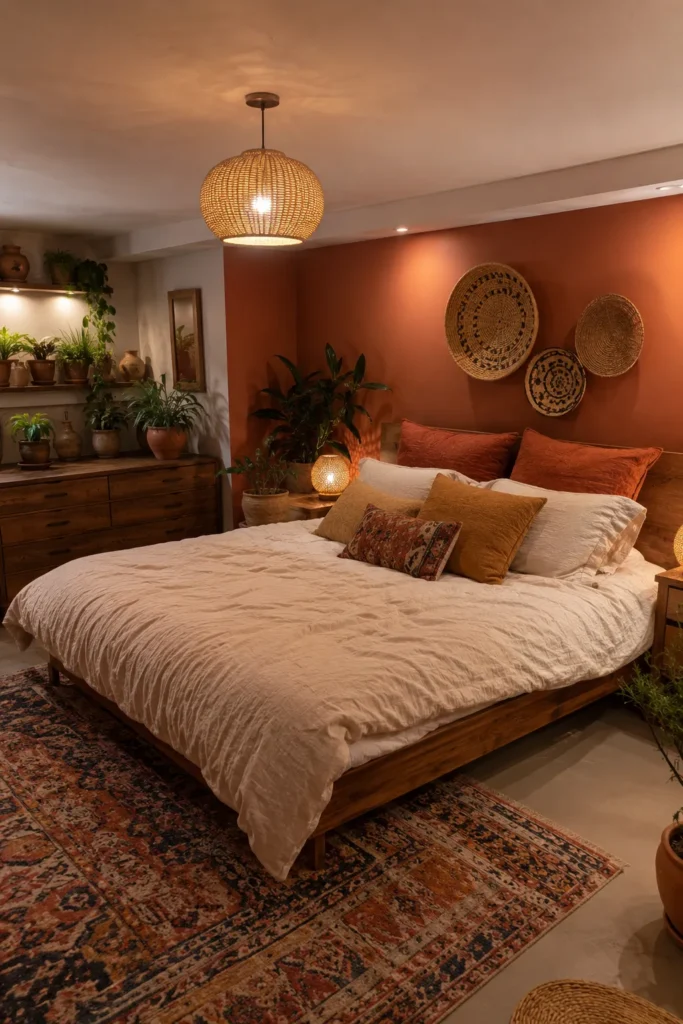
Terracotta walls bring immediate warmth to the lower level, while white bedding keeps the room open and restful. Woven wall baskets, patterned cushions, leafy plants, a wood platform bed, and a richly colored rug create an earthy scheme that feels layered without becoming dark.
Use the wall color as the main focal point and keep larger furniture pieces simple. Natural fibers, pottery, and greenery reinforce the relaxed mood, but limit decorative pieces to a few grouped areas. That restraint keeps the room practical and makes the warm palette feel intentional rather than busy.
9. Farmhouse Basement Bedroom With Reclaimed Wood Charm
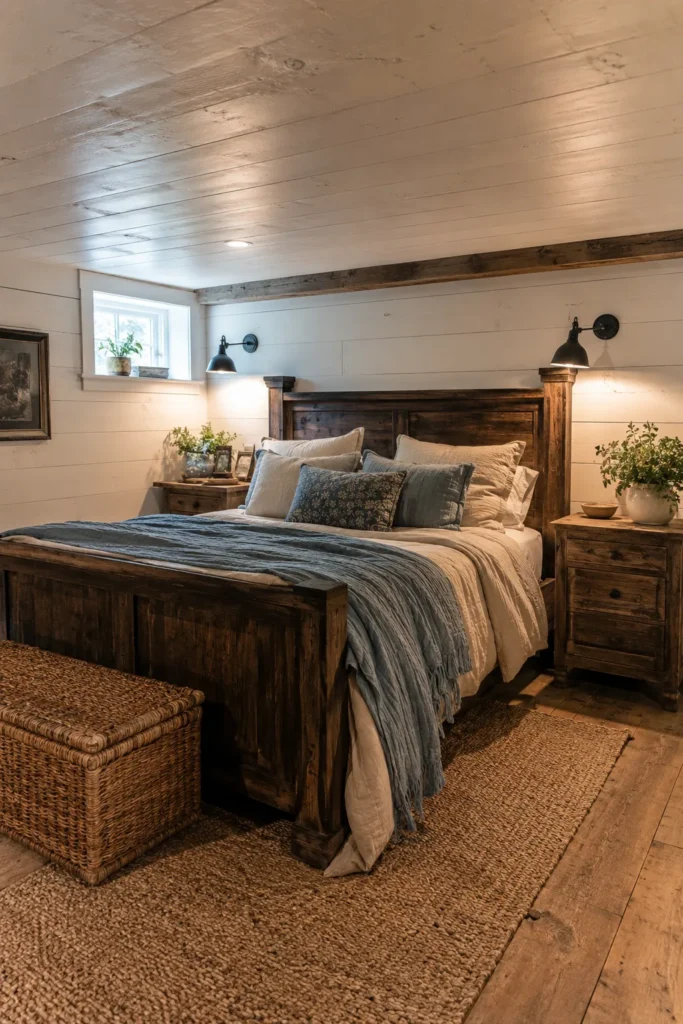
Reclaimed-looking wood gives this bedroom its strongest sense of character, from the bed frame to the matching nightstands and exposed beam. White plank walls, black sconces, blue-grey bedding, woven baskets, and a textured rug soften the rustic materials and keep the room comfortable.
Mix rough wood with lighter fabric so the room does not feel too heavy or cabin-like. Wall-mounted lights free the nightstands for daily use, while a small window and white surfaces help reflect available daylight. Choose fewer, larger pieces rather than filling every corner with rustic decor.
10. Industrial Basement Bedroom With Black Ceiling Details
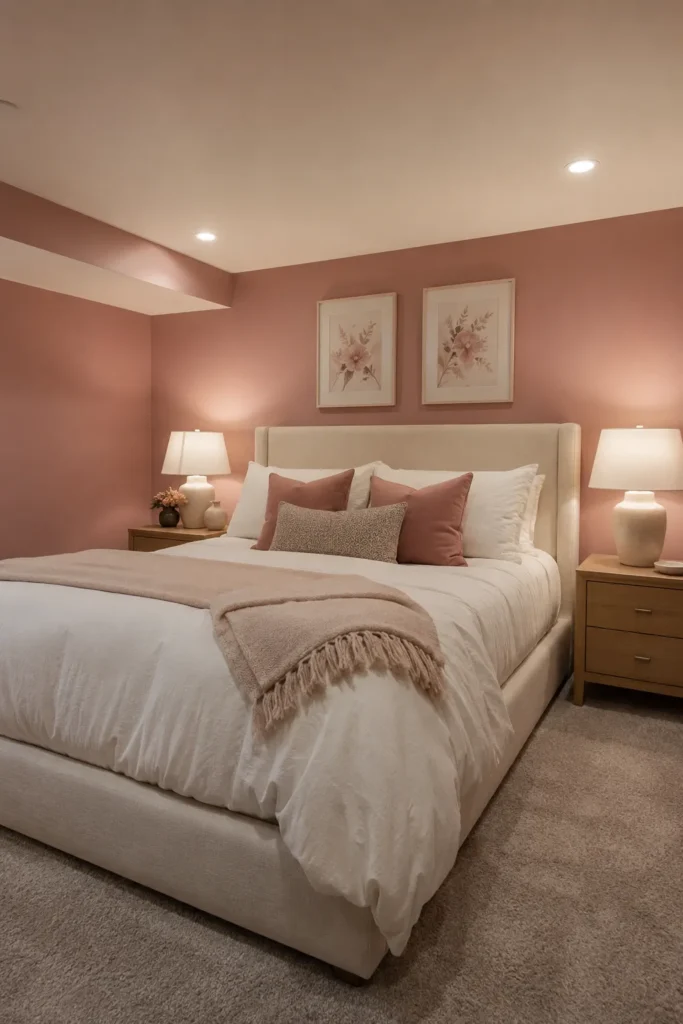
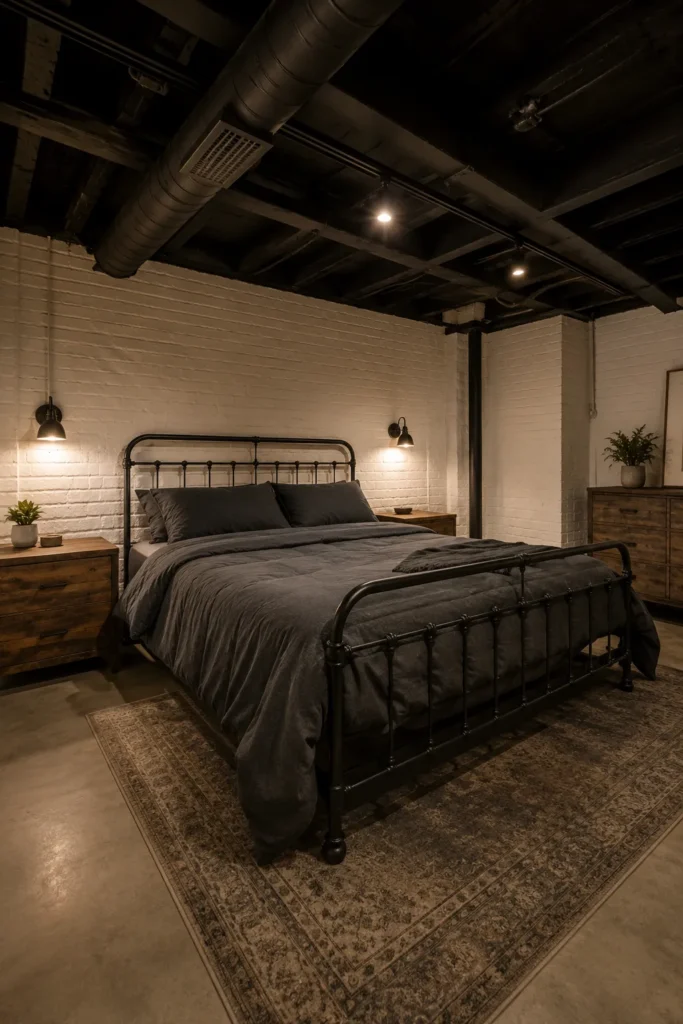
An exposed black ceiling can make basement utilities feel intentional instead of unfinished. White-painted brick, a black metal bed, dark bedding, warm wood nightstands, and a faded rug create a strong industrial look, while wall sconces provide focused light without lowering the ceiling visually.
Paint pipes, beams, and ceiling elements one consistent dark color to reduce visual clutter, then brighten the walls to maintain contrast. Warm timber and a traditional rug prevent the scheme from feeling cold. This approach works best when the room has clear pathways and minimal freestanding decoration.
11. Lavender Basement Bedroom With Plush Hotel Style Comfort
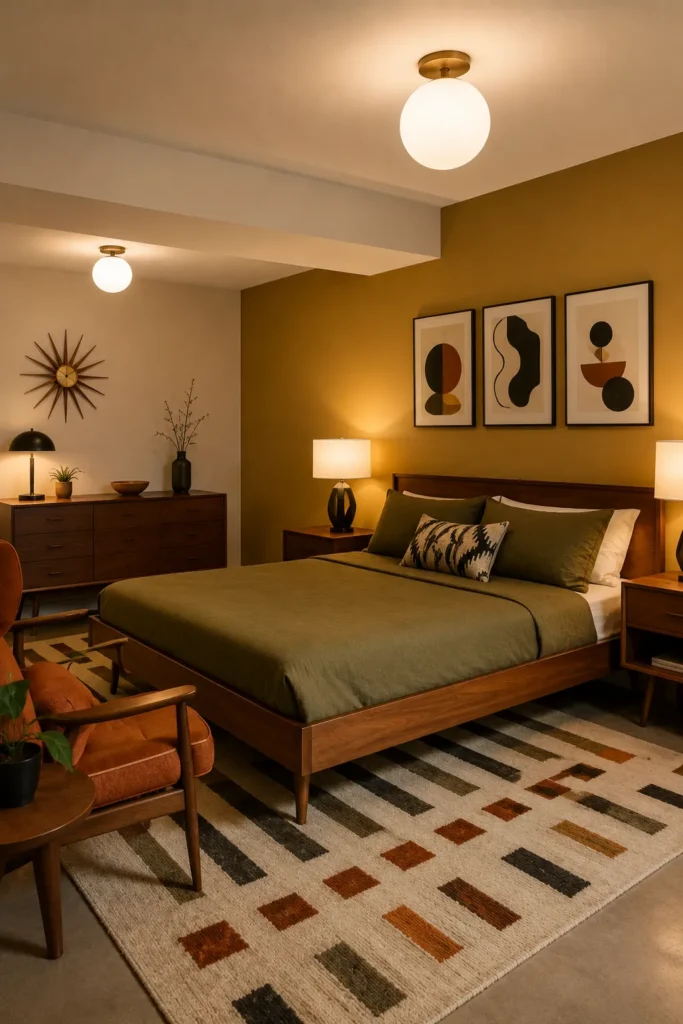
Warm mustard walls and walnut furniture give this room an inviting mid-century mood without making it feel overly themed. Olive bedding, abstract artwork, globe ceiling lights, and a patterned rug create a balanced palette, while the low bed frame keeps the proportions comfortable beneath the basement beams.
To recreate the look, begin with one earthy wall color and repeat it through bedding or small accessories rather than matching everything. Choose furniture with simple tapered legs, keep artwork grouped above the bed, and add several warm light sources so deeper colors remain rich instead of dull.
12. Light Wood Basement Bedroom With Cozy Blue Accents
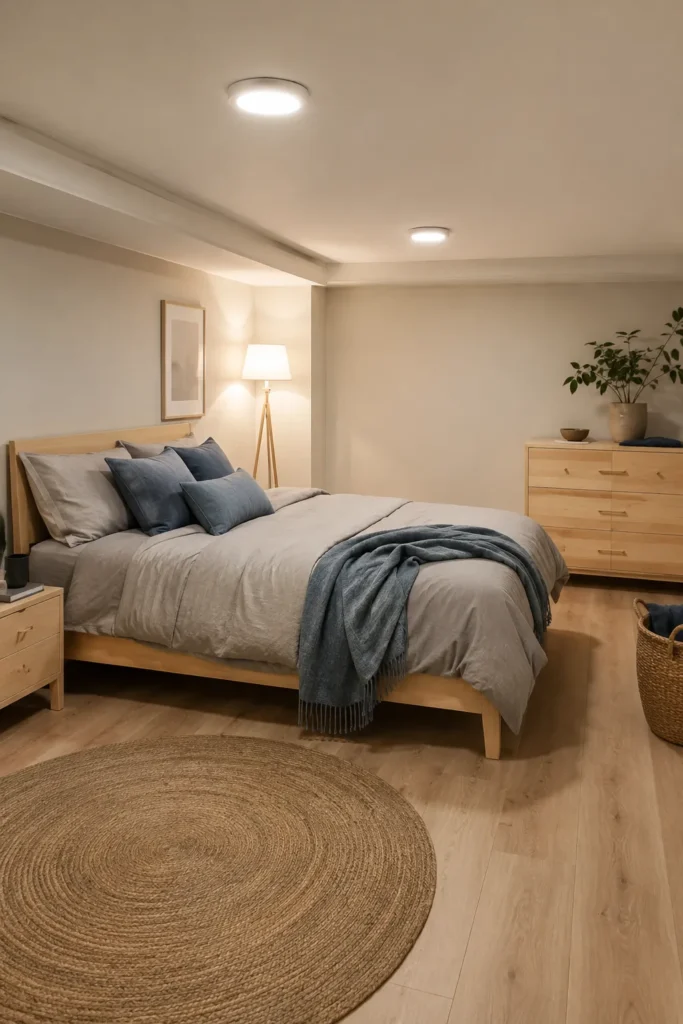
Soft wood tones and dusty blue textiles make this bedroom feel open, calm, and easy to maintain. A simple platform bed, matching dresser, round woven rug, and tall floor lamp add comfort without crowding the floor, which suits a wider room with a relatively low ceiling.
Let pale timber carry most of the visual warmth, then use blue through pillows, a throw, and one or two practical accessories. Keep the walls nearly bare and choose streamlined furniture with visible floor space underneath; the lighter outline helps a downstairs sleeping area feel less enclosed.
13. Mid-Century Basement Bedroom With Warm Walnut Finishes
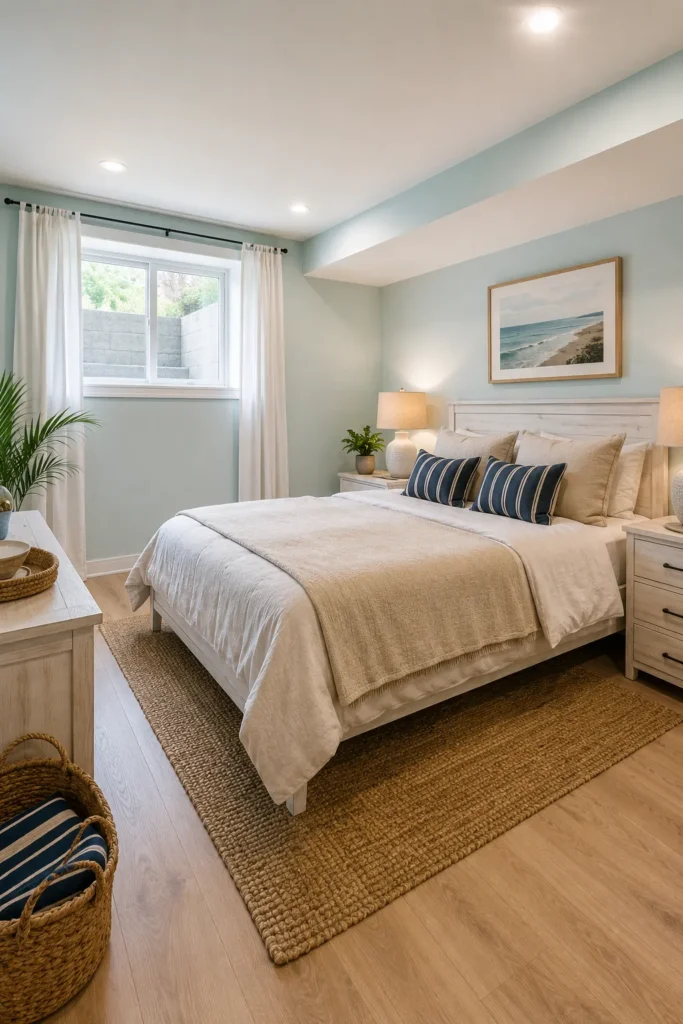
Fresh blue walls and bright white bedding turn limited basement daylight into a real design advantage. The high window, sheer curtains, pale furniture, woven rug, and striped navy cushions create a clean coastal feeling while still looking practical enough for everyday use.
Place the bed where it receives the strongest available daylight and avoid blocking a small window with tall furniture. A large natural-fiber rug warms the flooring, while repeated white finishes reflect light around the room. Use navy sparingly so the airy palette stays crisp rather than nautical.
14. Minimalist Black and White Basement Bedroom Design
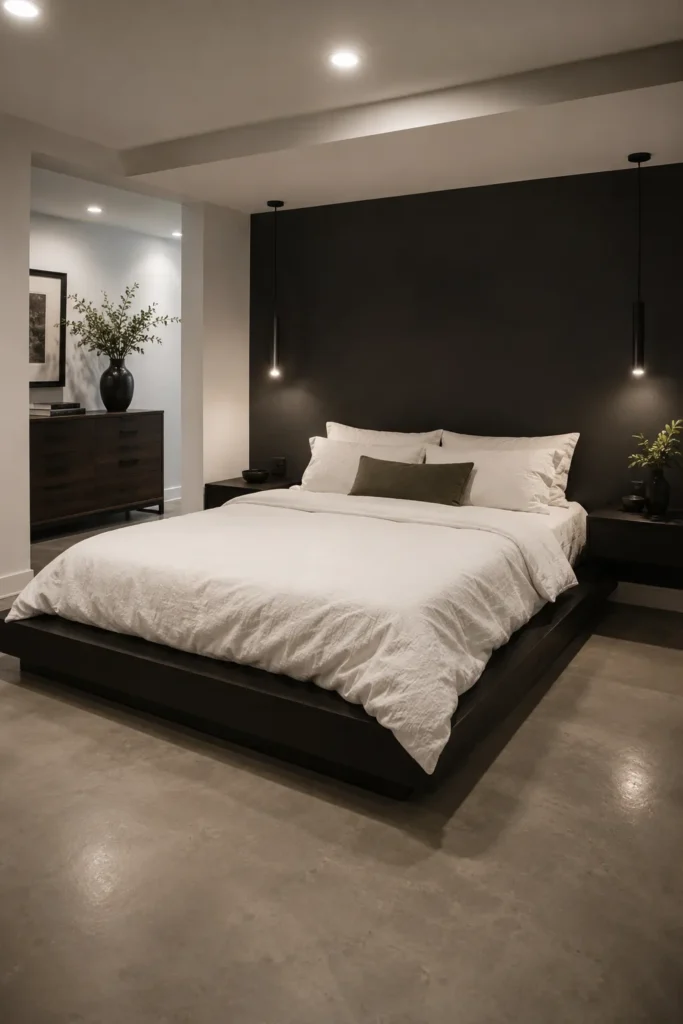
Black and white feels especially striking here because every line is kept clean and deliberate. A low black platform bed, white bedding, floating nightstands, slim pendant lights, and polished concrete flooring create a quiet modern retreat with very little visual clutter.
Make the dark wall the single focal point and keep textiles bright to preserve contrast. Wall-mounted lighting frees bedside surfaces and adds symmetry without extra furniture. For comfort, introduce one soft grey cushion, subtle greenery, or a textured rug rather than filling the room with decorative objects.
15. Modern Basement Bedroom With Mustard Accent Wall
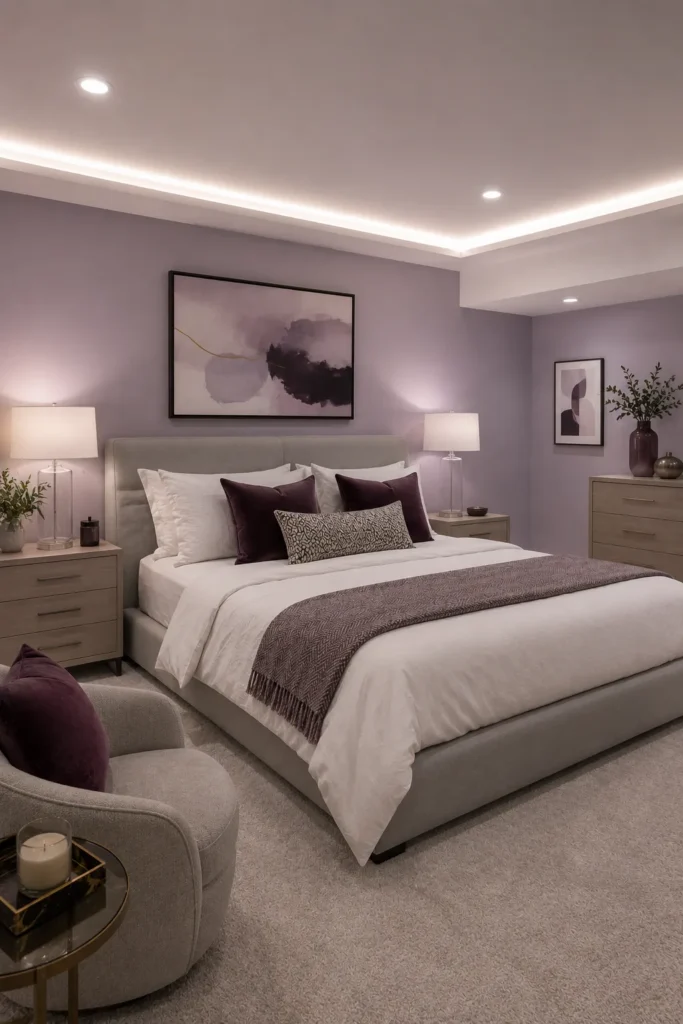
Lavender walls give this bedroom a soft boutique-hotel atmosphere, especially beside crisp white bedding and plum velvet cushions. An upholstered bed, matching light wood nightstands, abstract artwork, clear lamps, and perimeter ceiling lighting make the low room appear polished and gently layered.
Choose a muted purple with grey undertones so it stays restful under artificial light. Repeat the color in only two or three textiles, then balance it with white, taupe, and pale wood. A small upholstered chair can add luxury, but leave enough open floor for easy movement.
16. Moody Green Basement Bedroom With Leather Headboard
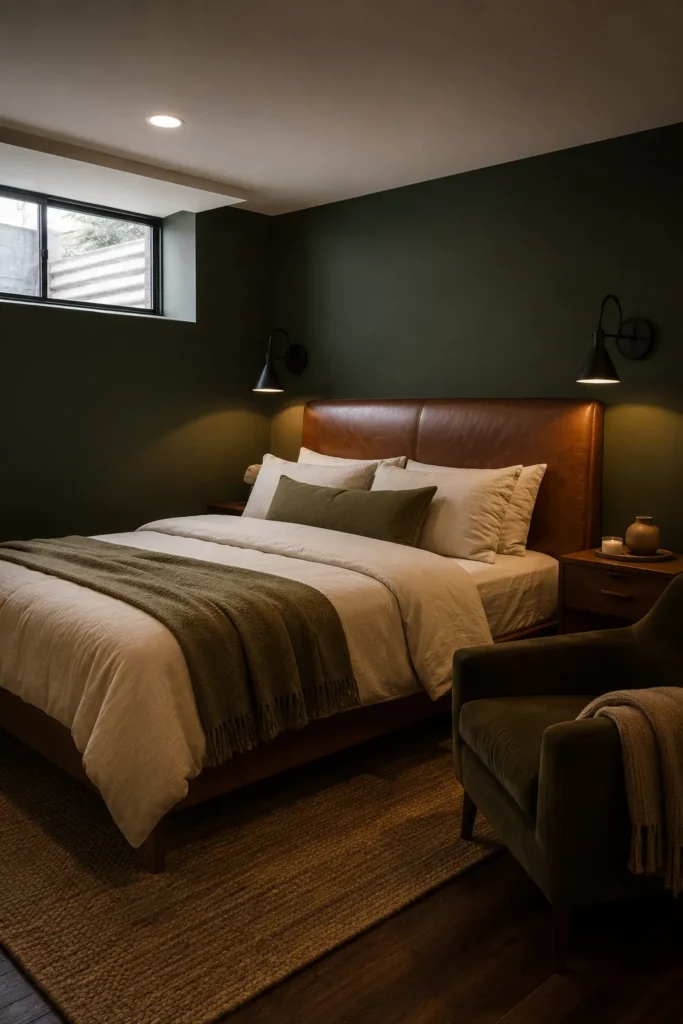
Deep green walls and a cognac leather headboard create a cozy cocoon that still feels refined. Cream bedding, olive textiles, black wall sconces, dark wood tables, and a small high window build depth without relying on busy patterns or excessive decoration.
This palette works best when every dark surface is balanced by something warm or light. Use leather as the main tactile feature, keep bedding mostly neutral, and position sconces high enough for comfortable reading. A woven rug and one upholstered chair soften the room without weakening its moody character.
17. Navy Accent Wall Basement Bedroom Ideas
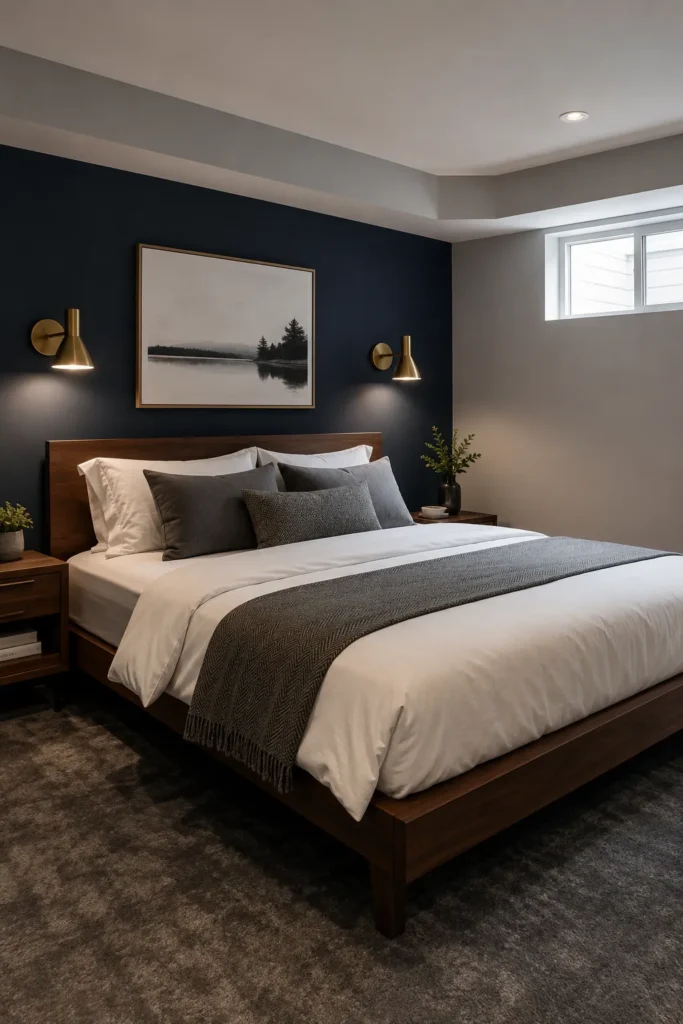
A navy feature wall gives the bed a strong visual anchor while the remaining grey walls keep the room from feeling closed in. Brass sconces, walnut furniture, white linens, charcoal cushions, and a monochrome landscape create a tailored look that feels calm rather than severe.
Paint only the bed wall if the room lacks generous daylight, then repeat navy through one small textile instead of covering every surface. Warm metal lighting and medium-tone wood are important here; they prevent cool grey and blue finishes from appearing flat under recessed basement lights.
18. Neutral Basement Bedroom With Japanese-Inspired Details
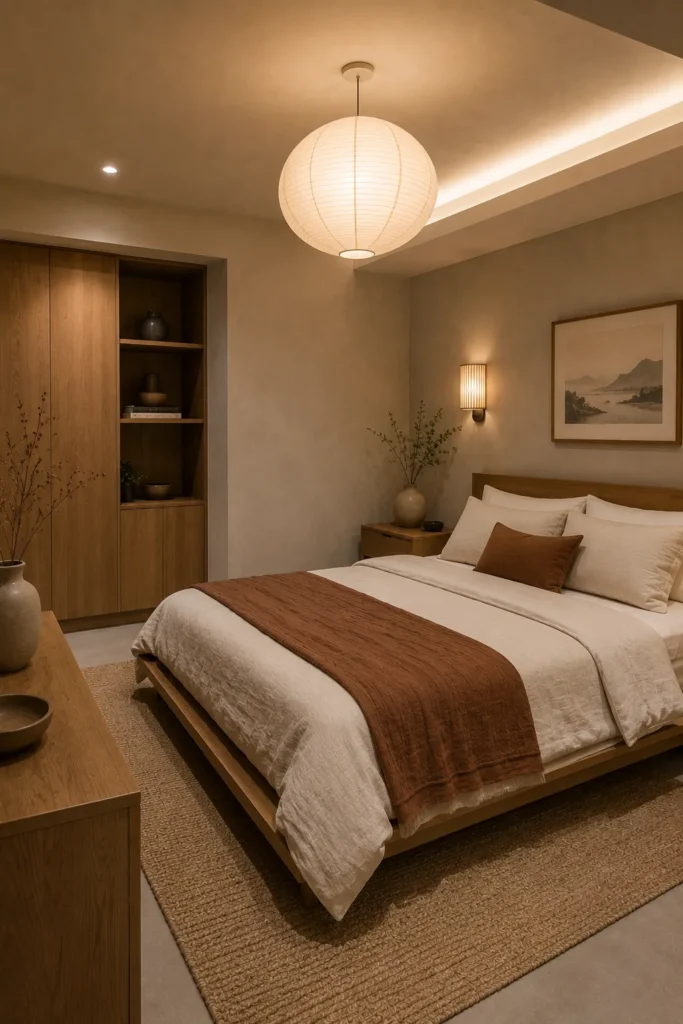
Quiet materials do most of the work in this pared-back bedroom. A low wood bed, built-in cabinetry, paper lantern pendant, woven rug, clay vessels, restrained artwork, and a rust-colored throw create warmth through texture rather than bold contrast or decorative clutter.
Keep furniture low and close to the walls to preserve a clear central walkway. Built-ins are useful, but a freestanding wardrobe in a similar wood tone can achieve the same effect. Limit the palette to cream, natural oak, and one earthy accent for a calm, connected result.
19. Peach-Toned Basement Bedroom With Vintage Flair
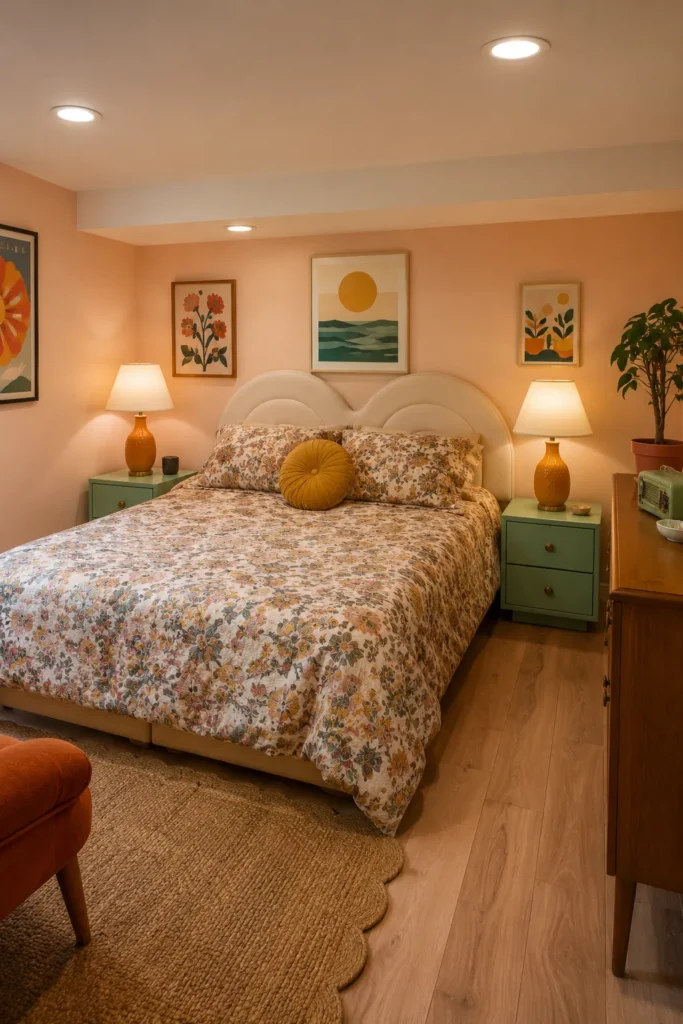
Peach walls and small floral prints give this bedroom a cheerful vintage personality without making it feel childish. The scalloped headboard, floral quilt, mustard lamps, mint nightstands, warm wood dresser, and rounded jute rug combine several colors while maintaining a friendly, coordinated rhythm.
Start with one patterned textile and pull two accent colors from it for lamps or bedside furniture. Keep the largest pieces cream or wood so the palette has somewhere to rest. Symmetrical lighting brings order to the playful mix and stops the smaller room from feeling visually busy.
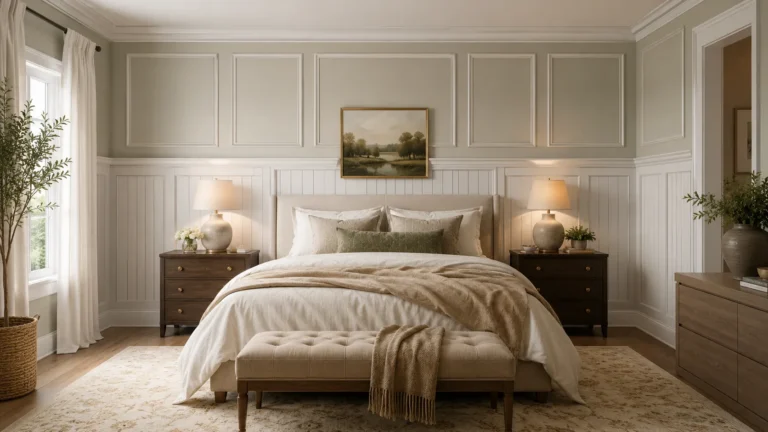
20. Sage Green Basement Bedroom With Soft Neutral Layers
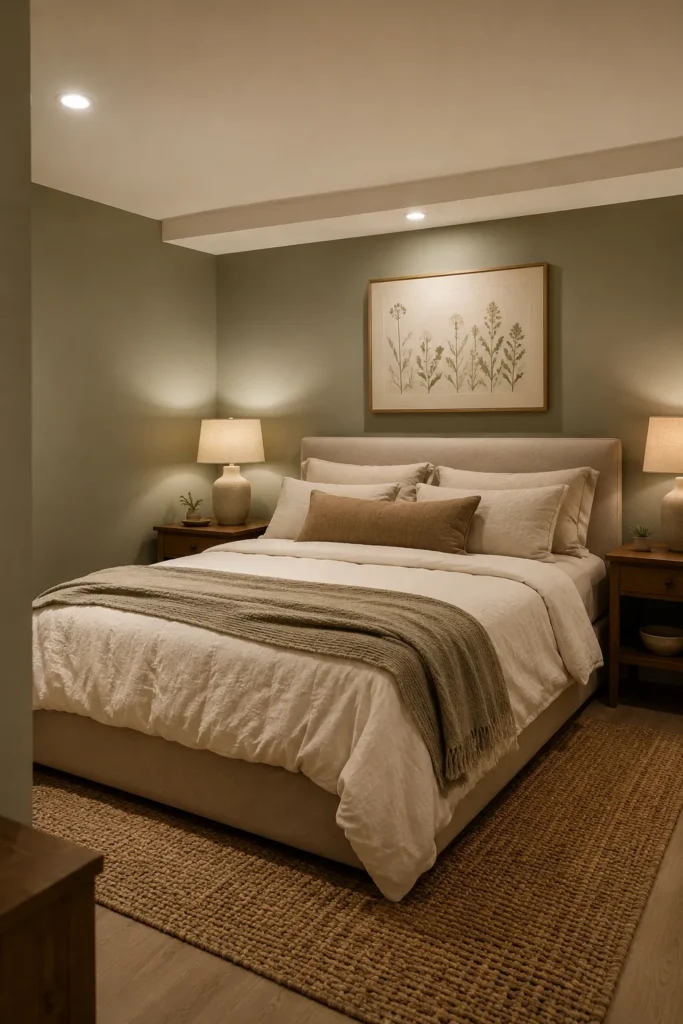
Sage green walls create a gentle, grounded backdrop that immediately makes this bedroom feel restful. Layered cream bedding, a beige upholstered headboard, warm wood nightstands, botanical artwork, table lamps, and a textured woven rug give the room softness without sacrificing a clean, practical layout.
Use sage as a full-room neutral rather than adding many competing colors. Natural linen, warm timber, and oatmeal textiles will keep it from reading cold under recessed lighting. Choose one centered artwork and matching bedside lamps to establish balance, then leave remaining surfaces simple and easy to maintain.
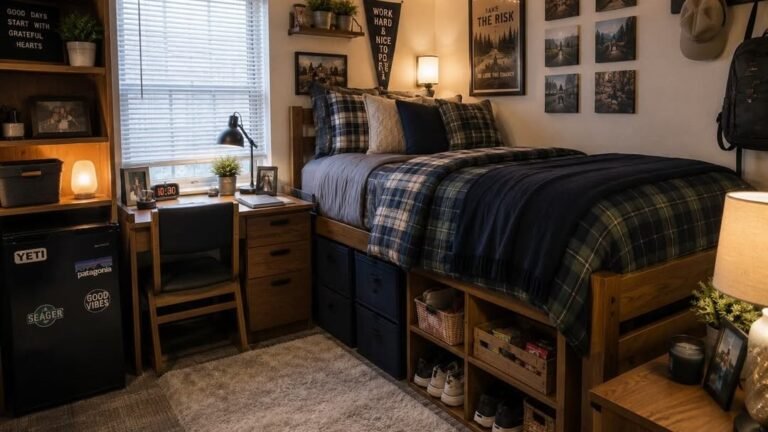
21. Teen Basement Bedroom With Study Space and Storage
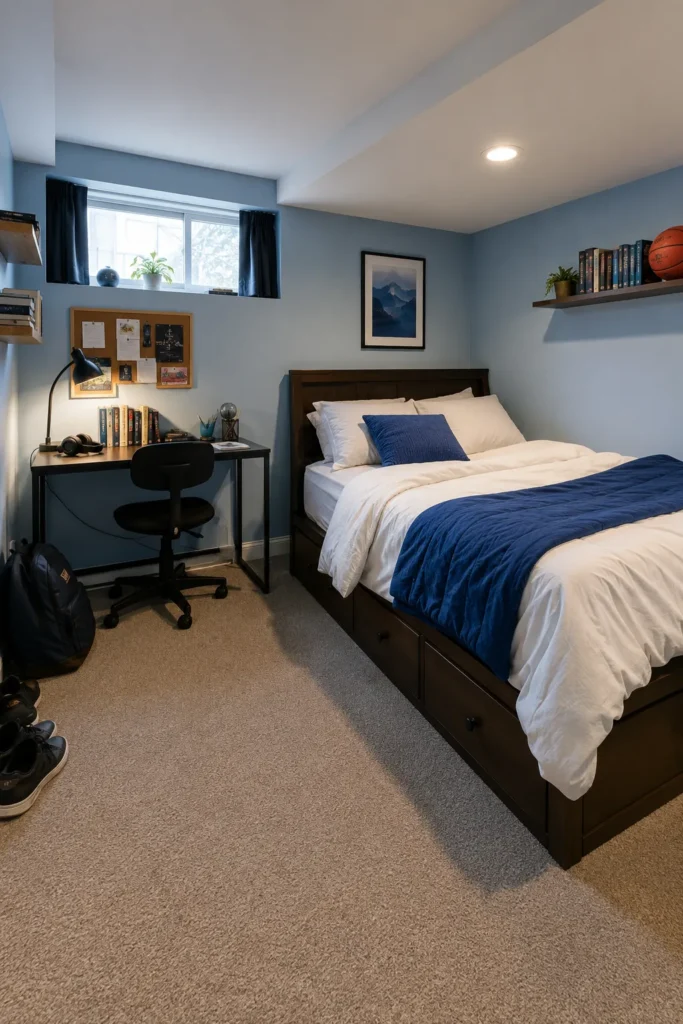
A bedroom that supports both sleep and schoolwork can make a small downstairs room feel far more useful. Soft blue walls, a dark storage bed, white bedding, cobalt accents, a compact desk, floating shelves, and a corkboard create a practical setup without making the room look overly busy.
Keep the desk close to the window for natural light, but leave enough clearance around the bed for easy movement. Under-bed drawers are especially valuable in compact bedrooms, while one long shelf can hold books and personal items; avoid adding several small storage pieces that crowd the floor.
22. Traditional Basement Bedroom With Rich Burgundy Walls
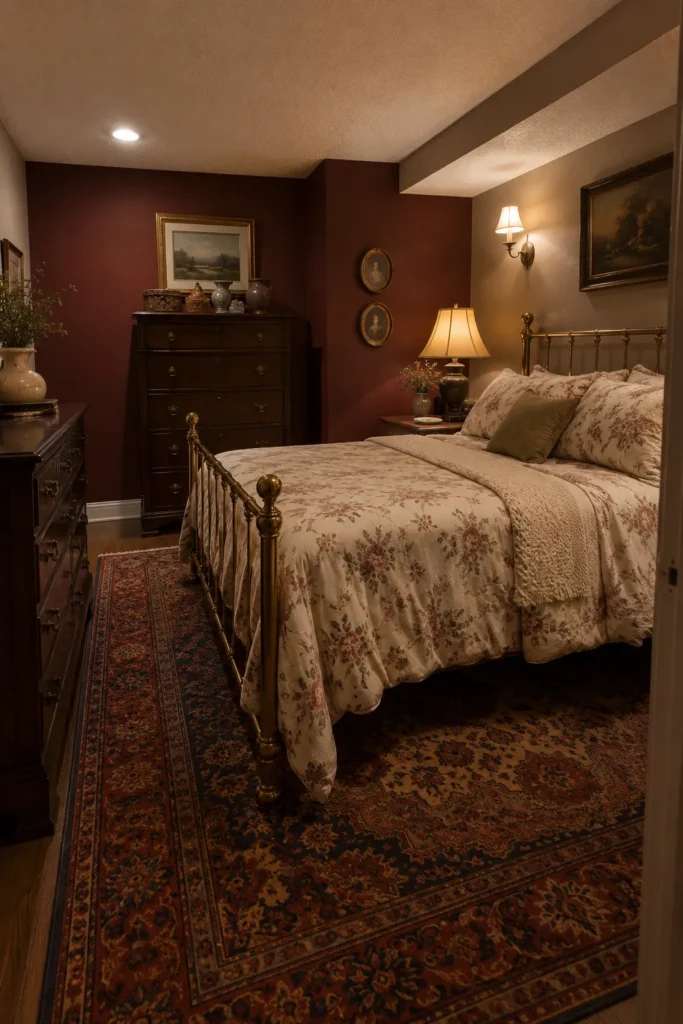
Rich burgundy walls instantly give this bedroom the depth and warmth that many low-light basements need. A brass bed, floral bedding, dark wood dressers, vintage portraits, shaded lamps, and a traditional patterned rug build a collected look that feels established rather than newly decorated.
Use one deep paint color across the main wall area, then soften it with cream textiles and warm lamp light. Matching antique furniture is unnecessary; pieces with similar dark finishes and classic shapes will feel connected, while repeating floral patterns only twice keeps the room layered instead of overly formal.
Simple Ways to Make the Room Feel Finished
- Start with the mood, not an exact copy. Decide whether you want the bedroom to feel calm, cozy, modern, or rustic, then choose a few details that support that feeling.
- Create one clear focal point. A statement headboard, painted wall, framed artwork, or attractive bed linen can give the room direction without requiring extra decoration everywhere.
- Keep the foundation simple. Neutral bedding, practical furniture, and uncluttered walls make a basement bedroom feel brighter and more restful. Add personality gradually rather than filling every surface at once.
- Use color in smaller doses. Cushions, throws, bedside lamps, artwork, and rugs are easy ways to introduce blue, green, terracotta, burgundy, or another favorite shade.
- Keep bedside arrangements low and useful. Compact lamps, a small plant, or one decorative object will leave nightstands practical and help the room feel open rather than crowded.
- Choose flexible solutions for small or rented spaces. Freestanding shelves, plug-in sconces, removable wall hooks, storage beds, and lightweight furniture can improve the layout without permanent changes.
- Repeat a limited palette. Carry two or three colors and a few textures—such as wood, woven fibers, soft linen, and black metal—through the room for a more polished result.
- Leave some breathing room. Clear walkways and open surfaces often make a bigger difference than additional décor.
A comfortable basement bedroom does not need to look perfectly styled. With thoughtful lighting, useful furniture, and a few personal touches, it can feel simple, welcoming, and genuinely easy to live in.