
Want To Be Obnoxiously Educated? Start with these History Books
You want to know more about history. Then you walk into the history section of a bookstore and suddenly there are 900 page biographies, military histories, political studies, ancient empires, presidents, revolutions, medical scandals, and enough dates to make you quietly return to the fiction aisle.
The harder problem is knowing which history books to read first. You probably do not want a textbook. You want books that help explain why people think, vote, argue, fear, trust, and distrust the things they do now.
These 3 books are great places to start because they approach history through very different doors. One examines Cold War paranoia. One follows the extraordinary life of Frederick Douglass. The third looks at centuries of medical ideas about women’s bodies.
Start With the History Question You Already Care About

You do not have to start with ancient Mesopotamia and work your way forward to become well read. In fact, that approach is probably going to turn reading into homework.
A much easier method is to follow a question that already bothers you. History becomes much more interesting when you are trying to figure out why something happened instead of memorizing a sequence of kings, wars, and dates.
These three books make that easy.
| If You Keep Wondering… | Start With… | Main Subject |
| Why do conspiracy stories and political fear spread so easily? | Someone Is Out to Get Us | Cold War paranoia and political fear |
| How did one formerly enslaved man become a major American political voice? | Frederick Douglass: Prophet of Freedom | Slavery, abolition, race, politics, freedom |
| Why have women so often struggled to be heard in medicine? | Unwell Women | Women, medicine, illness, medical bias |
These books also show why history rarely stays neatly in the past. Political fears get recycled. Old assumptions can survive inside institutions. Arguments over freedom and equal rights can change form without disappearing.
That is what makes these history book recommendations useful even if you have never thought of yourself as a history reader.
1. Read Someone Is Out to Get Us to See How Fear Shapes Politics

If you have ever watched a strange rumor spread online and wondered, “How do people actually believe this?”, Brian Brown’s Someone Is Out to Get Us gives you a much longer historical view of that question.
The book was published in 2019 and runs more than 500 pages in its hardcover edition. Hachette describes it as a history of Cold War paranoia covering subjects that range from UFOs and LSD experiments to Richard Nixon and American fear of communism.
That description gives you a good sense of the reading experience. This is not a tidy account of presidents shaking hands at conferences. Brown is interested in what happened when fear, secrecy, propaganda, politics, intelligence agencies, and popular culture collided.
Why This Book Feels So Relevant
The Cold War created a political climate where some fears were very real. The Soviet Union and United States were competing military and nuclear powers.
But fear can also make people more willing to believe weak claims, accept extreme actions, or view ordinary disagreement as proof that an enemy is hiding nearby.
Brown examines that anxious atmosphere through episodes involving J. Edgar Hoover, Joseph McCarthy, nuclear weapons, intelligence operations, Vietnam, government secrecy, and political scandals. Publishers Weekly called the book a revisionist account and noted its attention to subjects including McCarthyism, surveillance, the nuclear arms race, and American interventions abroad.
That makes the book especially useful if you are interested in conspiracy theories or misinformation. It gives you a reminder that mass suspicion did not arrive with social media.
The Real Lesson Is Bigger Than Conspiracy Theories
The most useful part of the book is the connection between fear and storytelling. People want events to make sense, especially when they feel threatened.
A conspiracy story can provide a simple villain. Political messaging can do something similar by turning a confusing problem into a story with heroes, enemies, and secret motives.
That does not mean every concern about government power is irrational. History gives us plenty of documented examples of secrecy and misconduct.
The harder skill is learning to separate evidence from a story that simply feels convincing. Reading about older scares helps because you already know how many of them ended.
Who Should Read It?
Choose this first if you like political history, intelligence stories, Cold War culture, propaganda, conspiracy theories, or media criticism.
There is one warning. Brown has a clear argument, and this should not be treated as the only book you ever read about the Cold War. Kirkus, for example, criticized it for being more of a sprawling pop history of fear than a complete Cold War history.
That criticism is worth knowing. A history book becomes more useful when you know what question the author is trying to answer.
2. Read Frederick Douglass: Prophet of Freedom to See One Life Change American History
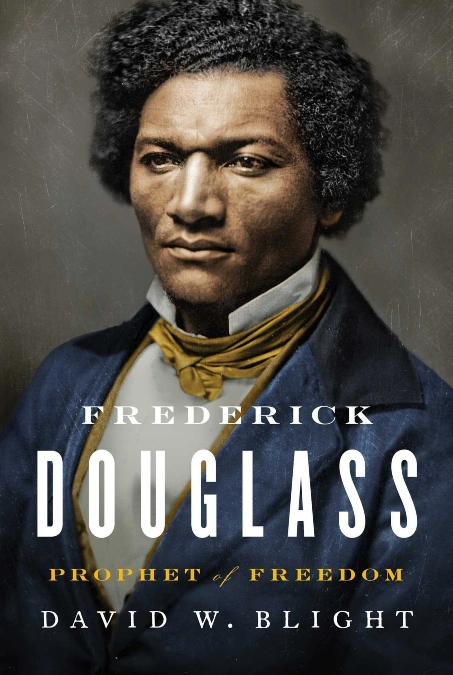
David W. Blight’s Frederick Douglass: Prophet of Freedom is the largest book on this list, but its size makes sense once you see how much life it has to cover.
Frederick Douglass was born into slavery in Maryland in 1818. He escaped in 1838 and became one of the most important abolitionist speakers, writers, and activists of the 19th century. The National Park Service also records his support for women’s suffrage and his later work in public life.
If the name Frederick Douglass is something you remember vaguely from school, this book fills in the enormous amount that tends to get left out.
Literacy Was Part of His Fight for Freedom
Douglass learned to read while enslaved, even though education threatened the system that kept enslaved people powerless. After escaping slavery, his command of language became one of his greatest political tools.
He eventually became a famous speaker, newspaper editor, writer, and critic of American slavery. His own life allowed him to challenge people who tried to defend slavery as harmless or humane.
The National Park Service notes that he published The North Star, supported abolitionist political causes, aided people escaping slavery through the Underground Railroad, and remained active in the fight for women’s rights.
This is why his story becomes much larger than a simple escape narrative. You watch a man build political influence in a country that had once legally treated him as property.
Blight Shows the Person Behind the Famous Name
One reason this biography stands out is the depth of its research. Yale University notes that Blight used information from a private collection that few previous historians had seen, along with newly discovered issues of Douglass’s newspapers.
That material lets the book spend time on Douglass as a public thinker and as a private person. You see his political arguments, family relationships, friendships, disagreements, marriages, ambitions, and contradictions.
That matters because famous historical figures can become flat when schoolbooks reduce them to one paragraph. A full biography puts the difficult parts back in.
Douglass changed his thinking over time. He argued with allies. He reconsidered political strategies. He lived through slavery, abolition, the Civil War, emancipation, Reconstruction, and the rise of Jim Crow.
Seeing those changes makes history feel less like a finished story and more like decisions being made by people who did not know what would happen next.
It Won the Pulitzer Prize for History
Blight’s biography received the 2019 Pulitzer Prize for History. The Pulitzer organization praised its deep research into Douglass’s writings, ideas, relationships, and influence.
Awards do not automatically make a book useful to every reader. In this case, however, the recognition points to the scale of the historical work behind the biography.
The paperback is more than 900 pages, so there is no reason to rush it. Treat it like several smaller books about one life.
Read a chapter or two, stop, and let the events settle. You will remember much more than if you try to race through 100 pages because your reading tracker told you to.
Who Should Read It?
Read this if you want to learn about slavery, abolition, the Civil War era, Reconstruction, race, women’s rights, political speech, or the meaning of American freedom.
It is also a strong choice if you normally prefer biographies over broad history books. Following one person’s life gives you a clear thread through decades of major events.
3. Read Unwell Women to See How Bad Medical Ideas Can Survive for Centuries

Elinor Cleghorn’s Unwell Women may be the most uncomfortable book of the three.
It is a history of how women, illness, pain, and medical treatment have been interpreted across centuries.
Penguin Random House describes the book as beginning with early medical beliefs about women’s bodies and moving through subjects including hysteria, hormones, menstruation, menopause, autoimmune disease, and endometriosis.
If you have ever wondered why discussions about women’s pain and medical treatment can become so heated, this book gives you a large part of the historical background.
Some of the Old Ideas Sound Absurd Now
Ancient Greek medical writing helped spread ideas about female illness that linked a wide range of symptoms to reproductive anatomy. Later periods developed their own explanations for women who experienced pain, distress, seizures, fatigue, or symptoms doctors could not easily explain.
“Hysteria” became one of the most famous examples. It was used over long periods in changing ways to classify symptoms associated with women.
Reading these chapters can be frustrating because you repeatedly see what happens when doctors begin with an assumption about a patient rather than the patient’s actual experience.
The details change over time, but the larger pattern is what Cleghorn wants you to notice.
The Book Also Shows Women Pushing Back
It would be easy for a history like this to turn women into passive victims. Cleghorn gives space to patients, campaigners, researchers, and doctors who challenged accepted medical ideas.
That part matters.
Medical knowledge does change. Patients speak up. Researchers find better evidence. Old explanations get discarded. New conditions receive names, and new treatments become possible.
The problem is that progress is rarely as clean as we want it to be.
Penguin Random House describes Cleghorn’s book as connecting early medical ideas with later debates over hormones, autoimmune disease, menstruation, menopause, and conditions such as endometriosis.
That long timeline helps you see how cultural beliefs can affect what questions researchers ask and whose reports doctors take seriously.
This One May Require Breaks
Of these three nonfiction history books, this may be the one you need to put down occasionally.
The subject includes illness, harmful medical treatment, dismissal of pain, reproductive health, and other difficult material. Reading hundreds of pages about those subjects can become emotionally tiring.
That is not a reason to avoid it. It is simply a reason to read it at a reasonable pace.
It also should not be used as personal medical guidance. It is a work of medical and cultural history. If you have a health concern, use qualified medical care rather than a history book to diagnose yourself.
Who Should Read It?
Choose Unwell Women if you are interested in women’s history, medicine, health care, gender, medical ethics, or the history of scientific ideas.
It is especially useful for readers who want history beyond wars and presidents. Hospitals, medical schools, research labs, and examination rooms have histories too.
And those histories can affect everyday life in surprisingly direct ways.
Which of These 3 History Books Should You Read First?
There is no correct order.
The better question is which subject will make you keep turning pages. A difficult 900 page book you desperately want to read is often easier to finish than a 250 page book you think you are supposed to read.
Here is the simplest way to choose.
| Book | Best For | Reading Difficulty | Main Payoff |
| Someone Is Out to Get Us | Politics, Cold War culture, conspiracy stories | Medium | Shows how fear and political stories influence public life |
| Frederick Douglass: Prophet of Freedom | Biography, slavery, abolition, civil rights | High | Makes a huge period of American history personal |
| Unwell Women | Medicine, women’s history, health care | Medium to High | Shows how cultural beliefs can shape medical treatment |
If political misinformation is constantly on your mind, start with Brown. You will recognize many of the emotional patterns even when the events took place decades ago.
If you want the richest historical biography here, choose Blight. It demands the biggest time commitment, but Douglass’s life touches so many parts of 19th century American history that one biography can lead you into several subjects.
If health care and women’s history interest you most, start with Cleghorn. Just give yourself permission to read it slowly.
How to Read Dense History Without Forgetting Everything

A common mistake is trying to read history the same way you read a thriller.
You race through 40 pages. Eleven political figures appear. Three government agencies are introduced. Someone mentions a law from 1947. By bedtime, you cannot remember who anyone is.
Slowing down usually fixes more than buying another productivity system.
Read 15 to 25 Pages at a Time
Dense nonfiction works well in small sections. Stop after one major event or argument instead of pushing until your attention disappears.
If the chapter is especially packed, five good pages still count. Your goal is learning, not winning a reading contest.
Write Down Names Only When They Matter
You do not need notes on every senator, doctor, general, editor, and family member.
Keep a small page near you. Write down a person only if they keep appearing or if their role seems important to the author’s argument.
This removes much of the mental clutter.
Use Outside Sources for the Big Questions
If Blight mentions an event you barely remember, the National Park Service and Library of Congress can provide useful background.
Museum collections can help too. Seeing photographs, documents, newspaper pages, letters, or maps can turn an abstract name into something concrete.
Do not look up every sentence. Check the events that seem essential.
Give Yourself a One Minute Chapter Test
When you finish a chapter, close the book and ask three questions:
- What happened?
- Why did it matter?
- What changed because of it?
You do not need an essay. Two or three sentences in your head are enough.
If you cannot answer those questions, reread the chapter summary or your marked pages before moving on.
Alternate Heavy Books With Something Easy
You are allowed to read two books at once.
A 900 page biography can sit beside a mystery novel. A disturbing medical history can share your nightstand with something funny.
That does not make you a less serious reader. It may make you much more likely to finish the serious book.


