

The GREATEST Books I’ve Ever Read (In My Entire Life)
You can spend days reading a famous book and reach the final page wondering why everyone loves it. That gets frustrating when your reading list keeps growing and your free time does not.
Ethan has read plenty of good books, but only a small group stayed in his mind long after he finished them. Some changed how he thought about life. Others made him think harder about loneliness, love, regret, friendship, community, and death.
These are the greatest books ever read by Ethan so far, ranked from number 1 to number 10. Some are calm and simple. Others require patience, but every title gave him something worth remembering.
1. Read Kokoro When You Want a Quiet Story That Goes Much Deeper Than Expected

Kokoro does not need battles, shocking twists, or a huge cast to hold attention. Its power comes from two people trying to connect while keeping important parts of themselves hidden.
Natsume Sōseki tells the story of a young student who meets an older man he calls Sensei. The student becomes fascinated by him and starts seeing Sensei as someone wiser and more experienced.
Their friendship is close, but it is never completely comfortable. The student can tell that Sensei is carrying something from his past that he does not want to explain.
That mystery gives the first half of the novel its tension. Nothing needs to explode because the reader is always wondering what Sensei is hiding.
The student keeps returning to him. Sensei shares pieces of his thinking, but he keeps emotional distance between them.
Then the structure changes.
A long letter allows the reader to finally hear Sensei explain his past in his own words. Suddenly, the distant older man becomes much easier to see as a person shaped by guilt, fear, loneliness, and painful choices.
That change made a huge difference for Ethan. Earlier scenes start feeling different once the reader knows what Sensei has been carrying.
The best part is that Sōseki never needs complicated language to create depth. The writing feels controlled and direct.
The story is also easy to follow. Yet it deals with friendship, loyalty, guilt, selfishness, loneliness, and the strange distance that can exist between two people who care about each other.
For Ethan, no section felt like something he had to push through. He liked the opening, the middle, and the ending.
That consistency is why Kokoro currently sits at number one.
2. Read The Master and Margarita When Normal Fiction Starts Feeling Too Safe

A mysterious stranger arrives in Moscow. That stranger happens to be the Devil.
Things get much stranger from there.
Mikhail Bulgakov fills The Master and Margarita with satire, romance, fantasy, dark humor, strange disappearances, supernatural events, and a giant black cat. There is also another story involving Pontius Pilate.
On paper, those pieces should feel disconnected. Somehow, they work together.
Ethan was not completely sold during the first few chapters. The book felt strange enough that he was unsure where it was going.
Then everything started clicking.
The comedy became sharper. The romance became more important. The strange events began feeling less random.
The Master is a writer whose life has been damaged by what happened to his work. Margarita becomes willing to enter increasingly bizarre situations because of her love for him.
Around them, Bulgakov keeps making fun of greed, fear, status, bureaucracy, and people who care too much about protecting their position.
The novel can be funny in one chapter and dark in the next. Then it can suddenly become romantic.
That mix is part of why Ethan loved it.
It also feels very different from what some readers expect when they hear the words Russian classic. This is not a quiet drawing room novel filled only with serious conversations.
People fly through the night. Strange performances take place. Reality keeps bending.
Readers who want something unusual may find this one of the most memorable books on the entire list.
3. Read Anna Karenina When You Want Characters Who Feel Almost Too Real

Anna Karenina is long. It also asks for more patience than most books on this list.
The reward is a group of characters who often feel more like real people than fictional creations.
The central story follows Anna, her marriage, and her relationship with Count Vronsky. Desire pulls her one way while family, reputation, motherhood, and social pressure pull her in another.
That creates plenty of drama. Yet the book is much more than a story about an affair.
Tolstoy also follows Levin, one of Ethan’s favorite characters in the novel. Levin thinks deeply about marriage, work, faith, family, purpose, and what makes life worth living.
His story gives the novel another emotional center.
Ethan did not always like Anna. That actually made her more interesting.
She can be sympathetic in one scene and frustrating in another. She can be loving, selfish, wounded, impulsive, and deeply unhappy.
Real people are often like that.
The book also contains long sections about farming and rural life. Some readers enjoy them, while others may find them slow.
Ethan found several of those passages difficult. Still, pushing through them was worth it because the emotional sections are so strong.
There are also many characters. Russian naming customs can make things harder because one person may be called by different forms of a name.
Keeping a character list nearby can help.
The novel takes work, but it gives a lot back. Love, jealousy, marriage, social pressure, faith, and loneliness all receive serious attention.
That is why Anna Karenina holds the number three spot.
4. Read Stoner When You Think an Ordinary Life Cannot Make a Great Novel

Explain the plot of Stoner in a few sentences and it sounds almost boring.
William Stoner grows up on a farm. He goes to college, discovers literature, becomes a professor, gets married, has a daughter, works for decades, suffers disappointments, and grows old.
That is basically the story.
Yet John Williams turns those ordinary events into something surprisingly moving.
Stoner does not have a glamorous life. He does not become famous or powerful.
His marriage becomes deeply unhappy. His professional life brings conflict. His personal choices create pain.
Still, he continues.
Ethan found Stoner’s patience both impressive and frustrating. There are scenes where a reader may desperately want him to fight harder or finally tell someone exactly what he thinks.
He often chooses restraint instead.
That raises an important question. When is patience a strength, and when does it become passive acceptance?
The marriage in the novel is especially memorable. Two people can live in the same house while feeling completely disconnected from each other.
That loneliness runs through much of Stoner’s life.
Yet the novel never says his life was worthless.
His love of literature matters. His work matters. Small moments of connection matter.
That may be the strongest lesson in the book.
A life does not need fame, wealth, or some dramatic public achievement to contain meaning.
5. Read Siddhartha When You Feel Lost About What Comes Next

Sometimes another person’s advice is not enough. People can tell you what worked for them, but their answer may still feel wrong for your life.
Siddhartha explores that problem.
Hermann Hesse follows a man searching for wisdom and meaning. Siddhartha meets teachers and tries very different ways of living.
He does not simply accept what someone tells him.
He tests ideas through experience.
At one point, he lives with strict discipline and rejects comfort. Later, he experiences money, desire, pleasure, love, disappointment, and failure.
Each stage teaches him something.
The key idea is simple. Wisdom cannot always be handed from one person to another.
Sometimes a person has to make mistakes before a lesson becomes real.
That message landed strongly for Ethan because he read Siddhartha during a period when he felt uncertain about his own direction.
The book did not give him a perfect answer. It made uncertainty feel more normal.
That can be more helpful.
The river scenes later in the book are especially calm. The pace slows, and Siddhartha begins looking at life in a different way.
Readers interested in books about purpose, meaning, and personal growth may find this one especially easy to connect with.
It is also much more accessible than some classics on this list.
6. Read The Death of Ivan Ilyich Before You Spend Years on the Wrong Things

Few short books make death feel as close as The Death of Ivan Ilyich.
Leo Tolstoy begins with Ivan already dead. The people around him hear the news and quickly start thinking about their own careers, routines, and problems.
Life keeps moving.
Then Tolstoy takes the reader back into Ivan’s life.
Ivan has followed a respectable path. He built a career, formed a family, cared about appearances, and tried to live the kind of life society considered proper.
Then he becomes sick.
Suddenly, success becomes less important than one frightening question.
Did he actually live well?
Ivan starts looking back at his choices. The closer death gets, the harder it becomes for him to avoid the possibility that much of his life was built around things that did not really matter.
Ethan found the book frightening for that reason.
Death itself is scary. Yet the possibility of reaching death and realizing that life was spent on the wrong priorities may be even worse.
That makes the book strangely motivating.
It reminds the reader that time is limited. More important, it asks what that limited time is actually being spent on.
The book is also short enough to read quickly.
That makes its emotional force even more impressive.
Some giant novels need hundreds of pages to make their point. Tolstoy manages to leave a lasting mark with a much smaller story.
7. Read One Hundred Years of Solitude When You Want a Book That Feels Like an Entire Universe
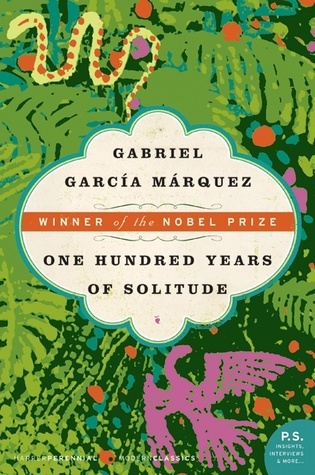
One Hundred Years of Solitude is difficult to explain because so much happens.
Gabriel García Márquez follows generations of the Buendía family in the fictional town of Macondo. Families grow, relationships change, wars begin, people disappear, strange visitors arrive, and unbelievable events become part of normal life.
The book constantly mixes ordinary life with the impossible.
That is one reason it feels so unusual.
A famous part of the story involves an insomnia plague. People stop sleeping and eventually begin losing their memories.
They start labeling objects so they will remember what everything is.
That section is strange and funny at first. Then it becomes something much more serious about memory and identity.
The book contains many moments like that.
Readers should know that it can also become confusing.
Many family members share similar names. Generations pass, and keeping track of everyone takes effort.
A family tree can make reading much easier.
| Common Problem | Simple Fix |
|---|---|
| Similar character names | Keep a family tree nearby |
| Losing track of generations | Write down new family members |
| Dense chapters | Read shorter sections |
| Strange events feel confusing | Accept the event before trying to explain it |
| Reading starts feeling tiring | Take breaks between chapters |
This is probably not the best book to choose during a reading slump.
It asks for concentration.
Still, the reward is huge.
The novel covers family, politics, war, memory, desire, ambition, loss, and loneliness. Even with all the strange events, loneliness remains one of the strongest forces in the story.
That makes the title matter more as the generations pass.
8. Read Heaven When You Want an Emotional Book That Does Not Look Away

Heaven is easy to read at the sentence level. Emotionally, it is much harder.
Mieko Kawakami follows a fourteen year old boy who is repeatedly bullied because of his lazy eye.
The bullying is severe.
He is mocked, humiliated, and physically hurt. The treatment is so constant that the reader begins feeling tense before anything even happens.
Then he forms a connection with Kojima, another student who is also being bullied.
Their friendship offers some comfort, but this is not a simple story where two outsiders suddenly defeat everyone hurting them.
Kawakami makes the situation much more painful and realistic.
The characters struggle with what the bullying means. They also struggle with how they should respond to it.
One of the strongest parts of the book is its direct writing.
Kawakami does not need large emotional speeches every few pages. The clean style lets difficult events hit without much warning.
That made Ethan feel uncomfortable throughout much of the novel.
Readers should know that this book deals heavily with bullying and violence involving children.
It will not be the right choice for everyone.
Still, its emotional effect is exactly why Ethan placed it in his top ten.
It forces the reader to look at how cruelty becomes normal when people around it stop treating it as serious.
9. Read The Serviceberry When You Are Tired of Treating Life Like a Competition

The Serviceberry is the biggest outlier on this list.
It is a short nonfiction book rather than a novel. Robin Wall Kimmerer uses nature, Indigenous knowledge, and the serviceberry plant to think about community, generosity, exchange, and gratitude.
The book asks readers to reconsider how value works.
Modern life often teaches people to think in transactions. Someone gives something, someone pays, and the relationship ends.
Kimmerer asks what happens when giving creates connection instead.
She writes about reciprocity and the gift economy. Shared resources and community generosity become examples of a different way to think about wealth.
That idea stayed with Ethan.
The book is especially useful for readers tired of constant pressure to earn more, own more, and measure success through money alone.
It does not provide a complete economic system. Readers looking for detailed policy arguments will need something else.
Its goal is more personal.
It asks whether a richer life could sometimes come from stronger relationships rather than more possessions.
The book is also short and includes illustrations, which makes it easy to finish without a large time commitment.
Ethan found himself thinking about its ideas long after reading it.
That lasting effect earned it the number nine spot.
10. Read The Gate When You Want a Book Where Almost Nothing Happens

Many modern books work hard to grab attention.
The Gate does the opposite.
Natsume Sōseki follows Sōsuke and Oyone, a married couple living a quiet and socially isolated life.
Their days are shaped by money problems, old guilt, family tension, and the consequences of choices made years earlier.
There are no constant surprises.
That is exactly what Ethan liked.
The novel gives ordinary life enough space to become interesting. Small worries matter because they matter deeply to the people experiencing them.
A conversation can carry more weight than a dramatic scene.
Eventually, Sōsuke seeks help at a Zen monastery. He hopes meditation might give him relief from the emotional weight he carries.
The book does not turn that into a simple answer.
That restraint fits everything else about the story.
Ethan also loved the writing style. Sōseki keeps things simple, calm, and direct.
There is depth, but the book does not constantly stop to explain that depth to the reader.
That can make the novel feel unusually natural.
Still, this is the slowest recommendation on the list.
Readers who need a strong plot may struggle.
But someone who enjoys quiet Japanese fiction, marriage stories, loneliness, regret, and subtle character studies may find The Gate deeply satisfying.
Which of These Greatest Books Should You Read First?
The number one book is not automatically the best place for every reader to begin.
Your mood matters.
A difficult book at the wrong time can feel much worse than a supposedly lower ranked book that fits exactly what you need.
| If You Want | Start With | Why |
|---|---|---|
| A quiet emotional novel | Kokoro | Simple story with deep emotional weight |
| Something strange and funny | The Master and Margarita | Fantasy, satire, romance, and chaos mix together |
| A major classic | Anna Karenina | Deep characters and powerful relationship drama |
| An ordinary life story | Stoner | Small events become surprisingly moving |
| A calming book about meaning | Siddhartha | Easy to follow and reflective |
| A short book with a huge question | The Death of Ivan Ilyich | It confronts mortality quickly |
| A large magical family story | One Hundred Years of Solitude | Generations of history fill one novel |
| A painful emotional read | Heaven | It looks directly at bullying and suffering |
| A short nonfiction read | The Serviceberry | Community and generosity are central |
| An extremely quiet novel | The Gate | Daily life and inner conflict carry the story |
You can also choose based on how much effort you want to give the book.
| Reading Mood | Good Choices |
|---|---|
| Want something short | The Serviceberry, The Death of Ivan Ilyich |
| Want something easy to follow | Kokoro, Siddhartha, Stoner |
| Ready for something emotional | Heaven, The Death of Ivan Ilyich |
| Ready for a long commitment | Anna Karenina, One Hundred Years of Solitude |
| Want something strange | The Master and Margarita, One Hundred Years of Solitude |
| Want something calm | Kokoro, The Gate, Siddhartha |
Ethan would not recommend forcing yourself through Anna Karenina or One Hundred Years of Solitude during a bad reading slump. Both reward patience, but both ask for real attention.
Kokoro, Siddhartha, and The Death of Ivan Ilyich are easier starting points. They still offer plenty to think about without demanding such a large time commitment.