Scientists Studied Doomscrolling (Here’s what they found)
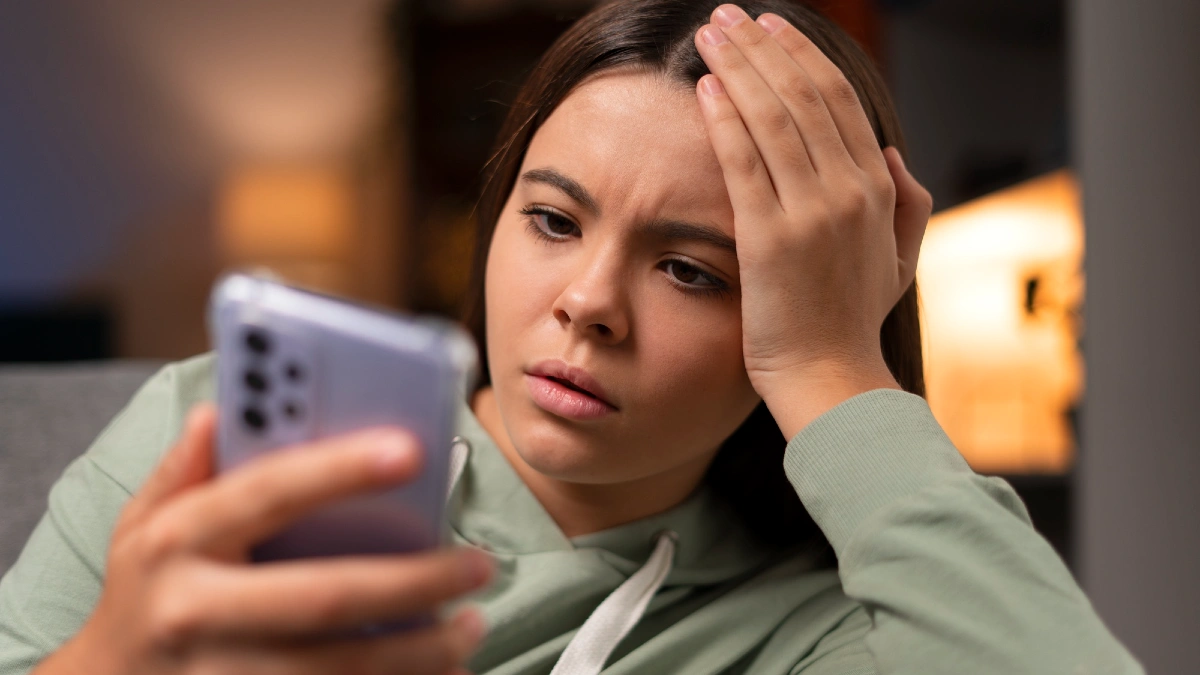
You sit down with a book and make it through two pages. Then your hand reaches for your phone, you check one notification, and somehow you are still scrolling 25 minutes later. When you finally return to the book, the page feels slower than it did before.
That experience can make you wonder whether something has changed in your brain. Maybe TikTok, Instagram Reels, YouTube Shorts, Reddit, or nonstop news feeds have weakened your attention span.
Scientists are starting to study that fear, but the answer is more careful than many headlines make it sound.
Some experiments suggest that rapid short form video scrolling can temporarily affect memory and attention related skills, while research on doomscrolling repeatedly finds links with anxiety, stress, and lower well being.
Doomscrolling and Short Form Scrolling Are Not the Same Thing

People often use the word doomscrolling for any long session on a phone, but researchers usually mean something more specific. Doomscrolling generally refers to repeated and difficult to stop consumption of negative, threatening, or upsetting information.
That might include war coverage, political conflict, crime, disease outbreaks, natural disasters, financial fears, or disturbing social media posts. You may feel worse as you continue, yet still feel pulled to check one more update because your brain wants to know what happens next.
Short form video scrolling is broader. A TikTok or Reels feed might contain pets, recipes, comedy, travel, fitness tips, celebrity clips, news, fashion, or anything else the algorithm thinks will keep you watching.
This matters because scientists are really studying two related but different questions. One asks what repeated exposure to negative information does to your mental health, while the other asks what rapid switching between small pieces of content may do to attention and memory.
A 2026 review of doomscrolling research described the behavior as compulsive consumption of negative online information and noted that infinite feeds and recommendation systems can help sustain it. The authors also warned that much of the current evidence is observational rather than experimental.
That distinction is important because the phrase “brain rot” often mixes all these behaviors together. The research does not support treating every minute of social media use as the same thing.
Scientists Found a Short Term Effect on Memory

One of the more interesting experiments appeared at the ACM CHI conference in 2023. Researchers Francesco Chiossi and colleagues recruited 60 participants and tested a skill called prospective memory.
Prospective memory is simply your ability to remember something you planned to do later. It is the skill you use when you need to send an email after lunch, take food out of the oven, bring a document to a meeting, or remember to call someone at a certain time.
The researchers interrupted participants with different forms of media. Some used TikTok, some used Twitter, some watched YouTube, and another group had no media interruption.
The TikTok group later performed worse on the prospective memory task than the other groups. The researchers suggested that short videos combined with rapid changes in context may have played a role.
That finding is worth paying attention to, but it should not be stretched too far. The study does not show that ten minutes of TikTok damages your memory or that people who use short video apps are permanently less capable.
It shows that after one specific kind of media interruption, participants had more trouble remembering an intention during the experiment. That is a short term performance effect, not proof of lasting cognitive decline.
The study was also small, so researchers needed more evidence before drawing broad conclusions. Later experiments began testing whether the content itself was the problem or whether the constant switching might matter even more.
A 2025 Study Suggests Rapid Switching May Matter More Than Video Length

Researchers Nicholas Barton and Michael Smyth at the University of Bristol published another experiment in the journal Memory in 2025. Their goal was to look more closely at the role of switching.
The study included 45 participants who were placed into different conditions. One group could switch freely through short videos, another had limited switching, and a control group did not receive the same short video interruption.
Afterward, the researchers tested prospective memory again. Participants who were allowed unlimited switching showed worse prospective memory after the interruption, while the limited switching group did not show the same decline.
That result raises an interesting possibility. The problem may not simply be that short videos are short, because the act of repeatedly choosing whether to stay or swipe may itself affect how your attention is being used.
You watch for a few seconds, decide whether something is interesting, then replace it instantly if it is not. That cycle repeats again and again, often dozens of times within a few minutes.
A book cannot compete in the same way. If one paragraph feels boring, the next paragraph does not suddenly turn into a funny animal clip, breaking news story, recipe, celebrity argument, or dramatic video selected around your past behavior.
That constant access to something more interesting may help explain why slower activities can feel unusually dull after a long scrolling session. It still does not prove permanent damage, but it does give researchers a clearer idea of what might be happening in the moment.
Another Experiment Found a Change in How People Prepared Their Attention

A 2025 study published in Behavioral Sciences looked at another part of cognitive control. Researchers randomly assigned 72 participants to one of three groups and then measured how well they prepared for a mental task.
One group watched 30 minutes of TikTok style short videos. Another watched a neutral documentary, while the third group had no video exposure.
Participants then completed a task that tested how well they could prepare to switch between different mental rules. People in the documentary and control groups benefited when they were given more time to prepare, but the short video group did not show the same benefit.
The researchers described this as a possible reduction in proactive cognitive control. In plain English, the people who had just watched the short video feed seemed less able to use extra preparation time to get ready for the next task.
That finding adds to the idea that rapid short form media can affect certain thinking skills immediately afterward. It does not show that the brain has been permanently changed or that someone who watches short videos has lost the ability to concentrate.
The timing matters because most of these experiments measure people shortly after exposure. Researchers still do not have strong evidence showing how long these effects last once someone puts the phone down.
| Study | What Researchers Tested | What They Found | What It Does Not Prove |
|---|---|---|---|
| 2023 CHI study, 60 participants | Prospective memory after TikTok, Twitter, YouTube, or no media interruption | The TikTok group performed worse on the prospective memory task | It does not prove permanent memory damage |
| 2025 University of Bristol study, 45 participants | Short videos with unlimited switching versus limited switching | Unlimited switching was followed by worse prospective memory | It does not prove all short videos harm attention |
| 2025 Behavioral Sciences study, 72 participants | Cognitive control after 30 minutes of short videos, a documentary, or no video | The short video group showed less benefit from extra preparation time | It does not show that attention loss lasts long term |
| 2026 doomscrolling review, 17 studies | Links between doomscrolling and mental health | Heavier doomscrolling was often linked with anxiety, stress, depression, and lower resilience | Most studies cannot prove that doomscrolling directly caused those problems |
Doomscrolling Has a Clearer Link With Stress and Anxiety

When scientists study actual doomscrolling, the pattern looks somewhat different. The strongest findings so far involve mental health rather than permanent loss of attention.
A 2026 scoping review in Mental Health and Digital Technologies examined 17 empirical studies on doomscrolling. Across those studies, heavier doomscrolling was repeatedly associated with anxiety, depression, stress, emotional exhaustion, and lower resilience.
A separate 2026 review located 50 empirical studies and found a similar overall pattern. Doomscrolling was often linked with anxiety, distress, distraction, lower well being, and other negative outcomes.
Those findings sound alarming, but there is an important limitation. Much of the research is cross sectional, which means researchers often measure scrolling habits and mental health at the same point in time.
If people who doomscroll more also report higher anxiety, that tells us there is a relationship. It does not automatically tell us which one caused the other.
Scrolling through frightening information may make someone more anxious, but an anxious person may also feel a stronger need to keep checking for threats. Both things may reinforce each other over time.
The 2026 review specifically noted that stronger experimental and long term studies are still needed. For now, the safest conclusion is that doomscrolling and poorer mental well being often appear together, but the exact direction of cause is still being studied.
Negative Scrolling May Make Everyday Life Feel Darker

One 2024 study looked at how doomscrolling related to existential anxiety. Researchers studied university students in both Iran and the United States.
The Iranian sample included 620 participants, while the American sample included 180. People who reported more doomscrolling also reported greater anxiety linked with meaning, uncertainty, life, and the future.
That connection is easy to picture in everyday life. If your phone repeatedly serves you war, crime, political anger, disaster, disease, corruption, and frightening predictions, your mental picture of the outside world may start feeling darker than your direct experience.
Your feed is not a random sample of reality. It is a stream selected partly around what gets attention, and highly emotional material often does a very good job of making people stop and look.
Still, this study cannot prove that doomscrolling created the anxiety. The researchers used university student samples, and the study was observational rather than experimental.
That means the responsible takeaway is fairly simple. Repeated negative scrolling is linked with more distress, but scientists are still working out how much of that distress is caused by the scrolling itself and how much begins before someone opens the app.
Scientists Have Not Shown That Your Attention Span Is Permanently Broken
This may be the most useful part of the research if you are worried that your brain has been ruined. Scientists do not currently have strong evidence showing that scrolling permanently destroys your attention span.
Most experimental studies measure what happens shortly after people use a certain kind of media. They can show that someone performed worse on a memory or attention task after scrolling, but that is very different from proving permanent decline.
These studies cannot yet tell us with confidence what happens after five or ten years of heavy short form video use. They also cannot tell us whether the effect lasts for ten minutes, several hours, several days, or disappears once the distraction is removed.
There is another explanation for why reading may feel harder now. Your environment has become much better at interrupting you.
Think about what happens when you sit with a book and a phone at the same time. The book may take several pages before it gives you a payoff, while your phone can give you something new within one second.
The book stays quiet, but your phone lights up. The book cannot tell you whether a friend replied, whether breaking news happened, or whether a new video perfectly matches your interests.
That competition matters. Difficulty concentrating in that setting does not automatically mean the ability to concentrate has disappeared.
Books and Movies May Feel Slower Because Scrolling Removes Boredom So Fast
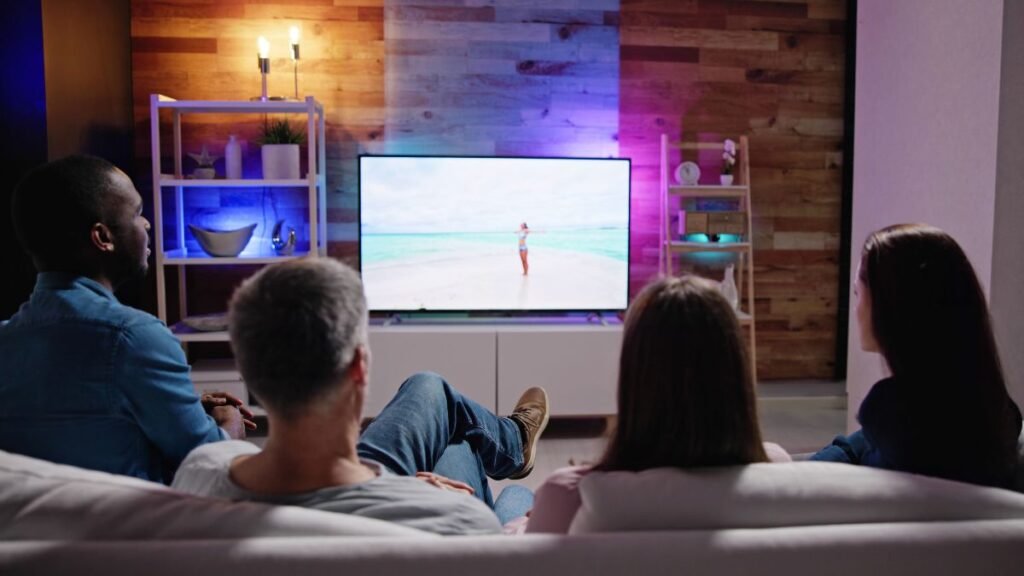
Short form feeds give you an unusual amount of control over boredom. The moment something becomes dull, confusing, predictable, or slow, you can replace it instantly.
If a video takes too long to make a point, you swipe. If you already understand the joke, you swipe again, and if the next clip does not grab you within seconds, you can move on without any cost.
Books work very differently. So do movies, conversations, exercise, studying, cooking, and most forms of serious work.
All of those activities contain quiet stretches where the reward comes later. You have to stay with the activity long enough for interest to build.
That may be one reason people report that books feel harder after years of heavy phone use. It may not mean the brain has lost its ability to focus, but it may mean you have become more used to having an escape from boredom available at every moment.
That is useful because habits can be tested and changed. You do not have to assume something permanent happened just because your current routine makes concentration harder.
Try This Before Deciding Your Attention Span Is Gone
Pick one activity you believe has become harder because of your phone. It might be reading, watching a full movie, studying, writing, drawing, or simply sitting through a meal without checking a screen.
For several days, make your phone physically inconvenient to reach during that activity. Put it across the room or in another room rather than placing it face down beside you.
Give the activity at least 30 minutes before deciding whether your attention is gone. The first few minutes may feel restless because you are used to having the option to check something whenever boredom appears.
Then watch what happens. If focusing becomes easier once the phone is harder to reach, that suggests the ability may still be there even if your normal environment makes it difficult to use.
You may still struggle, and that matters too. Sleep, stress, anxiety, depression, work overload, and many other factors can affect concentration, so social media should not automatically be blamed for every attention problem.


