


Your Glass Stovetop Isn’t Scratched — It’s Just Dirty. Here’s The Fix
You cleaned the stove. Then the afternoon light hit the black glass and there they were again. Pale circles, silvery streaks, cloudy patches, and thin marks that look suspiciously like scratches.
Before you assume your cooktop is ruined, give it a closer look. Some marks that look like scratches are actually layers sitting on top of the glass. Cooked grease, food residue, minerals from water, and leftover cleaner can all change the way a dark cooktop reflects light.
That does not mean every scratch is dirt. Real surface damage happens too. The trick is knowing when to keep cleaning and when to stop.
If you want to know how to clean a glass stovetop without turning a minor stain into permanent damage, start gently. The steps below move from the safest cleaning method to stronger options for stubborn residue.
1. Check Whether Those “Scratches” Are Actually Dirt
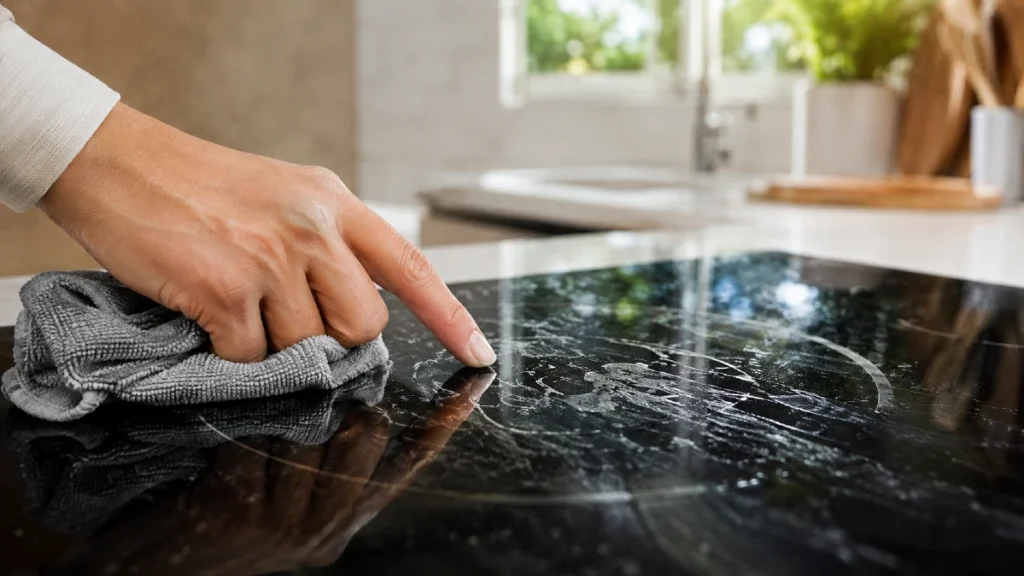
Before reaching for another cleaner, figure out what you are looking at.
Wait until the surface is safe to touch. Then look at the mark from different directions. Turn on the light above the stove and also look across the surface from a low angle.
Residue often changes appearance as the light moves. You may see cloudy halos around the burners, pale dots from water, brown patches from cooked food, or gray streaks where a pot sat.
Run a clean fingertip lightly across the cooled surface. If you can feel a slight bump or rough patch, material may be sitting on top of the glass.
Do not use your fingernail to scrape it aggressively. You are simply checking the surface.
Here is a useful first test:
| What You See | What It May Be | What to Try First |
|---|---|---|
| White dots or cloudy spots | Mineral residue or dried water | Mild cleaning and full drying |
| Greasy rainbow film | Cooking oil or cleaner residue | Dish soap and soft cloth |
| Dark ring around burner | Cooked food or grease | Cooktop cleaner |
| Raised hard spot | Burned residue | Approved cleaner and cooktop scraper |
| Fine line that stays after cleaning | Possible scratch | Stop aggressive cleaning |
| Deep groove or damaged glass | Possible physical damage | Check manufacturer guidance |
Southern Living warns against simply attacking marks with abrasive cleaners or rough pads because those tools can scratch glass cooktops.
The first goal is simple. Remove everything that could be sitting on the surface before deciding the glass itself is damaged.
2. Start With the Safest 10 Minute Clean

You do not need to begin with the strongest cleaner in the cabinet.
For ordinary grease, splatter, fingerprints, and light food residue, start with the gentlest method that can do the job.
First, turn off every cooking zone. Allow the cooktop to reach the condition recommended for routine cleaning in your appliance manual.
Then remove crumbs and loose food. You do not want to rub hard particles across the glass while wiping.
Mix a small amount of dish soap with warm water. Dampen a soft microfiber or cotton cloth and wipe the surface.
Pay extra attention to the circles around burners. Grease can build into a thin layer there because heat repeatedly cooks tiny splatters onto the surface.
Next, wipe again with a separate damp cloth so soap does not remain behind.
Finally, dry the cooktop completely.
That last step matters more than it sounds. Southern Living notes that water can leave mineral deposits on glass cooktops and recommends drying the surface after cleaning.
Look at the cooktop again after it is dry.
You may discover that many of those scary looking marks have disappeared. If they have not, you have at least removed the loose dirt and grease. Now you can see what actually needs stronger treatment.
Do not judge the glass while it is wet. Water and cleaner can hide some marks while making others look worse.
3. Remove the Cloudy Film That Makes Glass Look Damaged

One of the most frustrating cooktop problems is a dull haze.
The stove is technically clean, yet the black surface no longer looks deep and glossy. Instead, it looks gray around the cooking zones.
Several things can create that appearance.
Cooking oil can leave a very thin film. Hard water can leave mineral residue. Cleaner that was not fully removed can also dry into visible streaks.
Start by washing off grease with the basic dish soap method above.
If the haze remains, move to a cleaner specifically made for ceramic glass cooktops and approved by your appliance maker.
GE Appliances lists Cerama Bryte Ceramic Cooktop Cleaner among its ceramic cooktop cleaning products. Whirlpool instructions also refer to dedicated ceramic glass cooktop cleaner.
Use a small amount rather than covering the cooktop in a thick layer.
Work it over the problem area with the pad or cloth recommended by the product and your appliance manufacturer. Give the cleaner time to loosen the residue instead of adding more pressure.
Then remove the product and polish with a clean soft cloth.
A quick way to diagnose cloudy glass
Clean one small test area first.
If that spot becomes noticeably darker and clearer than the area around it, you are probably dealing with surface buildup rather than a change deep inside the glass.
That is good news because you can continue working across the cooktop in small sections.
If repeated proper cleaning makes no difference at all, stop. More force is not automatically better.
4. Fix Burned Rings Without Scrubbing the Glass Raw
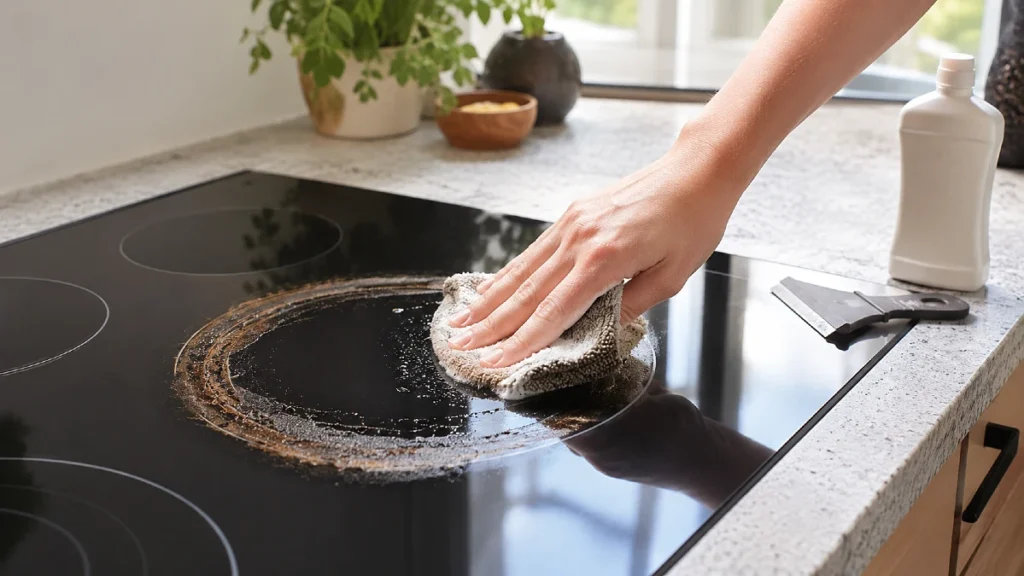
The dark ring that seems welded around your burner usually needs more work than fresh grease.
This is where many people make the problem worse.
They scrub harder. Then they reach for a rough kitchen pad. When that fails, they grab something even more abrasive.
A better approach is to soften the deposit before trying to remove it.
Whirlpool recommends a paste made from baking soda and water as one option for burned spills on glass electric stovetops, followed by careful use of a cooktop scraper. Maytag gives similar guidance for burned food on ceramic glass.
For a cooktop where that method is approved:
- Remove loose dirt first.
- Apply the approved cleaner or paste to the burned area.
- Give it time to work according to the product or appliance instructions.
- Wipe away whatever has loosened.
- Treat the remaining hard deposit with the approved scraper method if needed.
- Clean the area again.
- Dry it completely.
- Check the result before repeating.
The key is patience.
Three gentle cleaning passes are safer than one desperate attack with a rough scrubber.
Also remember that different stains may sit on top of one another. A burner ring might include grease, food, minerals, and cleaning product residue.
Removing one layer can reveal another underneath.
Which method fits the mark?
| Problem | Best Starting Method | What to Avoid |
| Fresh grease | Dish soap and soft cloth | Rough scrubbing |
| Light cloudy film | Approved cooktop cleaner | Steel wool |
| Hard water spots | Manufacturer approved mineral cleaning method | Random acids or chemicals |
| Cooked food | Cooktop cleaner or approved paste | Metal scouring pad |
| Raised burned deposit | Approved scraper method | Kitchen knife |
| Mark that never changes | Inspect for damage | Increasing pressure again and again |
If your manual gives different instructions, follow the manual.
5. Use a Cooktop Scraper Without Creating Real Scratches

A scraper sounds like the last thing you would want near shiny glass.
But manufacturers do recommend purpose made ceramic cooktop scrapers for certain stubborn deposits.
The important words are purpose made.
GE sells a Cerama Bryte scraper designed for burned splatters on glass ceramic surfaces. GE also warns against using a dull or nicked blade.
Whirlpool Product Help describes holding an approved cooktop scraper at about a 45 degree angle against ceramic glass when removing stubborn residue.
Do not translate that into permission to grab any razor blade and start scraping.
Before using one:
- Read your cooktop manual.
- Use a scraper approved for ceramic glass.
- Make sure the blade is clean and undamaged.
- Follow the maker’s instructions about surface temperature.
- Keep the scraper at the recommended low angle.
- Work on the deposit rather than repeatedly scraping clean glass.
- Stop if you are unsure what the mark is.
Temperature instructions deserve special attention.
Some manufacturer procedures describe scraping certain spills while the surface is still warm, while routine cleaning normally happens after cooling. GE also has special instructions for removing particular hot spills.
That is why your own manual beats a generic internet trick.
6. Stop Using These Cleaners and Tools on Glass

If a mark refuses to move, the temptation is to bring out something stronger.
That is exactly when you should become more careful.
Southern Living recommends avoiding abrasive cleaners and rough materials such as steel wool on glass stovetops. The publication also stresses gentle cleaning and the use of soft cloths.
Avoid treating your stove like a metal grill.
Be especially cautious with:
- Steel wool
- Rough scouring pads
- Dirty sponges containing trapped grit
- Knives
- Random razor blades
- Harsh abrasive powders
- Excessive water
- Cleaners your appliance maker does not approve
A product being safe for sinks, ovens, counters, or shower doors does not automatically mean it belongs on your cooktop.
That includes ordinary glass cleaners.
Your cooktop is a cooking appliance with a specialized surface. Check the manual before experimenting with cleaners containing strong chemicals.
The goal is to dissolve or lift the residue, not grind it away.
If you have to scrub with enough force to make your arm hurt, stop and reconsider the method.
7. Know When the Mark Really Is a Scratch

Cleaning fixes dirt. It does not erase every form of physical damage.
Once you have removed grease, mineral residue, cleaner film, and burned deposits, inspect the glass again.
A real scratch may remain visible from several angles even when the surface around it is spotless. You may also be able to see a clear line cut into the finish rather than material sitting above it.
At that point, stop trying stronger cleaning methods.
Southern Living recommends professional assessment when a glass cooktop has deep scratches or persistent cloudiness that cleaning does not solve.
There is an important difference between cosmetic wear and serious damage.
A faint surface mark may simply be annoying. A crack, chip, or major damaged area can be a safety concern and should be handled according to your appliance manufacturer’s instructions.
You should also stop using cleaning experiments as a diagnostic tool.
If five different cleaners have done nothing, a sixth random product from social media probably is not the answer.
Check the manual or contact the manufacturer.
8. Keep New Rings From Building Up Again

The easiest stain to remove is the one that never gets baked onto the surface twenty times.
Southern Living recommends a soft cloth wipe after use once the surface is safe to clean. Regular maintenance helps stop layers of residue from building up.
You can make that routine very simple.
After cooking, deal with visible splashes according to your cooktop’s care instructions. Once routine cleaning is safe, wipe away oil, sauce, and crumbs rather than leaving them until the next meal.
Keep the bottoms of your pans clean too. Dirty cookware can transfer residue back onto a freshly cleaned cooktop.
And lift cookware when moving it.
Southern Living specifically recommends picking up heavy pots rather than sliding them across the glass as a way to reduce the chance of scratching.
A practical routine looks like this:
- After cooking: Remove spills when your manufacturer says it is safe.
- After the surface is ready for cleaning: Wipe away grease and crumbs.
- After washing: Remove all cleaner residue.
- Before finishing: Dry the surface completely.
- When buildup appears: Use the approved cooktop cleaner before it becomes heavily burned on.
This takes less work than rescuing a cooktop covered with months of cooked residue.
Your Glass Stovetop May Need Cleaning, Not Replacing

Those pale rings and gray streaks can look terrible under kitchen lights. But appearance alone does not tell you that the glass is permanently scratched.
Start with the least aggressive method. Remove grease and loose residue, dry the glass, then treat stubborn deposits with a cleaner made for your cooktop. Use a scraper only when your appliance instructions allow it.
Most important, know when to stop. Cleaning can remove material sitting on the glass, but it cannot repair serious physical damage.


