

Stop Buying Laundry Detergent — This Cheap $6 Recipe (Lasts a Year)
That big bottle beside your washing machine can feel like one more household product you keep buying forever. You finish it, replace it, haul another bottle home, and repeat the process while grocery prices keep climbing.
That is why the homemade laundry detergent recipe built around washing soda, borax, and grated soap keeps getting attention. The ingredients are simple, one batch can make several gallons, and you can skip added fragrance if that is what you prefer.
But there is an important catch. This mixture is technically closer to homemade laundry soap than modern detergent, and the viral “$6 lasts a year” promise will not be true for every home. A large family may use it much faster, local ingredient prices differ, and hard water can change the results dramatically.
What Is Actually Inside Homemade Laundry Detergent?

The basic recipe uses three familiar laundry aisle ingredients. Each one has a different purpose, which is why simply grating a bar of soap into water is not quite enough.
Washing soda is sodium carbonate. ARM & HAMMER explains that it is alkaline and raises the pH of water, which improves its ability to tackle dirt and grime. It is much more alkaline than baking soda, so the two should not be treated as interchangeable ingredients.
Borax is a sodium borate product commonly used as a laundry aid and household cleaner. The third ingredient is bar soap, which provides the soap that helps loosen oily soil so water can carry it away.
| Ingredient | What It Does | Important Detail |
|---|---|---|
| Washing soda | Raises alkalinity and helps loosen grime | It is not the same as baking soda |
| Borax | Works as a laundry booster | Keep it away from children and pets |
| Bar soap | Helps lift oils and everyday soil | Soap behaves differently from modern detergent |
| Water | Dilutes the mixture into a usable liquid or gel | Water hardness affects performance |
There is also a difference between soap and detergent that matters here. Utah State University Extension explains that traditional soap can react with minerals in hard water, while modern detergents are designed to avoid much of that reaction.
Modern laundry detergent may also contain several surfactants, enzymes, builders, and other ingredients designed for different stains. The American Cleaning Institute notes that enzymes help remove stains and can support cleaning in colder water.
So this homemade mixture can be useful, but it is not simply an expensive commercial detergent recreated for pennies.
Make This 3 Ingredient Homemade Laundry Soap Recipe

If you still want a simple homemade option, the traditional gel version is easy to make. Use a container that is clearly labeled and reserved only for laundry products.
You will need:
- About 1 cup finely grated plain laundry soap
- 1 cup washing soda
- 1 cup borax
- Several cups of hot water
- Enough additional water to make about 5 gallons
- A large covered bucket
- A long stirring spoon used only for cleaning projects
- Gloves if your skin is easily irritated
Start by grating the soap into small flakes. Smaller pieces dissolve faster and make it easier to create a smooth mixture.
Put the grated soap in a saucepan or other suitable container with several cups of hot water. Heat gently and stir until the soap has dissolved. Avoid creating a rolling boil or a pot full of foam.
Fill your large bucket about halfway with hot water. Carefully add the dissolved soap, followed by one cup of washing soda and one cup of borax.
Stir slowly until everything is well mixed. Add more water until the bucket contains roughly five gallons, then cover it securely.
The mixture may thicken, separate, or develop a gel texture as it rests. That is normal for homemade soap mixtures, so stir it before measuring a portion for laundry.
How Much Should You Use?
This is where the viral recipe becomes less certain. There is no universal dose that has been tested across every washer, water type, load size, and soil level.
Traditional recipes commonly use a small scoop per load, but your washing machine manual should take priority. That matters especially with an HE washer, which may require products made specifically for low water washing.
Start conservatively if your machine permits homemade laundry products. Using more soap does not automatically create cleaner clothing and can increase residue.
Does a $6 Batch Really Last a Year?

Possibly, but that headline needs context. Six dollars should be treated as an approximate cost for the portions of ingredients used in a batch, not as a guaranteed price for buying every package from scratch.
A new box of washing soda plus a new box of borax plus a laundry bar may cost considerably more than $6 at checkout. The reason homemade recipes can still be inexpensive is that one batch uses only part of each box.
The “lasts a year” part depends even more heavily on your household.
| Household Situation | Likely Result |
| One person doing a few loads weekly | A large batch may last many months |
| Couple with moderate laundry | Batch can last a long time |
| Family with several children | Batch will be used much faster |
| Frequent work or sports laundry | Expect higher use |
| Heavy soil requiring extra treatment | Total laundry cost rises |
A five gallon bucket sounds enormous until you calculate how often your washer runs. A household washing ten loads each week will obviously empty it faster than a household doing three.
That does not make the recipe a bad value. It simply means “one batch lasts a year” should never be treated as a guarantee.
A better goal is to make one batch, record how many loads it handles, and calculate your household’s actual cost.
Hard Water Is Where Homemade Laundry Soap Can Struggle

This is probably the most important part of the entire recipe. If your towels become stiff or your dark clothing starts looking dull, the problem may not be dirt.
It may be your water.
The American Cleaning Institute says hard water contains calcium and magnesium that can react with soap. The resulting soap curd can appear on clothes, make fabric feel stiff, reduce cleaning performance, and collect inside the washer.
That explains why two people can use the same homemade laundry soap and report completely different results. One may have relatively soft water while the other is washing in mineral rich water.
Utah State University Extension makes the same basic distinction. Detergents are designed so they do not react with hard water minerals in the same way traditional soaps do.
Washing soda can help when water is hard. ARM & HAMMER specifically recommends its washing soda as a detergent booster for laundry in hard water. Notice the wording, though: the manufacturer recommends using it with detergent, rather than claiming it completely solves every problem created by soap in hard water.
If homemade soap leaves residue after several washes, adding more and more soap is usually not the smart response. Check your local water hardness first, then consider whether a modern fragrance free detergent may suit your water better.
Do Not Automatically Put Vinegar in Your Washer
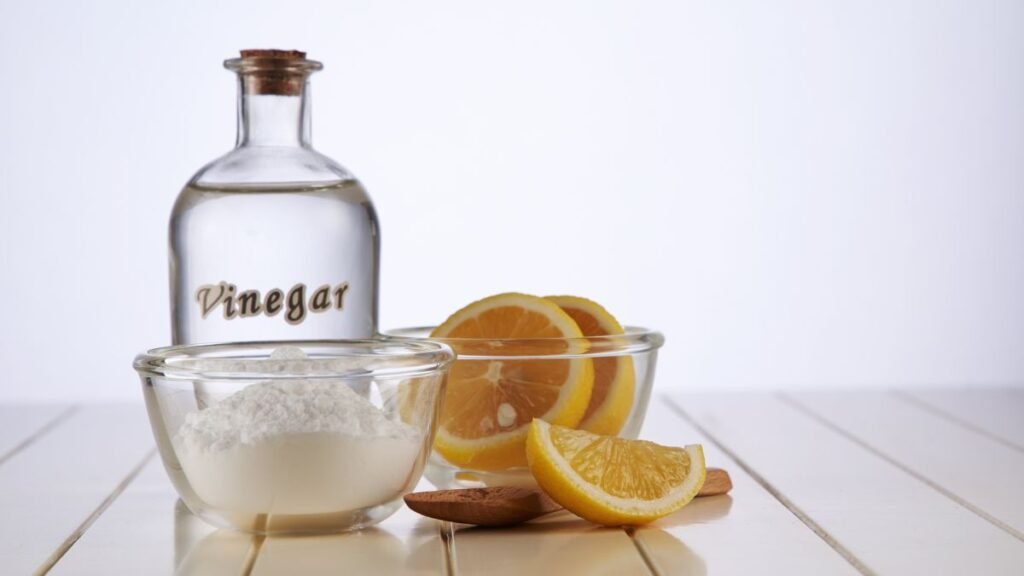
Many versions of this recipe claim that half a cup of white vinegar in every rinse solves the hard water problem. That advice sounds simple, but it should not be presented as a universal rule.
Maytag currently recommends avoiding vinegar inside its washing machines. The company says repeated exposure to acidity can damage some rubber components, including seals and hoses, over time.
That means the safest rule is simple: check your washer manual before putting vinegar into the machine.
Vinegar does have legitimate laundry uses. University of Georgia textile guidance includes diluted vinegar in specific stain treatment procedures, for example. Those instructions involve controlled treatment followed by rinsing rather than automatically pouring vinegar through a washer every week.
There is another reason to be careful with homemade cleaning advice. Cleaning chemicals should never be mixed casually, especially when bleach or other reactive products are involved. Poison Control recommends following product directions rather than creating untested chemical combinations.
So if the traditional recipe you found says vinegar is the secret ingredient that every machine needs, skip that assumption and check your appliance instructions first.
Homemade Laundry Soap Works Best on These Loads
Homemade soap makes the most sense when the job is fairly simple. Think lightly soiled shirts, pajamas, sheets, casual clothing, and everyday fabric that does not carry difficult stains.
Those loads ask much less from a cleaning product than grass covered sports clothing, greasy work trousers, blood stains, or heavily soiled baby items.
Modern laundry detergents have a real advantage when stains become harder. The American Cleaning Institute says deeper cleaning detergents often use enzymes and multiple surfactants to tackle heavier soil.
That does not mean you must use an expensive premium detergent for every shirt you own. It means you should pick the cleaning tool that matches the problem.
| Laundry Problem | Homemade Soap | Modern Detergent |
| Light everyday dirt | Often suitable | Suitable |
| Sweat and light body soil | May work well | Works well |
| Heavy grease | May need pretreatment | Usually stronger choice |
| Grass and food stains | Pretreat first | Enzymes may help |
| Blood or protein stains | Requires careful stain treatment | Enzyme formulas may help |
| Very hard water | Soap residue can become a problem | Usually better suited |
| Fragrance avoidance | Easy to keep unscented | Choose a fragrance free formula |
The American Cleaning Institute’s stain guide also recommends pretreating many stubborn stains before laundering. Depending on the stain, that can mean a commercial stain remover, detergent, a laundry additive, or sometimes bar soap.
This is a better strategy than pouring a huge dose of homemade soap into the whole load and hoping the stain disappears.
Check Your HE Washer Before Using Homemade Soap

A common claim online says homemade laundry soap is safe for every HE machine because it makes very little foam. Low suds help, but that alone does not make a product HE approved.
Whirlpool states that high efficiency machines should use HE detergent. The company warns that using non HE detergent can create problems such as excess suds and longer cycles.
Homemade soap may happen to foam less than some conventional cleaners, yet it has not automatically been formulated or tested for your specific machine. Soap residue is also a separate issue from foam.
For that reason, do these three things before trying the recipe in an HE washer:
- Read the detergent section of your washer manual.
- Check whether the manufacturer requires HE labeled products.
- Follow any warranty restrictions that apply to laundry additives.
Do not assume that adding just one or two tablespoons makes any homemade mixture safe for a front loader. Your appliance manufacturer knows the pump, sensors, seals, water volume, and rinse system inside that machine better than a viral recipe does.
If your manual requires HE detergent, use HE detergent.
You can still save money by measuring it carefully. ARM & HAMMER notes that detergent dosage should reflect load size, soil level, water temperature, and detergent concentration rather than being poured freely.


