
The 9 Books I Wish I’d Read at 35. I Finally Read Them at 63.
At 35, Michael thought his biggest problem was having too much to do. Work filled the weekdays. Bills, family duties, purchases, and plans filled the rest. The real problem was harder to see. Being busy gave him almost no reason to question where all that effort was leading.
At 63, those questions feel less optional. Time, health, money, relationships, and unfinished plans look different when fewer decades seem endless.
These 9 books to read at 35 could have changed some of those choices. Reading them later cannot return lost years. It can still change what happens next.
1. Your Money or Your Life Shows What Your Spending Really Costs

At 35, Michael would probably have treated a raise as permission to improve his lifestyle. A better car, nicer furniture, more meals out, and a larger monthly payment could all feel like signs of progress.
Your Money or Your Life asks a more uncomfortable question. How much of a person’s limited life was exchanged to earn the money being spent?
Vicki Robin and Joe Dominguez first published the book in 1992. The current Penguin Random House edition still centers on changing the reader’s relationship with money and making spending decisions more deliberately.
That idea becomes far more serious at 63.
A $200 purchase is no longer just $200. It represents some amount of work, stress, commuting, attention, or skill that had to be traded for it. Once spending is viewed that way, cheap and expensive start to mean something different.
Michael would not need to stop spending on enjoyable things. That is not the useful lesson.
The better question is whether the purchase gives enough value to justify the time used to pay for it.
Try This Before Buying Something Nonessential
Ask three questions:
- How many hours of work does this really cost?
- Will it improve daily life after the excitement fades?
- Would keeping the money create more freedom later?
A person who starts asking those questions at 35 gets decades to benefit from the answers.
2. The 7 Habits Helps You Stop Giving Everything Equal Priority

One of the easiest mistakes in the 30s is assuming that a full calendar means important work is getting done.
It does not.
Stephen R. Covey’s The 7 Habits of Highly Effective People was published in 1989. His framework includes being proactive, beginning with the end in mind, putting first things first, listening before trying to be heard, and renewing personal capacity. Simon & Schuster says the book has sold more than 40 million copies.
Michael would have paid special attention to one problem at 63: urgent tasks can consume years that were supposed to belong to important goals.
Emails feel urgent. Repairs feel urgent. Work requests feel urgent. Someone else’s problem suddenly becomes urgent.
Calling an old friend rarely does.
Taking care of health before something hurts rarely does.
Saving for future freedom rarely feels as urgent as this month’s wants.
The danger is easy to miss because every individual decision looks small.
Use a Better Weekly Question
Instead of asking, “What needs to get done this week?” Michael could have asked:
“What deserves to matter when this week is remembered years from now?”
The answer would still include work, errands, and bills. But it might also protect time for family, health, savings, rest, and personal goals before everything else claims the calendar.
That is why this belongs among the best books for your 30s. It asks readers to decide what matters before habit makes the decision for them.
3. The Millionaire Next Door Makes Quiet Wealth Look Better Than Rich Appearances

At 35, looking successful can feel dangerously similar to being successful.
They are not the same thing.
Thomas J. Stanley and William D. Danko published The Millionaire Next Door in 1996 after studying patterns among wealthy Americans. The book became known for challenging the picture of millionaires as people who always display their money through expensive homes, cars, and other visible purchases.
Michael would have benefited from that distinction early.
A person can earn a strong income and own expensive things while having little financial room. Another person can live in an ordinary home, drive an ordinary car, and quietly build substantial assets.
The book’s original research reflects its time and should not be treated as a perfect picture of every wealthy household in 2026. Housing costs, education costs, taxes, work patterns, and investment access have changed.
But the basic question remains useful.
Is money being used to create security or mainly to create an appearance?
At 63, a luxury car from 25 years ago means very little. Money invested or debt avoided during the same period could still matter.
Track the Number Nobody Sees
Michael would tell his 35 year old self to pay less attention to visible lifestyle markers and more attention to:
- savings
- investment balances
- consumer debt
- housing debt
- monthly fixed costs
- the amount of income that stays unspent
Quiet progress can feel boring.
Boring can become very valuable after enough years.
What Changes Between Reading These Books at 35 and 63?
| At 35 | At 63 |
|---|---|
| Time can feel almost unlimited | Time becomes easier to value |
| A raise can invite more spending | Lower fixed costs can feel more valuable |
| Career growth may dominate priorities | Health, family, freedom, and meaning may move higher |
| Social approval can influence purchases | Impressing other people may matter less |
| Delayed goals feel recoverable | Some delays become harder to reverse |
None of this means everyone reaches 63 with the same priorities. It means the cost of putting something off becomes easier to see after many years have already passed.
4. How to Win Friends and Influence People Makes Listening Useful Again

Dale Carnegie’s title can sound more calculating than the best parts of the book actually are.
The original text appeared in 1936. Simon & Schuster’s current edition still centers on communication, relationships, and dealing with people more effectively.
Michael would have found one lesson especially useful at 35: people remember how it feels to be heard.
Careers can train people to speak faster, defend ideas, prove expertise, and win arguments. Those skills can be useful at work. They can also follow a person home.
A spouse may want attention rather than a solution.
A child may want curiosity rather than a lecture.
A friend may want someone to listen rather than compare experiences.
Carnegie’s examples sometimes show their age, and readers do not need to turn every conversation into a technique for gaining influence.
The useful part is simpler.
Pay attention to people.
Remember what matters to them. Ask questions. Give sincere credit. Avoid using criticism as the first tool.
At 35, those habits can build relationships for decades.
At 63, Michael may care much less about winning an argument than preserving a relationship worth keeping.
That change in perspective is exactly why old books can read differently later.
5. The Road Less Traveled Makes Hard Choices Feel Normal

M. Scott Peck begins The Road Less Traveled with a simple claim about difficulty.
Life contains it.
WorldCat dates the book to 1978, and Simon & Schuster still describes it as a book about discipline, relationships, dependency, love, and personal growth.
That sounds obvious until daily life starts going wrong.
People often treat difficulty as evidence that they chose incorrectly.
A marriage becomes hard, so perhaps the marriage must be wrong.
Saving money requires sacrifice, so perhaps the plan is too strict.
Exercise feels uncomfortable, so perhaps it is easier to restart next month.
A career change involves uncertainty, so staying unhappy begins to feel safer.
Peck’s book pushes against that instinct. Some valuable choices are difficult because they require discipline, patience, honesty, or delayed comfort.
That does not mean every painful situation should be accepted. It certainly does not mean harmful relationships deserve endless tolerance.
It means difficulty alone does not prove a choice is bad.
Some of Peck’s psychological and spiritual arguments also reflect the period in which he wrote. Readers do not need to accept every claim to use the central lesson.
Michael’s question at 63 would be simple:
Which problem kept getting larger because avoiding it felt easier than dealing with it?
At 35, answering that question can save years.
6. Man’s Search for Meaning Changes What Counts as a Good Life
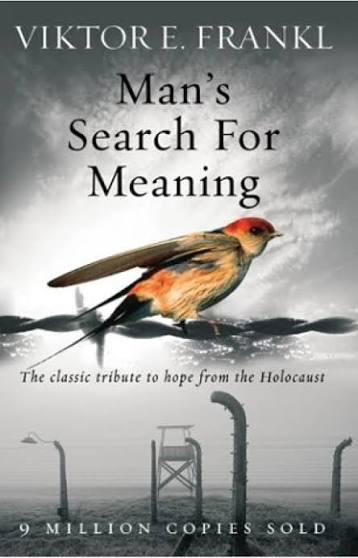
Man’s Search for Meaning deserves more care than an ordinary productivity book.
Viktor Frankl wrote about his experiences as a prisoner in Nazi concentration camps and later connected those experiences with his ideas about meaning and responsibility. Beacon Press says the book was first published in 1946.
The book should not be reduced to a cheerful slogan about positive thinking.
Its subject is suffering on a scale most readers have never experienced.
What Michael can take from it is a harder question: What gives life meaning when comfort, status, possessions, and control cannot be guaranteed?
At 35, success can become a simple scoreboard.
Job title.
Salary.
House.
Car.
Promotions.
Recognition.
Those things can improve life. Frankl’s work does not require people to reject ordinary goals.
It does challenge the idea that comfort alone is enough.
Purpose may come through work worth doing, caring deeply for another person, responsibility, creativity, service, or the way a person responds to circumstances that cannot be changed.
At 63, Michael would likely read that very differently.
A career eventually ends.
Children grow up.
Bodies change.
Some plans fail.
People leave.
Meaning needs somewhere deeper to live.
That is why this is one of the life changing books that may become more powerful with age, even though its central question is useful much earlier.
7. The Artist’s Way Shows Why Creativity Should Not Wait for Retirement

At 35, creative interests are easy to place in the “later” pile.
Later, when work calms down.
Later, when the children need less.
Later, when the house is finished.
Later, when there is more confidence.
Later can quietly turn into decades.
Julia Cameron’s The Artist’s Way first appeared in 1992. One of its best known practices is Morning Pages, a regular habit of writing freely rather than waiting for polished ideas. Penguin Random House continues to feature the book as a guide to developing creative practice.
Michael’s mistake at 35 would have been assuming creativity needed to become something useful.
It does not have to produce income.
A person can paint badly.
Write privately.
Learn piano slowly.
Take photographs nobody sees.
Build furniture.
Plant a garden.
Cook something difficult.
The result does not need an audience to have value.
Give Creativity a Real Appointment
One useful version of Cameron’s idea is simple.
Choose one hour each week for something creative and protect it like a real commitment.
An hour sounds small.
Over 28 years, small blocks of protected time can become a large body of work, skill, memories, or simple enjoyment.
Waiting until 63 is still better than never beginning. Starting at 35 gives the interest much more room to grow.
8. The Five Love Languages Works Better as a Conversation Starter Than a Rule

Gary Chapman published The Five Love Languages in 1992. His framework groups expressions of affection into words of affirmation, quality time, gifts, acts of service, and physical touch.
That simple framework became extremely popular.
It can also be taken too literally.
A 2024 review published in Current Directions in Psychological Science found little evidence for three major assumptions behind the model: that everyone has one main love language, that affection fits cleanly into five categories, and that relationships work better when partners match each other’s main language. Later research also failed to support the idea that satisfaction with a partner’s supposed primary language predicts relationship quality better than the other forms of care.
That does not make the book useless.
It changes how Michael should use it.
Instead of saying, “This is the one way this person receives love,” he could ask, “What makes this person feel cared for right now?”
Those answers can change.
Someone may want affection during one period of life and practical help during another.
A spouse dealing with illness may need support that looks different from what mattered ten years earlier.
Keep the Conversation, Lose the Box
The useful habit is talking about needs instead of assuming them.
Ask what helps.
Notice what gets appreciated.
Offer several kinds of support.
Listen when needs change.
At 35, learning that habit could improve decades of relationships without requiring anyone to fit into one fixed category.
9. The Death of Ivan Ilyich Makes the End of Life Hard to Ignore

Leo Tolstoy’s The Death of Ivan Ilyich is the shortest book on this list and possibly the most uncomfortable.
First published in Russian in 1886, the novella follows a successful judge whose serious illness forces him to examine the life he built. Current Penguin material describes him as a career focused man suddenly forced to confront his own mortality.
That is what makes the story so sharp at 63.
Ivan has done many things society told him were correct. He built a career. He cared about position. He arranged his life around appearances and respectable expectations.
Then mortality changes the test.
Michael would read that and ask a question that probably felt less urgent at 35:
What if a life can look successful from the outside and still feel wrong to the person living it?
That question is uncomfortable because there is no simple checklist that answers it.
It does not mean career ambition is empty.
It does not mean nice homes are foolish.
It does not mean people should ignore responsibility and chase pleasure.
It means outside approval cannot be the only measure.
At 35, mortality can seem distant enough to ignore.
Reading Tolstoy then might have made Michael protect more dinners with people he loved, take a few meaningful risks sooner, worry less about people who were barely paying attention, and stop treating time as an endlessly renewable resource.
At 63, the same lesson still matters.
The remaining years still count.
Which Book Should Come First?
There is no need to read all nine at once.
Start with the problem that currently costs the most.
| If This Feels Familiar | Start Here | One Action After Reading |
|---|---|---|
| Money disappears despite a decent income | Your Money or Your Life | Review one month of spending |
| Everything feels urgent | The 7 Habits | Choose three real priorities |
| Lifestyle rises with every raise | The Millionaire Next Door | Track net worth instead of purchases |
| Relationships feel strained | How to Win Friends and Influence People | Listen through one conversation without fixing it |
| A difficult problem keeps getting postponed | The Road Less Traveled | Name the avoided problem |
| Success feels strangely empty | Man’s Search for Meaning | Write what makes life feel useful |
| Creativity keeps getting delayed | The Artist’s Way | Protect one creative hour |
| A partner feels unseen | The Five Love Languages | Ask what support feels helpful now |
| Time suddenly feels short | The Death of Ivan Ilyich | Remove one obligation that no longer matters |