

If You Haven’t Read These 9, You’re Not Well-Read — You’re Just Well-Informed
You read the news. You follow smart people online. You know what is happening in politics, business, culture, and technology. But being informed is not the same as being well read.
That gap shows up when people mention Don Quixote, Beloved, The Odyssey, or Things Fall Apart and you know the title but not the ideas inside it. You may have plenty of information, yet still miss the books that shaped how generations think about love, power, faith, family, freedom, and identity.
These nine classics help close that gap. Each one gives you something headlines, summaries, and short posts cannot.
1. Read The Odyssey to See Where So Many Stories Begin
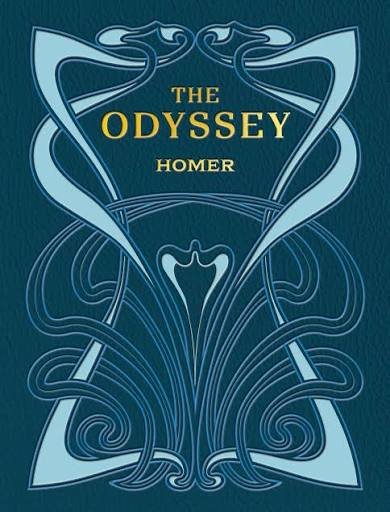
You already know pieces of The Odyssey even if you have never opened it. There are monsters, storms, temptations, disguises, gods, shipwrecks, and a man struggling to return home after war. But the book becomes far more interesting once you stop treating it as a collection of famous adventures.
Odysseus is clever, brave, deceptive, proud, loving, and often difficult to admire. His return to Ithaca raises questions about loyalty, violence, hospitality, marriage, status, and what home means after years away.
W. W. Norton describes the poem as dealing with the aftermath of war as well as wealth, poverty, power, family, identity, travel, and hospitality.
That range is why the poem keeps turning up inside later books, films, and stories. You start noticing how often writers send a character away, test that character repeatedly, and then make the return home more difficult than expected.
If older translations have scared you away, try Emily Wilson’s version. Norton notes that her translation uses clear contemporary language while keeping the poem in verse, and her 2017 version became the first complete English translation by a woman.
2. Read The Tale of Genji Before Calling the Novel a Western Invention

A reading list can become narrow very quickly if every road leads back to Britain, France, Russia, or the United States. The Tale of Genji is a useful correction.
Murasaki Shikibu wrote it in Japan during the eleventh century. Penguin describes the book as a detailed portrait of court life centered on Genji, the son of an emperor whose romances, family ties, political position, and desires shape much of the story.
The work is widely celebrated as one of the earliest novels and is often described as the world’s first.
What surprises many modern readers is how much attention the book gives to private emotion. Desire changes. People become jealous. Beauty fades. Relationships become awkward. Social rules limit what people can say or do. A court that existed roughly a thousand years ago begins to feel strangely close.
The difficulty is usually context rather than plot. Titles, family relationships, poetry, clothing, and court customs require some adjustment. That is why Royall Tyler’s Penguin edition is useful. It includes notes, character lists, glossaries, and chronologies designed to help readers follow the large cast and unfamiliar setting.
3. Read Don Quixote to See Fiction Make Fun of Fiction

Don Quixote has read so many tales about heroic knights that he decides he should become one. The problem is simple. The countryside around him refuses to behave like the stories inside his head.
Windmills become giants. Ordinary buildings become castles. Everyday encounters become heroic tests. His practical companion Sancho Panza keeps trying to deal with reality while Quixote keeps rewriting that reality into something grander.
That setup is funny, but Cervantes is doing more than mocking a confused man. Don Quixote asks what stories do to the people who believe them. It also asks whether a life built on fantasy can sometimes contain more courage, purpose, or beauty than a sensible life.
Penguin Classics says the book’s experimental form and literary playfulness are major reasons it is often described as the first modern novel. Its influence comes partly from the way it talks about storytelling while telling a story of its own.
The complete novel is long, so do not approach it as a test of endurance. Read it as a series of encounters between two unforgettable people. John Rutherford’s Penguin translation is a strong modern option.
4. Read Middlemarch to Learn How Ordinary Choices Shape a Life

No whale attacks anyone in Middlemarch. Nobody fights a monster or returns from an ancient war. George Eliot builds drama from something much more familiar: people choosing the wrong spouse, chasing status, needing money, misreading one another, and discovering that good intentions do not guarantee good results.
The novel follows several people in an English provincial town. Dorothea Brooke wants a life with intellectual and moral purpose. Dr. Tertius Lydgate arrives with serious ambitions for medicine. Both discover how easily marriage, money, pride, and social pressure can redirect a life.
Penguin describes Middlemarch as a major work of realist fiction set during a period of political, scientific, and social change. Yet its power comes from showing those changes through individual lives rather than presenting them like a history lesson.
This is one of the longest books on the list, and rushing works against it. Read a little each day. Pay attention to how one person’s mistake affects someone else several chapters later.
That slow accumulation is the point. Lives do not usually collapse because of one dramatic moment. They change through dozens of small choices.
What you gain from reading it: You become better at seeing how character, money, marriage, ambition, and community quietly shape each other.
5. Read Anna Karenina for a Harder Look at Love

People often hear “Anna Karenina” and expect one huge tragic romance. That is there, but Tolstoy gives you another major story beside it.
Anna’s relationship with Count Vronsky pushes against the rules surrounding marriage, reputation, motherhood, and respectable society. At the same time, Levin struggles with work, family, love, faith, and the question of what can make an ordinary life meaningful.
Penguin describes the novel as a story of love, destiny, and self destruction, while its parallel plots allow Tolstoy to compare different forms of marriage and personal purpose.
The contrast matters because Tolstoy refuses to turn love into a simple answer. Desire can make a person feel alive while also producing jealousy, fear, isolation, and dependence. Social judgment also falls unevenly, especially on women.
That makes the book far more useful than treating Anna’s affair as either pure romance or simple moral failure. Tolstoy keeps asking you to look again.
The Richard Pevear and Larissa Volokhonsky translation published by Penguin Classics is one widely available choice.
6. Read The Brothers Karamazov When Easy Moral Answers Stop Working

A terrible father is murdered. His sons have different reasons to hate him. That sounds like the beginning of a crime novel, and in some ways it is.
Dostoevsky uses the murder to ask much larger questions. What makes a person responsible for evil? Does thinking about an evil act matter if someone else commits it? Can morality survive without religious belief? What do people owe one another?
The brothers give those questions human faces. Dmitri acts through passion. Ivan pushes reason and doubt as far as he can. Alyosha tries to live through faith and compassion. Smerdyakov makes the moral picture even less comfortable.
Penguin describes Dostoevsky’s final novel as a story of murder that tests ideas about faith, morality, innocence, corruption, guilt, and human responsibility. The current Penguin Classics edition translated by David McDuff also provides notes and supporting material.
Do not worry about solving every philosophical argument. Keep track of the family first. The ideas become easier to follow once you see what each brother wants and fears.
7. Read Things Fall Apart Before Accepting a One Sided Colonial Story
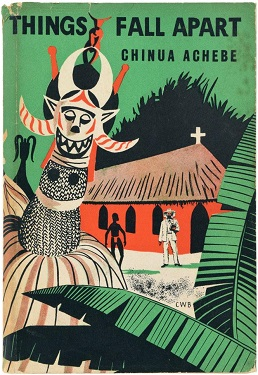
Many histories of colonial Africa begin when Europeans arrive. Chinua Achebe does something very different.
Things Fall Apart first places you inside an Igbo community through the life of Okonkwo. You see family roles, farming, religion, status, conflict, ceremonies, punishment, friendship, and arguments within the community itself. The society has strengths and problems long before European missionaries and colonial authorities enter the story.
Penguin Random House describes the book as following an Igbo warrior in Nigeria during the period before and after European colonization. The publisher also places it among the central works of modern African literature.
Okonkwo is not designed to be an ideal hero. He is proud, respected, frightened of weakness, and often harsh. That matters because Achebe does not need to make every character admirable in order to make the community fully human.
At roughly a few hundred pages in many editions, this is also one of the more approachable books on the list. The language is direct, but the questions underneath it are large.
8. Read Beloved to Feel What a History Book Cannot Show

You can learn the dates, laws, economics, and politics of American slavery from history. Toni Morrison asks a different question: what happens when someone escapes physical captivity but memory refuses to release her?
Sethe has escaped slavery and lives in Ohio, yet her home and family remain haunted by what happened before freedom. Morrison turns that haunting into something both literal and psychological. The past does not remain politely in the past.
Penguin Random House describes Sethe as an escaped enslaved woman still trapped by memories of Sweet Home, while her house is troubled by the ghost of her dead child. Beloved received the Pulitzer Prize for Fiction in 1988.
The novel can feel difficult at first because Morrison does not explain everything in neat order. Memory arrives in pieces. Viewpoints move. Details gain meaning after you have already passed them once.
That structure makes emotional sense. Trauma rarely presents itself as a clean timeline.
Read slowly and resist the urge to search for an explanation every few pages. Some uncertainty is part of the experience.
9. Read One Hundred Years of Solitude to See History Turn Into Myth
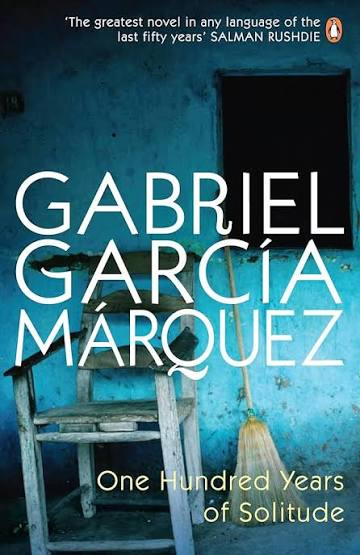
The Buendía family keeps repeating itself. Names return. Personal mistakes return. Political violence returns. Hopes return too.
Gabriel García Márquez builds the fictional town of Macondo and follows generations of one family through love affairs, wars, inventions, disasters, loneliness, ambition, and strange events that everyone often accepts with remarkable calm.
That mix became closely associated with magical realism. The Nobel Prize notes that García Márquez’s international breakthrough came with One Hundred Years of Solitude in 1967 and describes his writing as combining realistic settings with fantastic and dreamlike elements. He received the Nobel Prize in Literature in 1982.
The unusual events are memorable, but the repeating family patterns matter just as much. People believe they are living new lives while falling into old habits. Private memory and public history keep folding into each other.
The main challenge is the repeated names. Keep a family tree nearby. That small step saves a great deal of confusion.
Once you stop trying to make Macondo behave like ordinary realism, the book becomes much easier to read.
Being Well Read Is About Range, Not Bragging Rights
Finishing these nine books will not award you a certificate declaring that you are now well read. There is no final reading list, and somebody who has read all nine can still have enormous gaps.
The point is range. The Odyssey gives you ancient epic. The Tale of Genji takes you into Heian Japan. Cervantes plays with fiction itself. Eliot and Tolstoy examine ordinary social life.
Dostoevsky tests moral certainty. Achebe changes the angle of colonial history. Morrison turns historical trauma into personal memory. García Márquez lets history and myth occupy the same page.