


Read These 39 Books To Get Rich, Live Rich, and Stay Rich
You can read business books for years and still wonder why your bank account has barely changed. You highlight smart ideas, save useful quotes, and finish each book feeling more informed, yet very little changes in your actual life.
The problem is usually not a lack of information. It is a lack of action tied to the right problem. A book about investing will not fix a business that cannot find customers. A sales book will not help much if every dollar you earn disappears.
That is why these 39 books are organized by what they can help you fix. Some can help you create income. Others can help you sell, market, manage cash, invest, build stronger habits, and decide what you actually want your money to do for your life.
No book can guarantee wealth. But the best books to get rich can give you useful frameworks, save you from avoidable mistakes, and help you make better decisions.
The 39 Books at a Glance
| Your Current Problem | Books to Focus On | Main Skill |
|---|---|---|
| You need an income producing idea | 1 to 10 | Business creation |
| You struggle to sell | 11 to 20 | Sales and persuasion |
| Nobody knows your business exists | 21 to 30 | Marketing |
| Money comes in but disappears | 31 to 35 | Financial control |
| You want wealth to improve your life | 36 to 39 | Behavior and lifestyle |
10 Books That Help You Start Making Money
You do not need to read every entrepreneurship book before starting something. You need an advantage, a customer problem, a way to deliver value, and a system that keeps you moving when the excitement fades.
These first 10 books focus on those problems.
1. StrengthsFinder 2.0 by Tom Rath and Gallup

Most people begin by asking, “What business should I start?” A better first question may be, “What am I already unusually good at that somebody else values?”
StrengthsFinder 2.0 is built around identifying natural talent and developing it. Gallup has long argued that people often make better progress when they invest in strong natural patterns instead of spending most of their energy trying to become good at everything.
That matters in business because your time is limited. If you are naturally strong at writing but weak at design, becoming an excellent writer may create more value than spending years trying to become an average designer.
After reading it, write down three skills people already ask you for help with. Those strengths may point you toward a service, product, role, or business model where you have an early advantage.
2. How to Win Friends and Influence People by Dale Carnegie

Business opportunities often arrive through people. Clients refer clients, managers recommend employees, founders meet partners, and friends introduce useful contacts.
Dale Carnegie’s classic focuses on listening, showing genuine interest, remembering what matters to other people, and communicating without making every interaction about yourself.
Some examples feel old because the book was published decades ago. The central lesson still holds up well: people usually respond better when they feel respected, heard, and valued.
A practical next move is to contact three people in your network without asking them for anything. Check in, congratulate them on something, or share something useful.
3. Zero to One by Peter Thiel with Blake Masters

A weak business idea often begins with copying what everybody else is already doing. Then the founder ends up competing mainly on price, attention, or advertising spend.
Zero to One pushes you to search for an idea or advantage that other people have missed. You do not need to build the next giant technology company for that principle to matter.
A local cleaning company could focus only on move out services for apartment managers. A freelance writer could specialize in one difficult industry. A consultant could solve one narrow problem much better than general competitors.
After reading it, finish this sentence: “Most businesses in my field do this, but I believe customers would prefer this instead.”
That answer may reveal your strongest point of difference.
4. Start With Why by Simon Sinek

People need a reason to care about what you are selling. A long list of features rarely gives them one.
Simon Sinek argues that organizations often communicate more clearly when they can explain why they exist, how they work, and what they offer.
Do not turn this into a grand mission statement that means nothing. Your reason can be simple. Maybe you want accounting to feel less confusing for freelancers. Maybe you want healthy meals to be realistic for busy parents.
After reading it, try explaining why your business should exist in two sentences. If the answer sounds vague, keep cutting until it becomes clear.
5. Business Model Generation by Alexander Osterwalder and Yves Pigneur
A business can sound brilliant until you ask basic questions.
Who pays you? How do you reach them? What does delivery cost? What resources do you need? Where does the money actually come from?
Business Model Generation turns these questions into the Business Model Canvas. Strategyzer presents the model through nine connected areas covering customers, value, channels, revenue, resources, activities, partners, relationships, and costs.
This makes the book especially useful before you spend months writing a huge business plan. A one page visual model can quickly expose weak assumptions.
After reading it, map your business on one Business Model Canvas. If you cannot clearly explain who pays you and why, that is the first problem to solve.
6. Give and Take by Adam Grant

Relationships become weaker when every conversation feels like a transaction.
Adam Grant looks at different patterns of giving and taking in professional life. One useful lesson is that creating value for other people can build stronger long term relationships than pure self interest.
That does not mean saying yes to everybody or giving away your work endlessly. Help still needs limits.
A good next step is to find one small way to help a useful contact without expecting an immediate return. That could mean sharing a lead, making an introduction, or sending a resource that solves a problem.
7. The Lean Startup by Eric Ries
One of the most expensive business mistakes is spending months building something before finding out whether anybody wants it.
The Lean Startup helped popularize the minimum viable product approach. Instead of creating every feature first, you build enough to test an important assumption and learn from real customer behavior.
Dropbox is a famous example. Before the product reached a broad audience, founder Drew Houston used a demonstration video to show how the file syncing concept would work. Interest rose sharply, helping validate that people cared about the problem.
The lesson is simple. Do not spend heavily just because you love the idea.
After reading the book, ask yourself what the cheapest possible test would be. A landing page, prototype, preorder, waiting list, consultation, sample, or demo may tell you more than six months of private planning.
8. The ChatGPT Millionaire by Neil Dagger

This is a narrower recommendation than books such as The Lean Startup. It focuses on ways people can use generative AI for online work and income.
Read it for ideas rather than promises. AI can speed up research, brainstorming, drafts, customer support, and simple workflows, but typing prompts into a chatbot does not automatically create a valuable business.
A stronger question is this: Can AI reduce the time or cost required to deliver something customers already want?
After reading it, identify one repeated task that currently takes too long. Test whether AI can shorten that task without lowering quality.
9. The 12 Week Year by Brian P. Moran and Michael Lennington
Annual goals are easy to postpone. January feels important, but a December deadline feels far away.
The 12 Week Year compresses planning into shorter cycles. You set a small number of important goals and measure the actions you take each week.
The method is useful because it forces you to compare your plans with what you actually completed.
After reading it, choose one measurable 12 week goal. Then list the weekly actions required to reach it.
For example, if your goal is to gain 12 new clients, the weekly plan may include a fixed number of outreach messages, calls, proposals, and follow ups.
10. Extreme Ownership by Jocko Willink and Leif Babin

When a project fails, it is easy to blame the customer, economy, employee, algorithm, supplier, or competition.
Extreme Ownership argues for taking responsibility for the parts you can control. The book comes from the authors’ military leadership experience, so some examples will feel far removed from ordinary business.
The useful principle is simple. Stop spending all your time explaining why something failed and start asking what you could have done differently.
After reading it, review one recent failure. Make two lists: what was outside your control and what was inside your control.
Spend most of your energy on the second list.
10 Books That Can Make You Better at Selling
You can build something useful and still make almost no money if you cannot sell it. Selling does not have to mean pressuring people into buying things they do not need.
Good selling helps the right person see why a useful offer solves a real problem.
11. Pre Suasion by Robert Cialdini

People do not evaluate every offer in a vacuum. What happens before a request can affect what receives their attention.
Robert Cialdini’s Pre Suasion explores how context, attention, and framing can influence persuasion. For a business owner, the useful lesson is to think carefully about what the customer sees, hears, or thinks about before you present your main offer.
That does not mean manipulating people. Good framing should make a real benefit easier to evaluate.
Before your next proposal or price conversation, think about the idea you want the other person considering first. That may be value, urgency, risk, convenience, or the cost of doing nothing.
12. Style and the Man by Alan Flusser
This is the most specialized book in this section because it deals with men’s clothing rather than sales.
Its place here comes from a simple truth: presentation can affect first impressions in interviews, meetings, pitches, and client work.
Do not confuse clothing with competence. A good jacket cannot save a weak offer. But looking appropriate for the setting can remove an unnecessary distraction.
The takeaway is not to dress expensively. It is to look intentional, clean, and suited to the environment where you are trying to build trust.
13. The Art of the Deal by Donald J. Trump with Tony Schwartz

Read this as a business memoir and deal making case study, not as a scientific manual for negotiation.
The book touches on relationships, persistence, positioning, publicity, deal structure, and maintaining contact with many people.
Memoir style business books need to be read carefully. Stories are often presented from the author’s point of view, so they should not automatically be treated as independent proof that a tactic always works.
You can still study the behavior behind the stories. Look at how opportunities are framed, how relationships are maintained, and how attention itself can become part of a business strategy.
14. Crushing It! by Gary Vaynerchuk
A personal brand can give customers repeated exposure to what you know and what you sell.
Crushing It! focuses on using online platforms to build an audience around expertise, personality, or a business.
The platforms may change, but the basic model remains useful. Publish useful material, earn attention, build trust, and give people a reason to stay connected.
Do not create content just to stay busy. Choose one platform where your likely customers already spend time and publish material that solves real problems.
15. To Sell Is Human by Daniel H. Pink

Daniel Pink argues that persuasion is part of far more jobs than traditional sales.
Employees persuade managers. Freelancers persuade clients. Founders persuade investors. Managers persuade teams. Parents even persuade children.
One of the strongest lessons is to see a situation from the other person’s point of view instead of spending the entire conversation preparing your next sentence.
Before your next sales call, write down what the buyer may be worried about. Price may be one concern, but time, trust, risk, effort, or fear of making a bad decision may matter more.
16. Pitch Anything by Oren Klaff
A weak pitch often gives the audience far more information than they need.
Pitch Anything focuses on controlling attention, framing an offer, and presenting information in a way that keeps the other party interested.
Some of its language can feel aggressive. You do not need to copy the attitude to benefit from the communication lessons.
The practical fix is to shorten your pitch. State the problem, explain the opportunity, show why your solution is credible, and tell the other person what happens next.
17. Never Split the Difference by Chris Voss with Tahl Raz
This is one of the most practical negotiation books on the list.
Former FBI negotiator Chris Voss teaches ideas such as labels, mirrors, tactical empathy, and calibrated questions. Questions that begin with “what” and “how” can help expose problems and encourage the other person to think through a difficult situation.
The goal is not to trick somebody. It is to gather information, lower tension, and find possible room for agreement.
Instead of instantly rejecting a difficult request, you might ask, “How would that work in practice?” That forces both sides to examine the issue rather than simply arguing over positions.
18. Better Small Talk by Patrick King

Many opportunities begin before the formal sales conversation.
Better Small Talk focuses on starting conversations, keeping them moving, avoiding awkward dead ends, and becoming more comfortable speaking with unfamiliar people.
That can matter if networking currently feels painful or forced.
A useful practice is to stop searching for impressive things to say. Ask better questions instead. People usually remember a conversation more positively when they felt heard.
19. Objections by Jeb Blount
“No” does not always mean the same thing.
A customer may lack money, trust, urgency, authority, information, or confidence. Objections focuses on dealing with that resistance without giving up too quickly.
The useful lesson is to stop treating every objection like an enemy. Often it is information about what the buyer still needs before making a decision.
When somebody objects, slow down and clarify. Ask what is really holding them back before launching into another sales speech.
20. The Charisma Myth by Olivia Fox Cabane

Charisma is often treated as something you either have or do not have.
Olivia Fox Cabane argues that many behaviors linked with charisma can be practiced. Presence, warmth, body language, attention, and communication can improve over time.
Do not aim to become a fake version of somebody else. Aim to make people feel that you are actually present when they speak.
One easy place to start is to put your phone away during an important conversation. Full attention is rare enough that it can make a noticeable difference.
10 Books That Teach You How to Find More Customers
A great product with no attention can fail quietly.
Marketing is the bridge between something useful and the people who might pay for it. These 10 books attack that problem from different angles.
21. Purple Cow by Seth Godin

Most businesses want attention while doing almost exactly what their competitors do.
Seth Godin uses the image of a purple cow to explain why something remarkable gets discussed while something ordinary gets ignored.
Being remarkable does not require being bizarre. You can stand out through specialization, service, speed, design, packaging, guarantees, convenience, or a better customer experience.
Look at five competitors and write down what they all do the same way. That pattern may reveal an opportunity to stand apart.
22. YouTube Secrets by Sean Cannell and Benji Travis
Video gives small businesses access to audiences that once required large advertising budgets.
YouTube Secrets covers choosing a niche, making useful videos, packaging content, attracting viewers, and connecting attention to a business.
Do not chase views without a business reason. Ten thousand relevant viewers can be more valuable than a million people who will never buy what you sell.
Start by answering the questions customers repeatedly ask you. Those questions can become your first batch of useful videos.
23. The Mom Test by Rob Fitzpatrick

Friends can be terrible market researchers when they want to protect your feelings.
Ask, “Would you buy my product?” and they may say yes because being supportive costs nothing. Ask what they currently do, what they have already bought, and what frustrates them, and you can get much better information.
That is the central lesson of The Mom Test.
Instead of asking whether someone likes your business idea, ask, “How did you solve this problem the last time it happened?”
Past behavior is often more useful than polite predictions.
24. Blue Ocean Strategy by W. Chan Kim and Renée Mauborgne
Many entrepreneurs enter crowded markets and then wonder why growth feels hard.
Blue Ocean Strategy asks businesses to search for new value rather than fight over exactly the same customers with exactly the same offer.
There is an important warning here. A market with no competition can sometimes have no competition because nobody wants the product.
That is why a fresh position still needs customer testing. New is useful only if people care.
25. Building a StoryBrand by Donald Miller
Customers usually care about their own problem more than your company history.
StoryBrand places the customer in the central role and asks the business to act as the helpful guide. The framework focuses on the customer’s problem, a simple plan, and a clear next step.
Look at the top of your website. If the first screen talks almost entirely about how great your company is, rewrite it.
Explain what problem you solve and what the visitor should do next.
26. Copywriting Secrets by Jim Edwards

A good offer can disappear behind weak writing.
Copywriting Secrets focuses on headlines, benefits, customer problems, offers, calls to action, and sales copy.
One useful habit is replacing vague claims with concrete outcomes. “Premium business solutions” says almost nothing. “Get invoices paid faster without sending every reminder yourself” tells the reader what improves.
Review your homepage or sales page and circle every vague phrase. Replace each one with plain language that describes a real benefit.
27. DotCom Secrets by Russell Brunson
Getting the first sale can be expensive. That makes the value of an existing customer important.
DotCom Secrets is known for sales funnels and value ladders. A business can begin with a simple entry offer and then provide more advanced solutions to customers who need them.
Upselling works best when the next offer genuinely solves the customer’s next problem.
A gym might start with a basic membership, then add personal training. A software company might offer a simple plan, followed by advanced tools for larger teams.
The next product should feel like a logical next step, not a random attempt to charge more.
28. Expert Secrets by Russell Brunson

Expertise becomes more valuable when you can organize it into something other people can follow.
Expert Secrets focuses on building an audience around knowledge and presenting offers through teaching, stories, webinars, and other forms of communication.
This can be especially useful for consultants, coaches, educators, creators, and service professionals.
The key question is whether your knowledge solves a valuable problem. Expertise without a clear customer outcome is difficult to sell.
29. Oversubscribed by Daniel Priestley
Businesses usually think the goal is having enough supply for anybody who wants to buy.
Daniel Priestley approaches the issue differently. Demand becomes powerful when more qualified customers want something than the business can serve at one time.
Artificial scarcity can destroy trust, so do not fake waiting lists or pretend stock is limited when it is not.
Real capacity limits make more sense. A consultant may have five client slots. A course may run four cohorts per year. A handmade product may have limited monthly production.
Scarcity is strongest when it is true.
30. Don’t Make Me Think by Steve Krug

Your marketing can work and still lose the sale if your website confuses people.
Steve Krug’s usability classic argues that digital experiences should be obvious enough that users do not have to waste mental effort figuring out what to do.
Open your homepage and ask:
- What is being offered?
- Who is it for?
- What should I click next?
If the answers take too long to find, simplify the page.
5 Books That Help You Keep the Money You Make
Making money and keeping money are different skills.
A person can build a high income while remaining financially fragile. These books focus on cash control, profitability, taxes, investing, and decision making.
31. The Total Money Makeover by Dave Ramsey
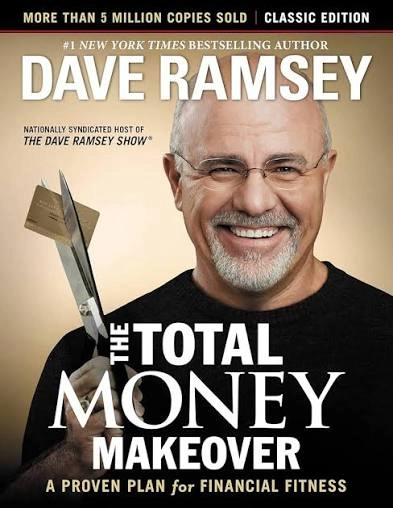
Dave Ramsey’s book focuses mainly on household finances rather than business finance.
Its strongest lesson is basic but useful: you need to know where your money goes. Debt payments, recurring expenses, and careless spending can consume income surprisingly quickly.
Ramsey’s views on debt and investing are more rigid than what every financial professional would recommend for every situation. That does not make the budgeting ideas useless.
Start by listing your fixed expenses, debt payments, savings, and optional spending. A high income becomes much easier to manage when you can see exactly where it goes.
32. Profit First by Mike Michalowicz
Many companies treat profit as whatever is left after spending.
Profit First flips that thinking. Instead of allowing expenses to grow until nothing remains, Michalowicz argues for allocating profit deliberately and letting the available amount influence spending.
The exact percentages should fit the business. A manufacturer with inventory and payroll has very different needs from a solo consultant.
The bigger lesson is to stop treating profit as an accident.
Review the last three months of business revenue and calculate what was truly left after all expenses. The number may tell you more than revenue growth alone.
33. Tax Free Wealth by Tom Wheelwright

Taxes can become one of the largest expenses for a successful business owner, but this is also an area where casual financial advice can cause expensive mistakes.
Tax Free Wealth encourages readers to learn how tax rules affect business and investment decisions. That part is useful.
Do not assume every strategy in any tax book applies to your situation. Tax rules change, and results can depend on income, business structure, location, assets, deductions, and many other facts.
Use the book to create better questions for a qualified tax professional. Verify strategies against current IRS guidance before acting.
34. The Intelligent Investor by Benjamin Graham
This book has lasted because many of its central lessons reach beyond specific stock picks.
Benjamin Graham emphasizes valuation, discipline, a margin of safety, and emotional control. His famous Mr. Market example asks you to think of the market as a partner constantly offering prices that you are free to accept or ignore.
That is useful when markets become exciting or frightening.
A stock price moving quickly does not automatically mean the value of the underlying business changed by the same amount.
Write down your investment rules before the next market panic. Rules made while calm can protect you from decisions made while emotional.
35. Thinking, Fast and Slow by Daniel Kahneman
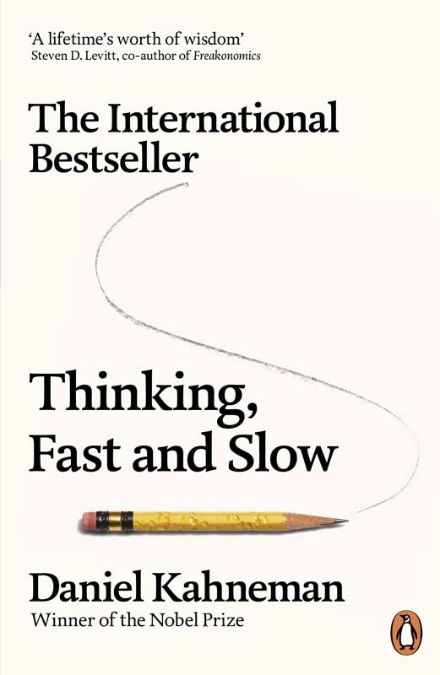
You can know a lot about money and still make poor financial decisions.
Daniel Kahneman describes two broad styles of thought. One is fast, intuitive, and automatic. The other is slower and more deliberate.
Neither style is always bad. The problem comes when an important decision receives the same instant reaction you might use for something trivial.
Before a major financial choice, add friction. Sleep on it, write down the risks, compare alternatives, and ask what evidence would change your mind.
That short pause can be especially valuable when the decision involves a large investment, expensive purchase, business partnership, or major loan.
4 Books That Explain What Being Rich Is Actually For
There is one more problem business books often ignore.
You can become much better at making money and still build a life you do not enjoy. These final four books connect wealth with behavior, time, freedom, systems, and spending.
36. The Psychology of Money by Morgan Housel

People often treat wealth as a math problem. Morgan Housel spends much more time on behavior.
Two people with similar incomes can end up in completely different financial positions because they save differently, take different risks, have different expectations, and define “enough” differently.
One of the most useful distinctions is between looking rich and being wealthy. Expensive possessions are visible. Money you kept, invested, or used to buy flexibility is much harder to see.
Ask yourself how much of your spending comes from genuine enjoyment and how much comes from wanting other people to notice.
That can be an uncomfortable question, but it is useful.
37. The E Myth Revisited by Michael E. Gerber
Owning a business can become another job with a more demanding boss: yourself.
Michael Gerber argues that many small businesses depend too heavily on the owner’s personal labor. If everything stops when the owner stops working, the business has limited independence.
Systems, procedures, training, and delegation can reduce that dependence.
You do not need to remove yourself from every task. The goal is to stop being the only person who knows how everything works.
Start by documenting one task you perform repeatedly. Write the process so clearly that somebody else could follow it.
38. Atomic Habits by James Clear

Big financial outcomes are often built from actions that look boring on an ordinary Tuesday.
Saving automatically, contacting prospects, reviewing expenses, publishing useful content, exercising, reading, and following up with clients rarely feel dramatic.
Atomic Habits focuses on making useful behavior easier to repeat and bad behavior harder to repeat.
That makes it a strong companion to almost every other book on this list.
Do not finish 39 books and create 39 new habits. Choose one behavior that matters most and make it easier to perform.
If you want to save more, automate the transfer. If you want more clients, schedule outreach before the week becomes busy.
39. The Art of Spending Money by Morgan Housel

Getting rich answers one question: how do you accumulate resources?
Living rich asks a different question: what should those resources actually do for your life?
Published in 2025, Morgan Housel’s The Art of Spending Money explores spending, expectations, status, happiness, and peace of mind.
That makes it a fitting final book because money can buy many different things beyond objects. It can buy time, privacy, comfort, flexibility, education, security, experiences, and the ability to help people you care about.
More spending does not automatically create more satisfaction. Extreme saving does not automatically create a good life either.
Ask what purchases have genuinely improved your life over the last five years. Then compare them with the expensive things you barely think about anymore.
That difference can teach you a lot about what being rich actually means to you.
Which of These 39 Books Should You Read First?
Do not start at number one simply because it is number one.
Start with the problem currently costing you the most money, time, or progress.
| If You Keep Thinking… | Read This First | What to Do Next |
| “I don’t know what business to start.” | StrengthsFinder 2.0 | List strengths people already value |
| “I have an idea but don’t know if it will work.” | The Lean Startup | Run a cheap demand test |
| “People seem interested but don’t buy.” | Never Split the Difference | Review sales conversations |
| “Customers don’t understand what we do.” | Building a StoryBrand | Rewrite your main message |
| “Nobody knows my business exists.” | Purple Cow | Find one clear point of difference |
| “Revenue is growing but cash stays tight.” | Profit First | Review where each dollar goes |
| “Market swings make me panic.” | The Intelligent Investor | Write your investment rules |
| “I know what to do but never stay consistent.” | Atomic Habits | Build one repeatable action |
| “I have money but still feel anxious.” | The Psychology of Money | Define what enough means |
| “I save but don’t know what money is for.” | The Art of Spending Money | List what improves your life |
A Better Way to Read These 39 Books
Reading all 39 in a few months may sound productive. It can also become sophisticated procrastination.
A better system is one book, one problem, one action. Finish a useful section, identify the strongest idea, and put it into practice before filling another notebook with highlights.
| Step | What You Do | Example |
| 1 | Pick your biggest problem | Leads are too low |
| 2 | Choose one relevant book | Purple Cow |
| 3 | Write one key idea | Become easier to talk about |
| 4 | Turn it into an action | Create one distinctive offer |
| 5 | Measure the result | Track inquiries for 30 days |
| 6 | Keep, change, or drop it | Use actual results |
| 7 | Read the next book | Move on after acting |
The point is not to collect ideas. The point is to change behavior and measure what happens.
One useful book applied for six months can matter more than 20 books read and forgotten.


