
15 Two Tone Kitchen Cabinet Ideas for a More Custom Look
A thoughtfully planned kitchen can feel custom without requiring a complete renovation. These Two Tone Kitchen Cabinet ideas show how combining color, wood, or contrasting finishes can add depth, improve visual balance, and give ordinary cabinetry a more considered look.
Choosing two finishes can feel tricky, especially when you are unsure which areas should stand out and which should stay neutral. This article explores practical combinations ranging from soft white and navy to warm wood and black, along with lighter palettes that suit smaller kitchens.
In my experience, the most successful designs connect both cabinet finishes through shared hardware, countertops, or flooring rather than relying on perfect color matching. You will find realistic inspiration for creating contrast while keeping the kitchen bright, functional, and comfortable enough for everyday cooking.
1. Black and White Two Tone Kitchen Cabinet Design
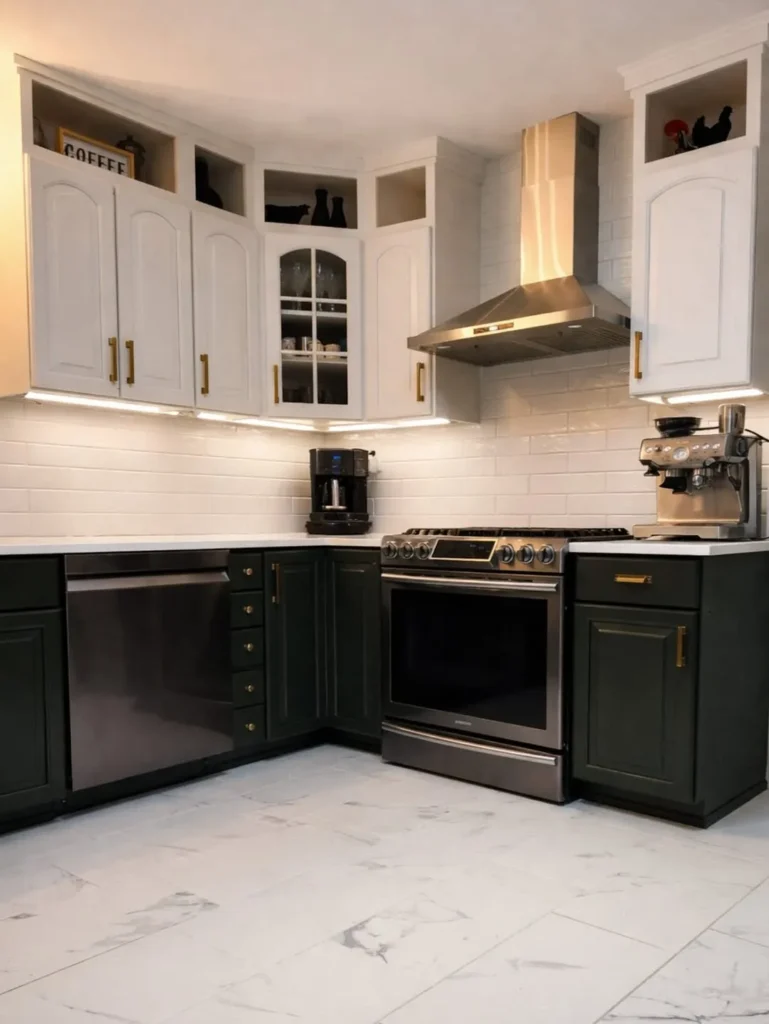
Few color pairings feel as crisp and confident as black and white. Bright upper cabinets keep the kitchen visually open, while deep lower cabinetry grounds the layout, disguises everyday marks, and gives the stainless appliances and brass hardware a sharper, more polished setting.
For real homes, the balance works best when the darker shade stays below eye level. Keep counters and backsplash simple, then repeat one metal finish across handles, lighting, and fixtures so the contrast feels deliberate rather than pieced together overall.
2. Blush Pink Lower Cabinets With Warm Neutral Uppers
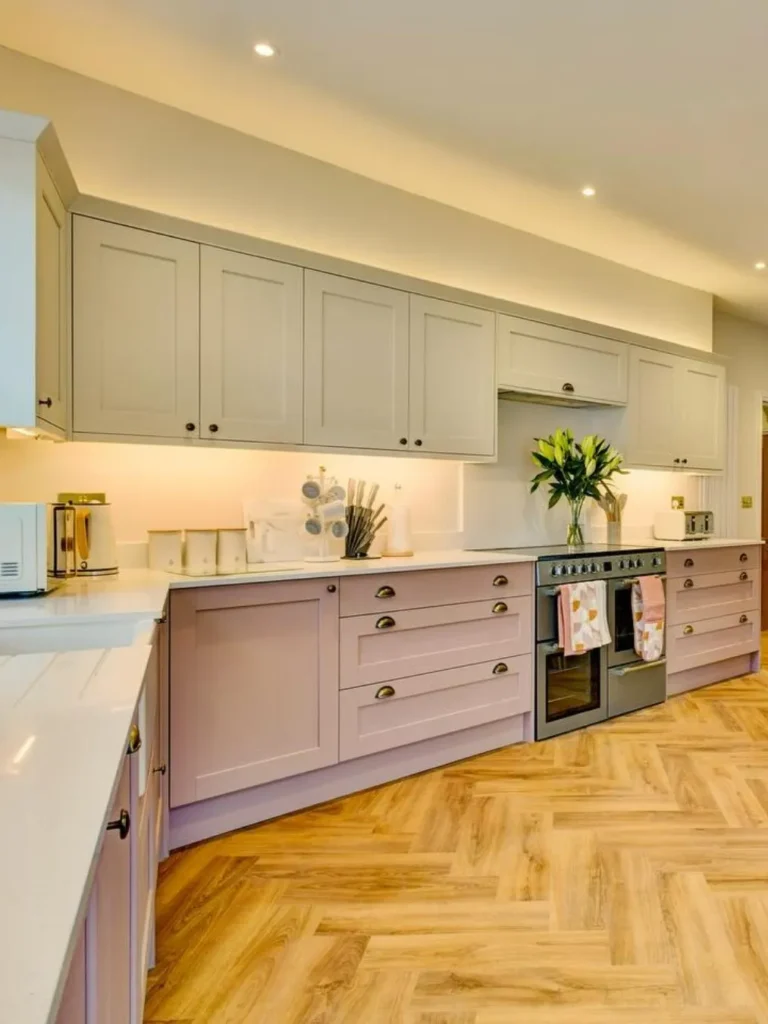
Soft blush cabinetry brings personality without making the kitchen feel overly sweet. Pairing pink lower units with warm neutral uppers creates a calm layered look, while pale worktops and the wood-patterned floor keep the palette bright, practical, and comfortable for everyday use.
Choose a muted pink instead of a highly saturated shade, especially across long cabinet runs. Antique-style cup pulls or aged brass knobs suit the softness beautifully, while green branches and simple ceramics add freshness without competing with the gentle color story.
3. Dark Wood and Charcoal Cabinet Pairings to Try
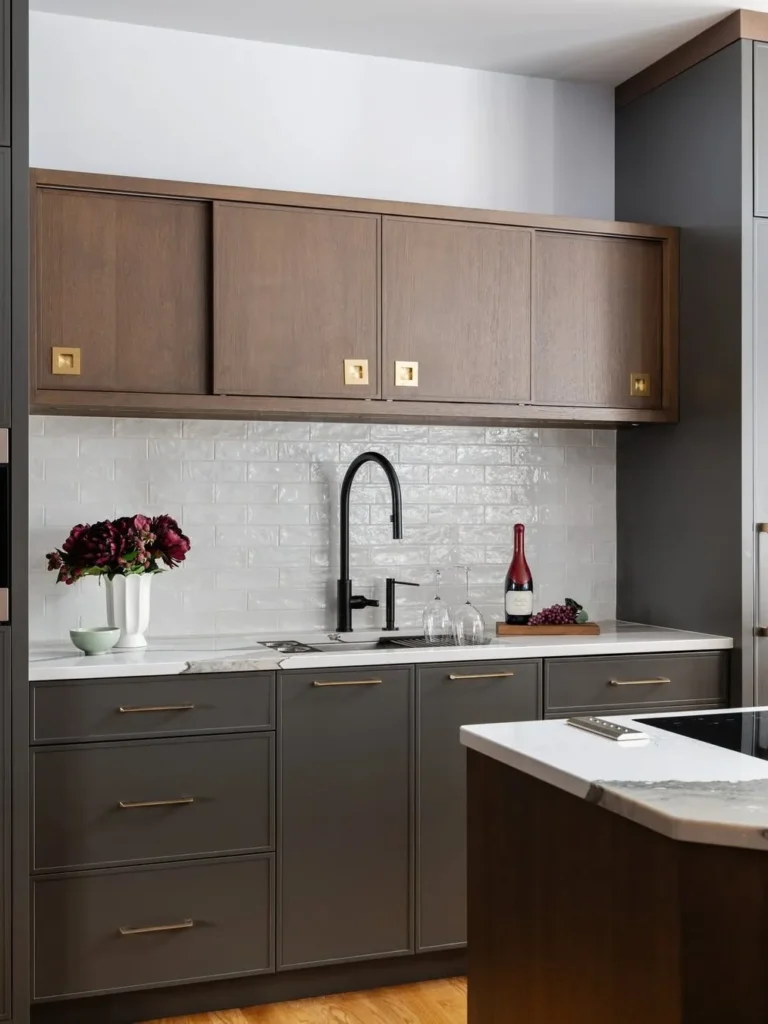
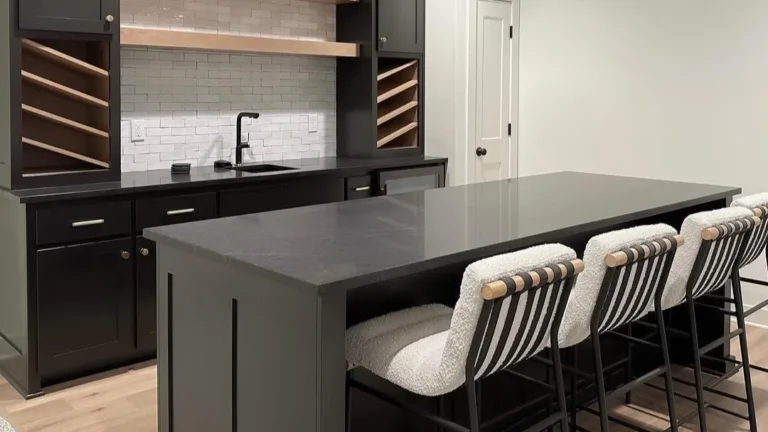
Dark wood and charcoal create a refined kitchen that feels modern without becoming cold. Wood-grain upper cabinets add visible texture, while charcoal lower units and tall storage bring depth around the sink, with a white backsplash and counter preventing the composition from looking heavy.
This pairing performs best in kitchens with generous daylight or reliable task lighting. Choose clean-lined hardware and leave some countertop breathing room, because too many accessories can blur the contrast, while one dark faucet neatly connects the deeper finishes overall.
4. Forest Green and White Cabinet Combinations With Brass Accents
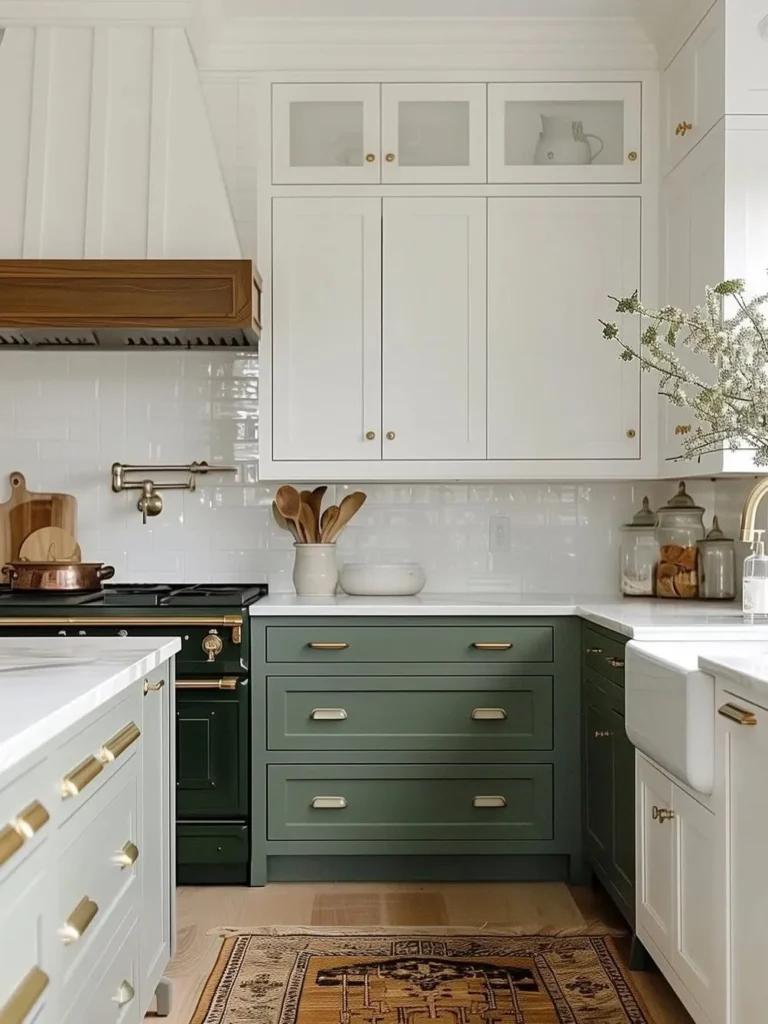
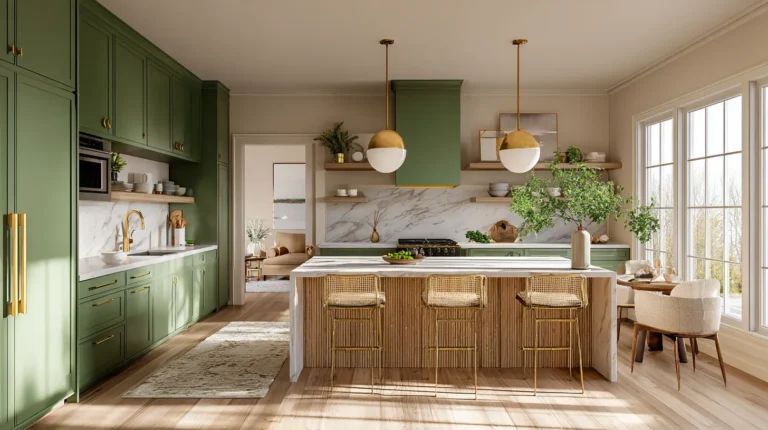
Forest green and white make a compact kitchen feel both fresh and grounded. Deep green drawers and lower cabinets anchor the work zone, while white uppers reflect light, reduce visual bulk, and allow the brass handles to add a soft classic glow.
Repeat green in one major appliance or nearby feature rather than scattering it across every surface. A warm rug and wooden utensils keep the palette relaxed, while white counters and glossy tiles make daily cleanup easier and preserve the room’s brightness.
5. Green Island and Grey Cabinets for a Classic Mix
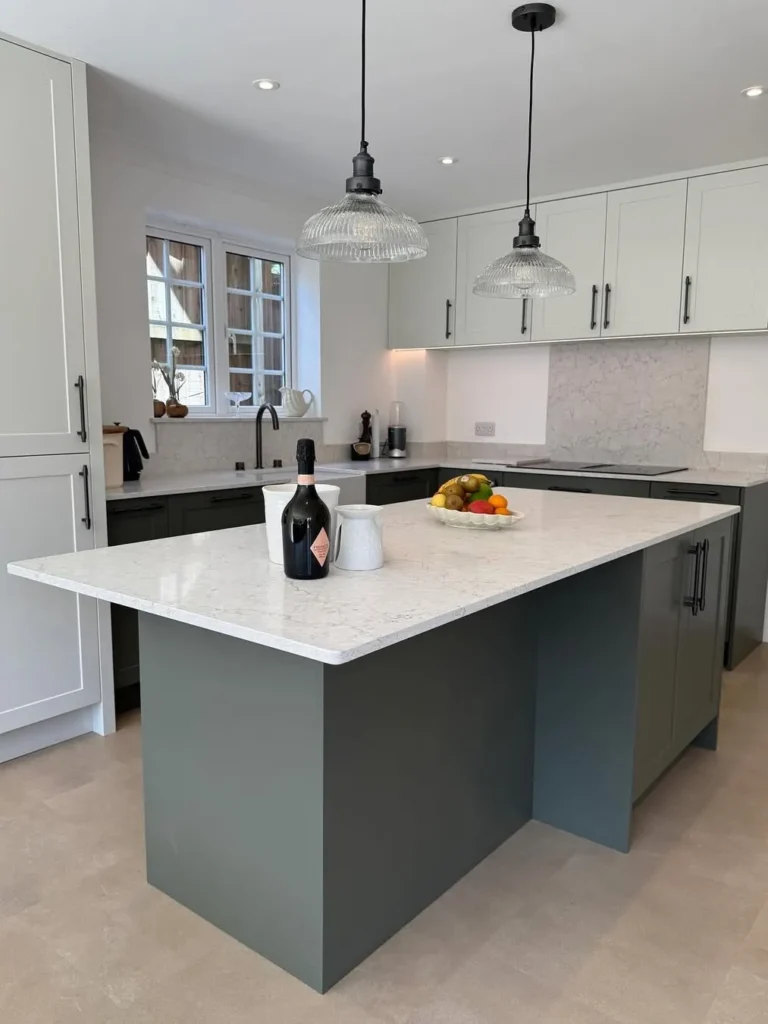
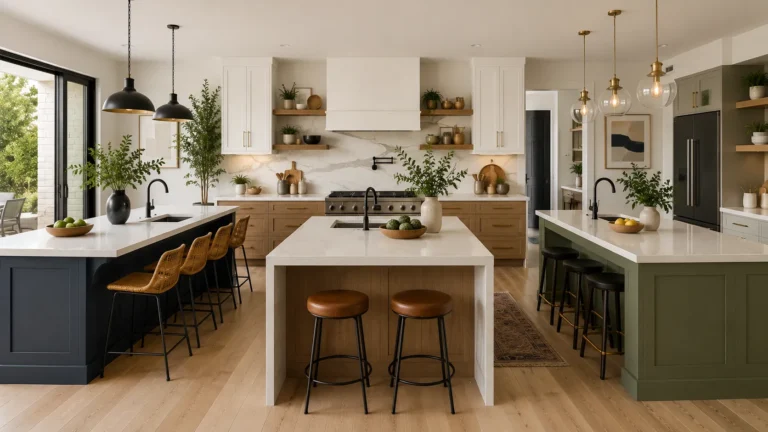
A green island can give a neutral kitchen a clear and memorable center. Muted grey perimeter cabinets stay quiet enough for the island to carry the color, while white counters and glass pendants keep the arrangement spacious, balanced, and suitable for everyday family use.
This approach suits anyone who wants color without committing every cabinet to it. Test the island shade in changing daylight, repeat it once in a vase or artwork, and keep the surrounding cabinetry consistent so the room does not feel visually fragmented.
6. Light Wood and White Cabinet Combinations That Feel Bright
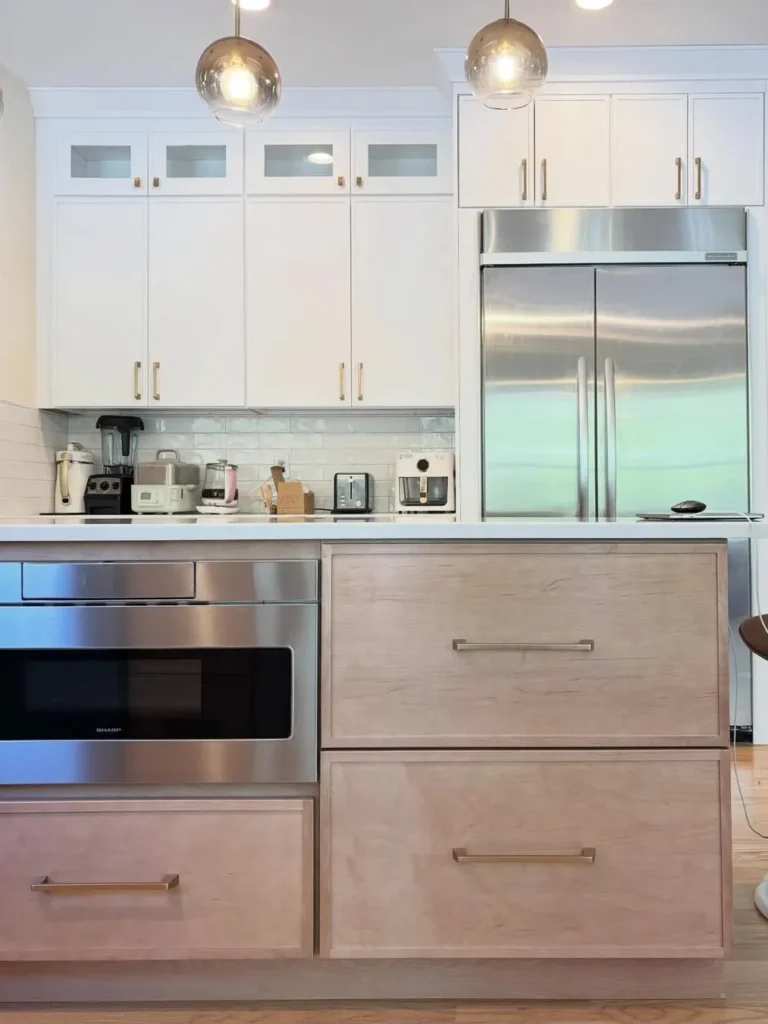
Light wood and white create an easy, sunlit kitchen with warmth built into the layout. Pale timber drawers soften stainless appliances and bright cabinetry, while simple brass pulls add polish and prevent the clean palette from feeling flat or clinical.
Choose wood with a quiet grain and avoid mixing several unrelated timber tones nearby. Keeping upper cabinets white preserves brightness in smaller kitchens, while concentrating wood on one large feature gives the material enough presence without making the design feel busy.
7. Natural Wood Island Paired With Crisp White Cabinetry
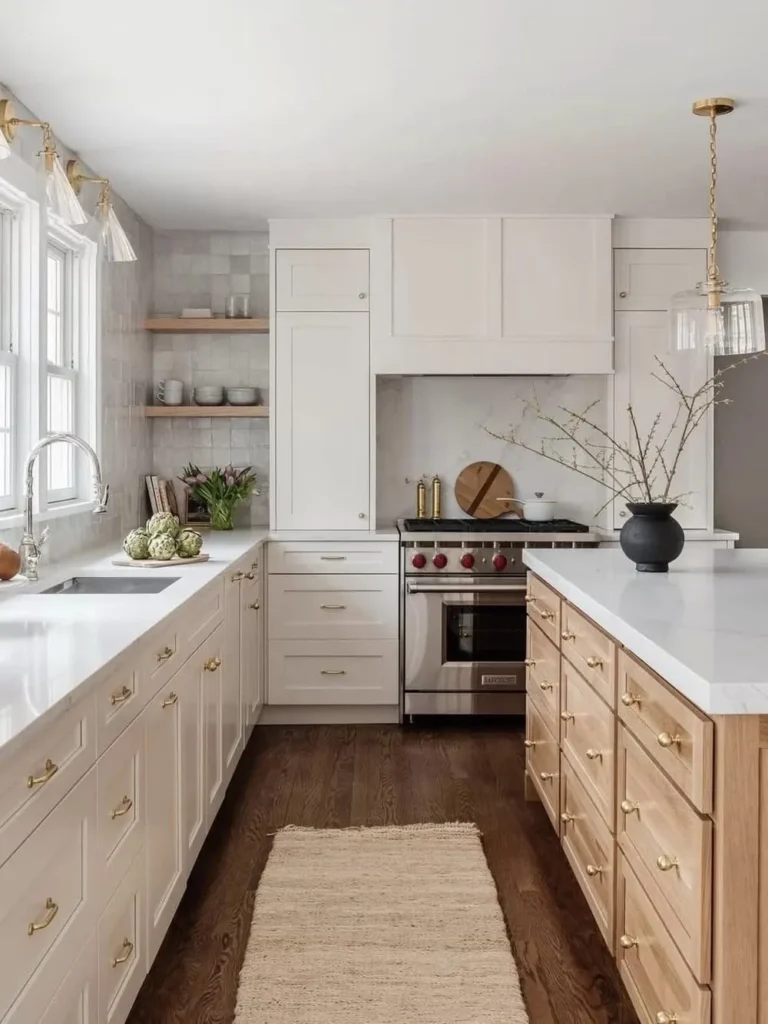
A natural wood island instantly softens a mostly white kitchen. Pale cabinetry and backsplash maintain an airy background, while the wood drawers introduce texture and a furniture-like quality, with dark flooring giving the lighter finishes enough contrast to feel intentional.
Use this idea when a classic kitchen needs more warmth and character. Match the island loosely with flooring or open shelves rather than forcing an exact tone, then use simple brass hardware and a neutral runner to connect everything comfortably.
8. Navy and White Two Tone Kitchen Cabinet Ideas With Coastal Charm
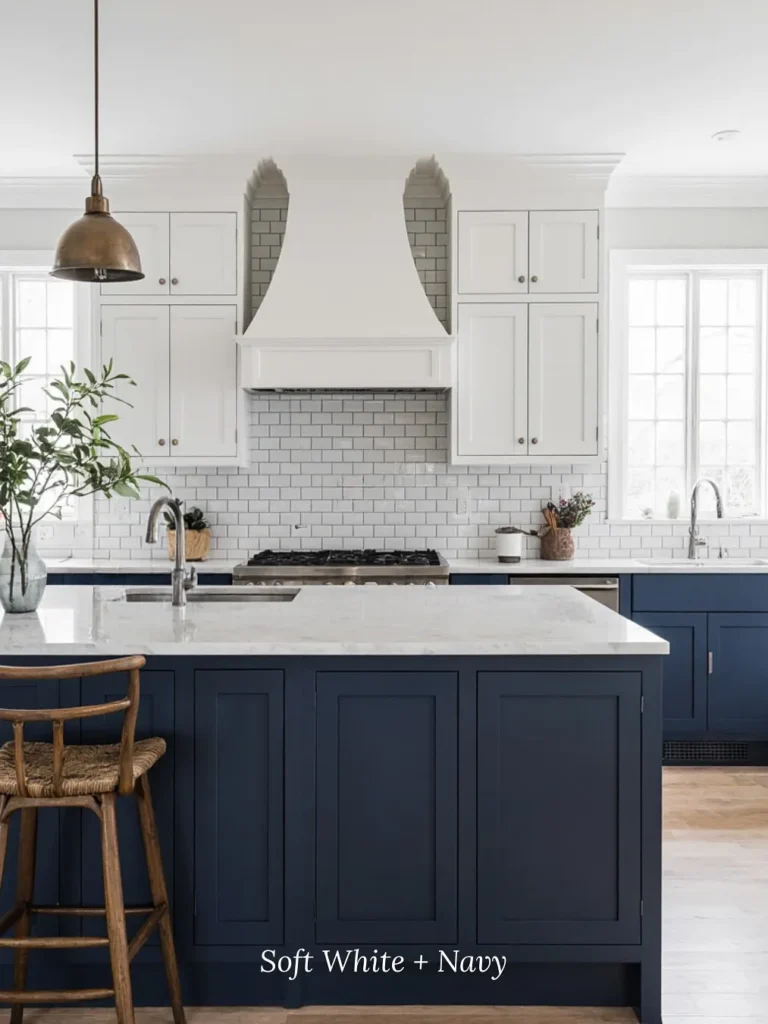
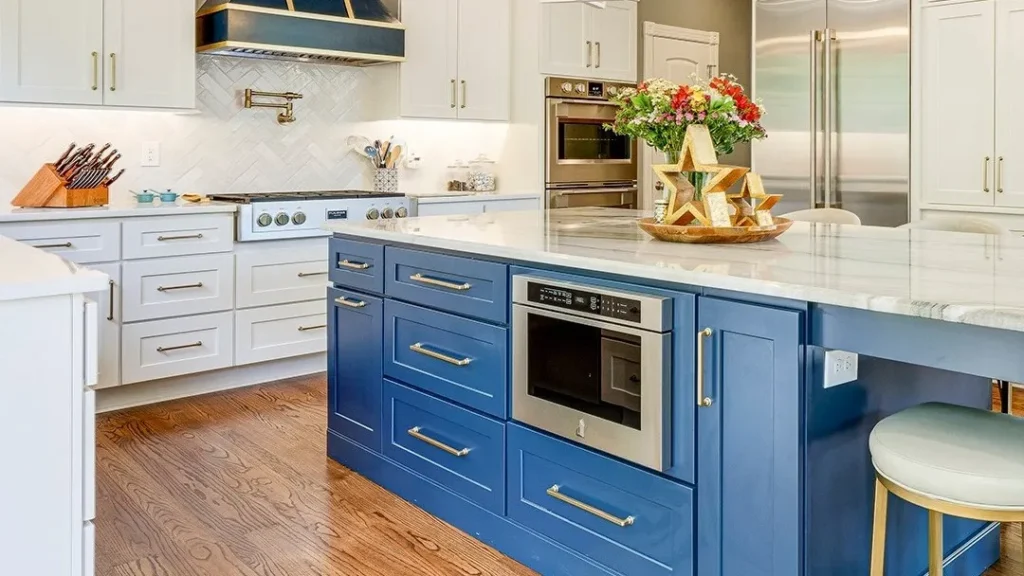
Navy lowers and a matching island bring coastal depth without relying on themed decor. White upper cabinets, subway tile, and pale countertops keep the room bright, while the rich blue base supplies a custom look and woven seating adds relaxed natural texture.
This scheme works especially well in kitchens with generous daylight. Choose a matte or softly satin navy, add warm wood or rattan in small amounts, and avoid filling the counters with blue accessories because the cabinetry already provides plenty of color.
9. Pink and Black Two Tone Kitchen Cabinet Ideas
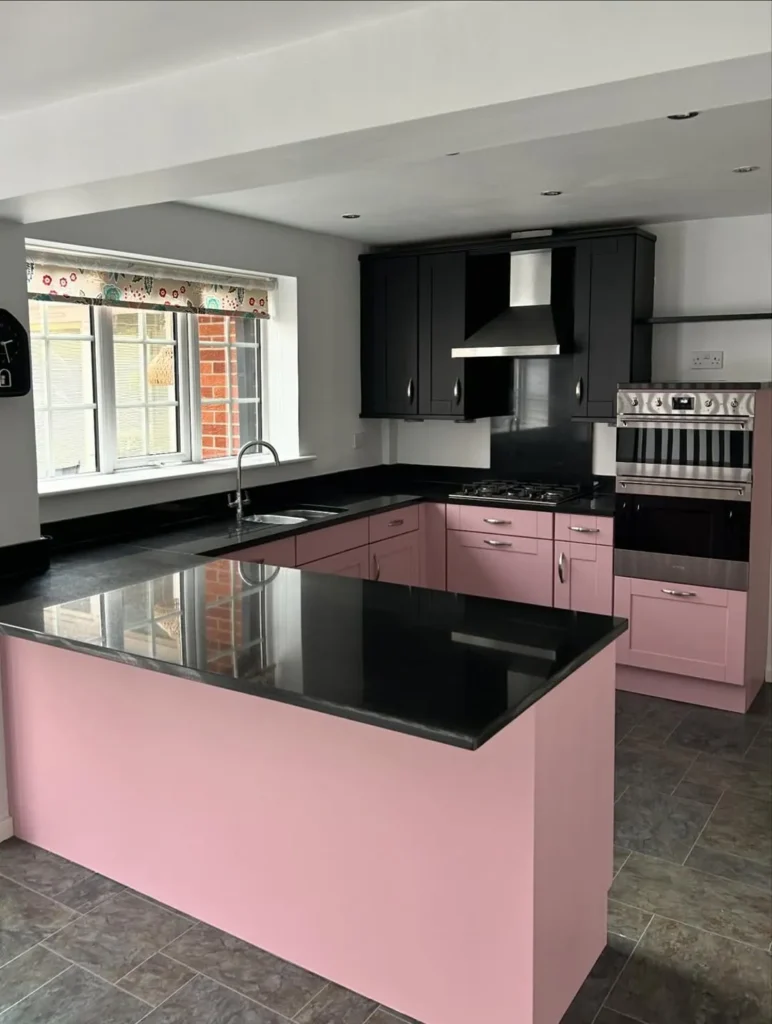
Pink and black make a bold kitchen feel playful, sharp, and surprisingly grown-up. Dusty pink lower cabinets soften the black uppers and glossy counters, while stainless appliances add a clean industrial note and help each color remain clearly and visually defined.
Choose a muted rose instead of a bright candy pink to keep the palette easier to live with. Because solid black worktops can show dust and streaks, a low-sheen or lightly patterned surface may be more practical for busy households.
10. Powder Blue and White Two Tone Cabinets
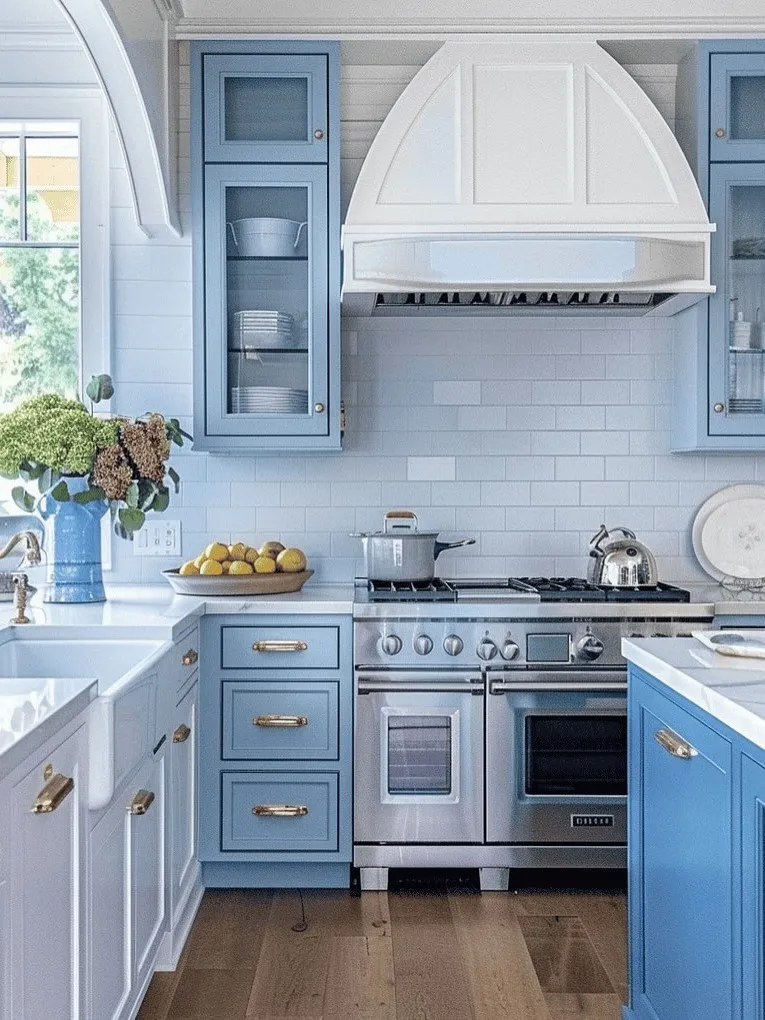
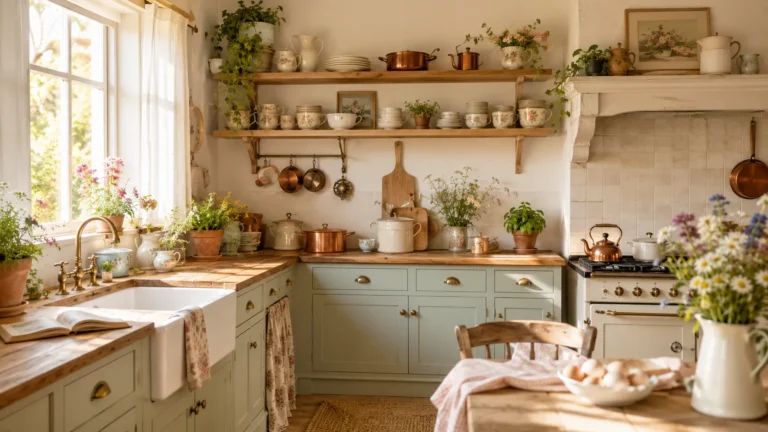
Powder blue cabinets give a white kitchen a soft, collected character. Blue appears on the island and selected lower units, while crisp white cabinetry frames the range, reflects daylight, and lets brass hardware and warm wood flooring add welcome balance.
This combination suits cottage, coastal, and traditional interiors, but the blue should stay slightly greyed for a timeless finish. Repeat the shade in only one or two nearby accents and keep counters pale so the overall result remains fresh rather than busy.
11. Soft Gray and White Cabinets for a Fresh Kitchen Look
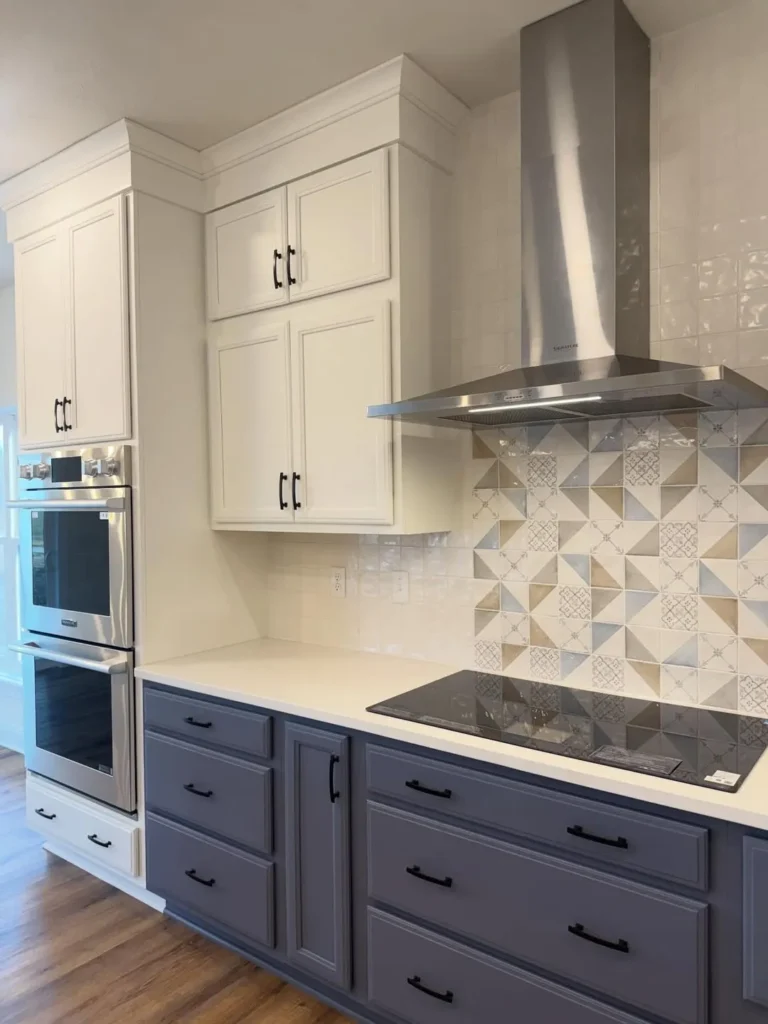
Soft gray lowers bring calm structure to a bright white kitchen without creating a harsh contrast. The upper cabinets, pale counters, and stainless range hood keep the room open, while the patterned backsplash adds just enough movement to stop the neutral palette from feeling plain.
This combination works well in kitchens that need depth but cannot handle very dark cabinetry. Choose a gray with blue or violet undertones, repeat black hardware throughout, and let one patterned surface carry the visual interest so the finished room still feels clean and easy to maintain.
12. Teal and White Shaker Cabinets With Timeless Appeal
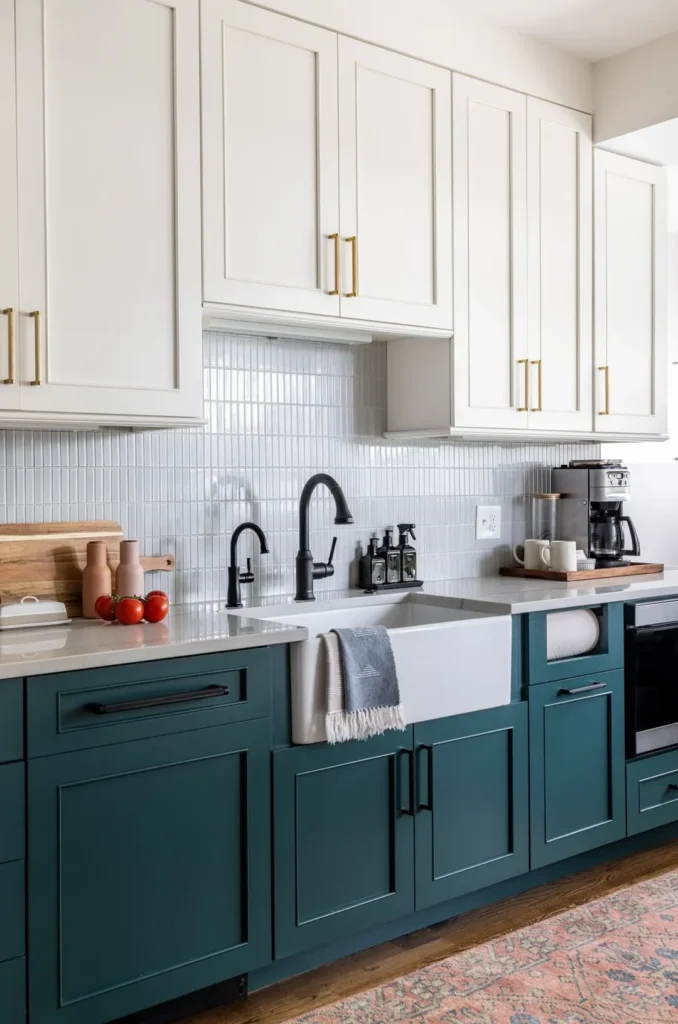
Teal lower cabinets give a hardworking sink wall real personality while white uppers keep the look light. The farmhouse sink, black faucets, slim tile backsplash, and warm wood flooring create a balanced mix of crisp lines, rich color, and comfortable everyday texture.
For a similar result, keep the strongest shade below the counter and use a softer white above. Brass handles can warm the upper cabinets, while black fixtures ground the lower section; limiting the palette to these few finishes helps the kitchen feel custom instead of overly decorated.
13. Walnut and Matte Black Cabinets for a Modern Kitchen
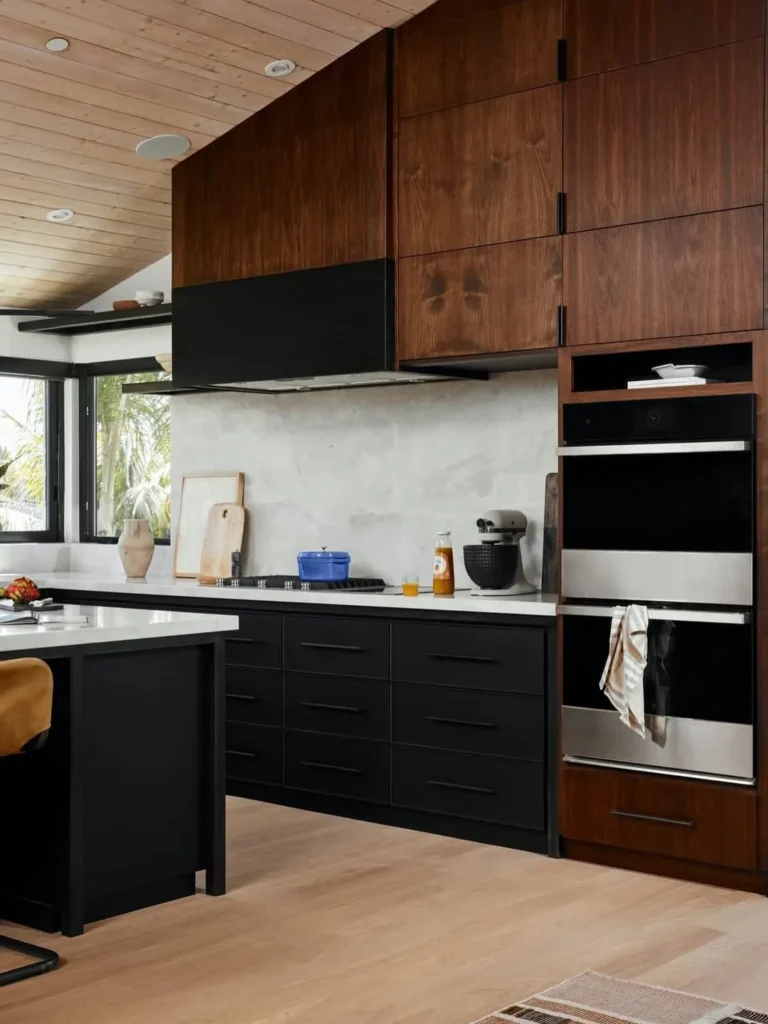
Walnut and matte black create a dramatic modern kitchen that still feels inviting. Tall wood cabinetry brings warmth and visible grain, while black drawers and the matching island sharpen the layout, allowing the pale floor, white counter, and textured wall to provide necessary breathing room.
This pairing suits open kitchens with strong daylight and simple architecture. Keep wood tones consistent, use long dark pulls for a streamlined finish, and avoid adding several competing colors; one blue pot or earthy accessory is enough to soften the scheme without weakening its bold character.
14. Warm Wood and White Cabinets
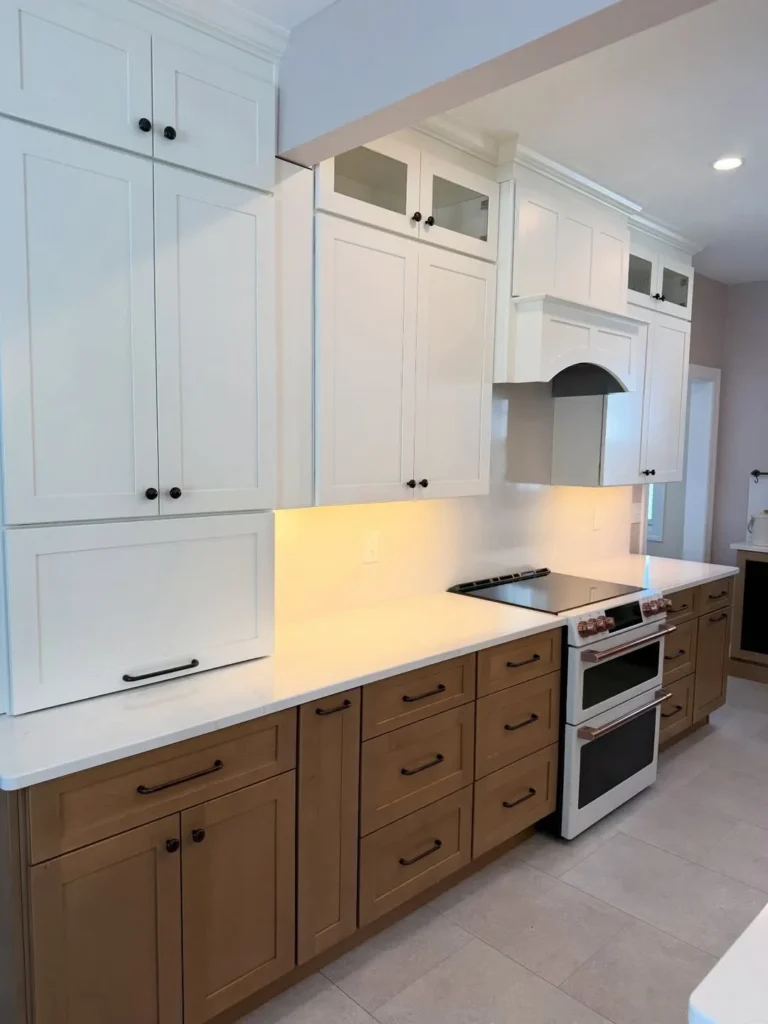
Warm wood lowers and white uppers make a long cabinet run feel lighter and more welcoming. The white section visually lifts the ceiling, while brown base cabinets add warmth near the floor and help the range and dark hardware feel naturally connected to the overall design.
This approach is especially useful when you want wood without letting it dominate a narrow kitchen. Choose a medium, muted stain, keep counters pale, and repeat black handles across both finishes so the contrast looks planned rather than like two separate cabinet sets.
15. White and Wood Two Tone Kitchen Cabinet Ideas
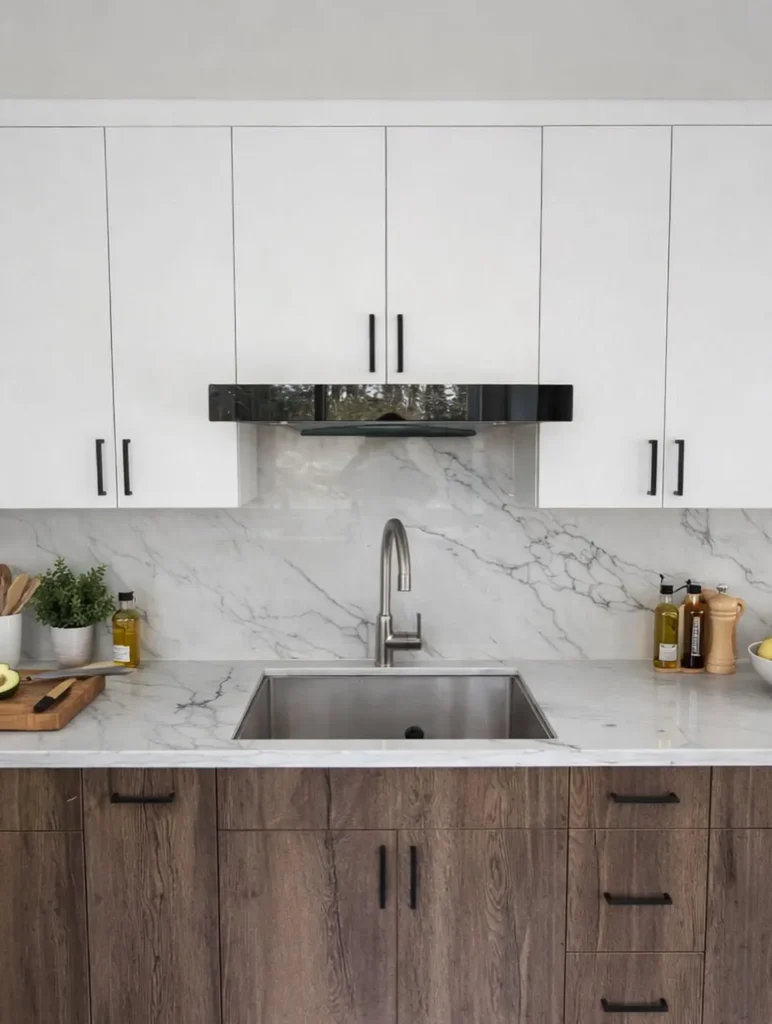
White upper cabinets paired with wood-grain lowers create a clean kitchen with natural warmth. The marble-look backsplash and counter form a continuous bright backdrop, while black handles and a stainless sink add definition without distracting from the simple cabinet split.
The idea works particularly well in compact layouts because lighter cabinets remain at eye level. Select a wood tone with subtle grain, keep accessories to a minimum, and repeat black details in the faucet, hood, or lighting so the lower and upper sections feel visually connected.
Practical Ways to Balance Two Cabinet Finishes
- Start with the overall mood. Instead of copying every cabinet color, handle, and surface exactly, decide whether you want the kitchen to feel light, grounded, warm, modern, or relaxed. Use that feeling to guide your choices.
- Choose one clear focal point. Let the island, lower cabinets, or a tall pantry wall carry the stronger color or wood finish. Keeping the remaining cabinetry quieter prevents the room from feeling visually divided.
- Keep permanent surfaces simple. White, cream, soft gray, or lightly patterned counters and backsplashes give two cabinet finishes room to work together without creating too much competition.
- Introduce extra color carefully. Rugs, towels, artwork, stools, or small appliances can bring in another shade without requiring a major renovation. These accents are also easy to change later.
- Repeat key finishes. Using the same hardware, countertop, flooring tone, or faucet finish across both cabinet colors makes the design feel connected and professionally planned.
- Make small changes where possible. Renters can try removable cabinet film, updated handles, or a painted freestanding island. In compact kitchens, changing only the lower cabinets can add depth without making the room feel smaller.
- Know when to stop. Too many colors, wood tones, and decorative details can weaken the two-tone effect. A limited palette with two cabinet finishes and a few repeated textures usually looks more polished.
A well-balanced kitchen does not need to match an inspiration photo perfectly. With thoughtful contrast and a simple foundation, it can still feel personal, practical, and comfortable for everyday life.