

Reverse Decluttering: The Method That Works When Marie Kondo Didn’t
Your bedroom may look clean at first glance, but the clutter still finds a way back. Clothes land on the chair, drawers become harder to close, and the nightstand slowly fills with things you barely use.
Maybe you have tried decluttering before and ended up feeling more tired than organized. You picked up item after item, tried to decide what deserved to stay, and got stuck on gifts, old clothes, sentimental objects, and purchases you regretted making.
That is where reverse decluttering can help. Instead of starting with what you should remove, you begin by choosing the things you clearly use, need, or love. Everything else gets reviewed afterward.
It is not a magic cure for clutter. But if other methods left you staring at huge piles without knowing what to do, reverse decluttering gives you a smaller and clearer place to start.
What Reverse Decluttering Actually Means

Most decluttering methods begin with a question like, “What should I get rid of?” That sounds simple, but it can quickly turn every object into a debate about money, memories, usefulness, or guilt.
Reverse decluttering flips the question. You ask yourself, “What do I definitely want to keep?” Then you pull those clear keepers out first and leave the uncertain things behind.
Think about a crowded bathroom drawer. You might immediately choose your toothbrush, toothpaste, moisturizer, deodorant, hairbrush, and the makeup you use every morning.
Those decisions take almost no effort. What remains might include dried mascara, empty bottles, old hotel toiletries, broken hair clips, and products you bought but never liked.
You have already reduced the size of the problem before making any difficult decisions. That small shift is what makes reverse decluttering feel more manageable.
Why Reverse Decluttering Can Feel Easier Than KonMari

Marie Kondo’s method is often described as simply throwing away anything that does not spark joy, but that is not quite accurate. The official KonMari Method also focuses on choosing what you want to keep.
KonMari asks you to work by category rather than by room. You begin with clothes, then move through books, papers, miscellaneous belongings, and sentimental items.
The method also asks you to handle individual possessions and decide whether they spark joy. That structure works well for many people, especially those who want a full reset.
Reverse decluttering can feel different because the task can stay much smaller. You can start with one drawer instead of gathering every piece of clothing you own.
You can work through ten coffee mugs instead of the entire kitchen. You can stop after one shelf and still feel like you finished something useful.
| KonMari Method | Reverse Decluttering |
|---|---|
| Organizes by category | Can begin with one small space |
| Uses a set category order | Lets you choose where to begin |
| Asks whether an item sparks joy | Starts with obvious things you use, need, or value |
| Often involves gathering a full category | Can work inside one drawer or shelf |
| Sentimental items come last | Difficult items can also wait |
| Works well for larger tidying projects | Works well for small sessions |
The two methods actually share an important idea. Both focus on what deserves to stay, but reverse decluttering changes the order and size of the decisions.
If KonMari felt like too much, that does not mean you are bad at decluttering. You may simply need a method that fits the time and energy you have right now.
Try Reverse Decluttering in 5 Simple Steps
You do not need new storage bins or an entire weekend. The best way to start is with a space small enough that you can finish without creating another mess.
Choose a drawer, shelf, cabinet, basket, or small part of a closet. A contained area gives you a clear stopping point and makes it easier to see progress.
Reverse Decluttering in 5 Simple Steps
A simple step by step process to clear clutter without feeling overwhelmed. Start small, keep what matters, and make the space easier to use every day.
Choose One Small Space
Start with a drawer, shelf, cabinet, basket, or one small part of a closet. A contained space gives you a clear finish point and helps you see progress fast.
Pull Out the Clear Keepers
Remove the things you know you use, need, or love. Do not debate anything yet. Just take out the easy yes items first.
Look at What Is Left
Study the leftover items and ask why they did not make the keep pile. They may be broken, forgotten, duplicated, or kept only out of guilt.
Give Unwanted Items a Destination
Sort them into simple groups like donate, sell, recycle, dispose of responsibly, or move to another room.
Put Keepers Back in a Smart Way
Clean the space, then return the things you kept. Put the items you use most often where they are easiest to reach.
Final Goal
The goal is not to create a picture perfect drawer. The goal is to create a space that feels lighter, works better, and makes daily life easier.
The goal is not a drawer that looks perfect in a photograph. The goal is a drawer that makes your everyday routine easier.
Use These 5 Questions When You Get Stuck

Some items will still make you hesitate. Reverse decluttering handles the easy choices first, but it cannot remove every emotional or practical decision.
Start by asking, “Do I actually use this?” Something can be useful in theory without being useful in your real life.
A bread maker might work perfectly, but if you have not used it in four years, that matters. Your actual habits are more useful than the possible future use you keep inventing for the object.
Next, ask whether you already own something that does the same job. Duplicates often hide in different drawers, closets, and cupboards.
Three bottle openers, four black cardigans, or seven travel mugs may be more than your household actually uses. Seeing them together can make the decision much easier.
Another helpful question is, “Would I buy this again today?” This separates past spending from present value.
The money you spent is already gone. Keeping something you do not want will not bring that money back.
You can also ask whether the item fits your current life. People often store old hobbies, old work clothes, and old versions of themselves long after those things stop being useful.
Greater Good Science Center has discussed how possessions can become connected to identity and past stages of life. That emotional link can make decluttering harder even when the object itself is no longer useful.
Finally, ask whether you are keeping the memory or the object. A meaningful memory can stay important even if every physical item connected to it does not stay in your home.
7 Easy Places to Try Reverse Decluttering First

Your first project should feel easy enough to finish. Avoid starting with inherited belongings, old photographs, family papers, or a garage packed with decades of mixed items.
A nightstand is often a good choice because you use it every day. Pull out the things that support your morning or bedtime routine, then question the random items left behind.
A sock drawer works well for the same reason. Choose the comfortable pairs you wear, then look at the worn, unmatched, stretched, or uncomfortable ones that remain.
A bathroom drawer can also give you quick progress. Keep your current daily products first, then review forgotten samples, empty containers, and things you never liked using.
| Space | Keep First | Look Closely at What Remains |
| Nightstand | Daily bedtime items | Receipts, old cords, random objects |
| Sock drawer | Comfortable pairs | Worn or unmatched socks |
| Bathroom drawer | Current products | Samples and forgotten products |
| Utensil drawer | Weekly tools | Duplicates and specialty gadgets |
| Mug cabinet | Favorite mugs | Extras nobody chooses |
| Entry table | Keys and essentials | Items dropped there without a home |
| Linen shelf | Regular towels and sheets | Worn or excessive extras |
A utensil drawer is another easy place because you probably know exactly which tools you use. Once those are removed, strange gadgets and duplicates become easier to question.
A mug cabinet can reveal the same pattern. Many households have favorite mugs that get used repeatedly while other mugs simply take up space.
The point is not to pick the perfect room. The point is to finish a small area and learn what the method feels like before moving on.
How to Handle Sentimental Items Without Regret

Sentimental belongings need more care than expired toiletries or broken kitchen tools. A chipped bowl might look useless to someone else but remind you of someone you loved.
Do not force yourself to make those decisions first. Even the official KonMari Method places sentimental belongings near the end of the process because they tend to be harder to judge.
Reverse decluttering can use the same idea. Build confidence in easier spaces before working through old photographs, inherited objects, childhood keepsakes, or family gifts.
When you do reach sentimental things, choose the pieces that carry the strongest meaning. You do not need to keep every object connected to the same memory.
A limited memory box can help because it gives sentimental storage a physical boundary. You still decide what matters, but the collection cannot spread into every closet and drawer.
Photographs can also help with some objects. Sometimes a picture preserves the memory well enough that you no longer need the physical item.
That will not feel right for everything, and that is fine. If a physical object truly matters to you, keeping it can be the right decision.
Decluttering should make your home easier to live in. It should not make your home feel empty, cold, or disconnected from your life.
Stop Buying Organizers Until You Know What Is Staying

A cluttered closet can make new baskets and storage boxes feel like the obvious solution. But storage products cannot solve the problem if you are simply trying to fit too many belongings into the same space.
The better order is simple. Decide what stays first, remove what does not, measure what remains, and then buy storage if you still need it.
The official KonMari guidance follows a similar idea by putting the main focus on choosing belongings before giving too much attention to storage systems.
The Container Store also recommends sorting and decluttering before deciding how items should return to drawers and other storage spaces. This helps you buy solutions for a real problem rather than hiding extra stuff.
After reverse decluttering, you may still need drawer dividers, slim hangers, small baskets, stackable bins, or under bed storage.
You may also discover that your existing storage works perfectly once the things you never use are gone. That saves money and keeps the room from filling with unnecessary containers.
Where Reverse Decluttering Works Best
Reverse decluttering can eventually work in almost every part of the home. The trick is to break large spaces into smaller sections instead of treating the whole room as one project.
A bedroom closet, for example, can be divided by clothing type. You might begin with shirts, then jeans, then shoes, rather than emptying the entire closet at once.
The kitchen can be handled in the same way. Start with one utensil drawer, then move to one cabinet, one shelf, or one food storage area.
| Area | Easy Keepers to Choose First | Harder Items to Review Later |
| Bedroom closet | Clothes you wear often | Almost fitting clothes and old favorites |
| Kitchen | Daily cookware and dishes | Specialty gadgets and duplicates |
| Bathroom | Daily products | Rarely used beauty items |
| Living room | Furniture and decor you enjoy | Objects kept from habit |
| Home office | Current supplies | Old notebooks and unused cables |
| Garage | Active tools and equipment | Forgotten hobby gear |
The same pattern works in the living room. Choose the furniture and decor you actually enjoy, then look at the objects that are there simply because they have always been there.
A home office can benefit too. Keep current supplies, active documents, and useful equipment first, then question outdated notebooks, old cables, and abandoned projects.
Reverse decluttering works best when your first choices reflect the life you actually live today.
When Reverse Decluttering Might Not Work for You

No method works perfectly for every home. Reverse decluttering becomes harder if almost everything feels like an automatic keeper.
Suppose you have sixty books and instantly decide all sixty must stay. In that case, the method has not really helped you edit the collection.
A physical limit can make the next step easier. Decide how much space a category is allowed to use, then choose which items deserve that space most.
Shared belongings can create another challenge. Do not remove your partner’s clothes, your child’s collections, or another person’s personal things just because you would make a different choice.
Shared spaces often need shared decisions. Reverse decluttering works best when everyone involved agrees on what belongs there.
The method also cannot fix shopping habits by itself. You could clear fifteen sweaters this month and slowly replace them with fifteen new ones.
Before buying something new, ask where it will live. If you cannot answer that easily, the item may become future clutter.
How to Keep Clutter From Coming Back
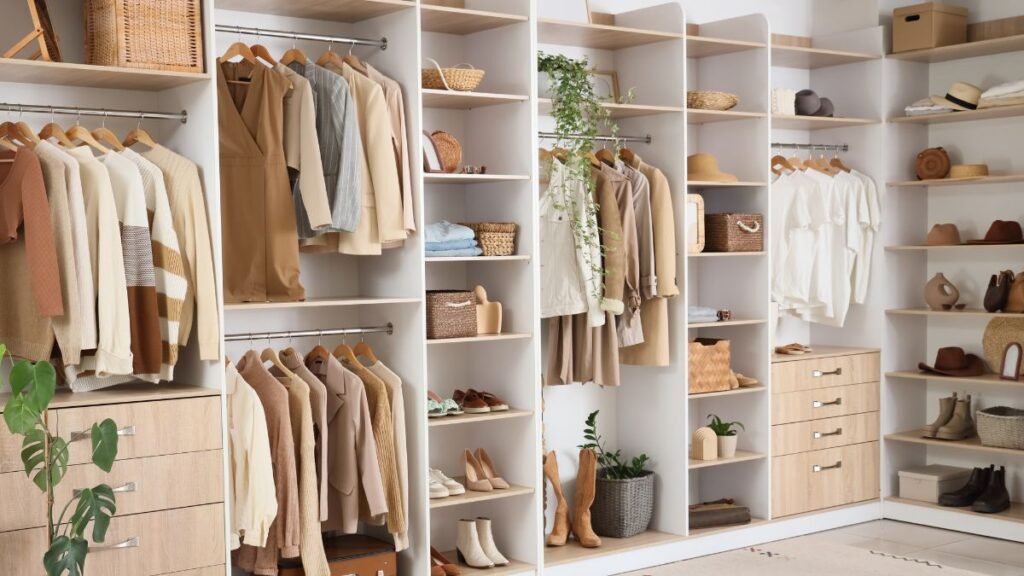
Decluttering feels good because the result is visible right away. Maintenance is less exciting, but it is what keeps the room from slowly returning to its old state.
Real Simple’s organizing guidance recommends using a realistic decluttering schedule and keeping a donation container available so unwanted things have somewhere to go.
You can make that habit very simple. Keep one donation basket in a closet, laundry area, or other convenient spot, then empty it when it becomes full.
Small reverse decluttering sessions can also prevent another large cleanout. One drawer on Tuesday and one bathroom shelf on Saturday is enough to keep things moving.
Giving everyday objects permanent homes matters too. Keys, chargers, mail, shoes, and bags are much easier to put away when there is an obvious place for each one.
Try to leave some empty space after you finish. A partly empty drawer is easier to use than one packed tightly with perfectly organized belongings.
Empty space also gives you room when something new enters the home. You do not need to fill every shelf simply because the shelf exists.
A Simple Reverse Decluttering Routine You Can Use Anywhere
The method becomes easier once you stop treating decluttering like a special event. You can use the same small routine in almost any room.
Pick one contained space, remove the obvious keepers, review what remains, and give unwanted items a destination. Then return the keepers in a way that matches how often you use them.
| Step | What You Do | What You Avoid |
| 1 | Pick one small space | Starting with the whole house |
| 2 | Choose obvious keepers | Debating every object immediately |
| 3 | Inspect what remains | Making excuses for every item |
| 4 | Remove unwanted things | Creating endless maybe piles |
| 5 | Return useful items | Buying storage too early |
| 6 | Give each item a home | Filling every available inch |
| 7 | Repeat somewhere else | Waiting for a perfect free weekend |
The biggest benefit of this routine is that each session has a clear end. You can finish one drawer and walk away without leaving the rest of the room in chaos.
Then you can repeat the process when you have more time. Progress does not need to happen all at once to make your home easier to manage.
Why Reverse Decluttering Is Worth Trying

Maybe Marie Kondo’s approach worked perfectly for someone you know but left you surrounded by piles and second guessing every decision. That does not mean decluttering cannot work for you.
KonMari and reverse decluttering actually share one important idea: what you choose to keep matters. Reverse decluttering simply makes the first decisions smaller and more obvious.
Instead of asking yourself to solve the whole bedroom, start with one drawer. Pull out the things you clearly use, need, or love, then take a closer look at what you did not choose.
You may find that the hardest part of decluttering was never getting rid of things. The hardest part was deciding where to begin, and reverse decluttering gives you that starting point one small space at a time.


