15 Garden Summer House Ideas for a Dreamy Escape
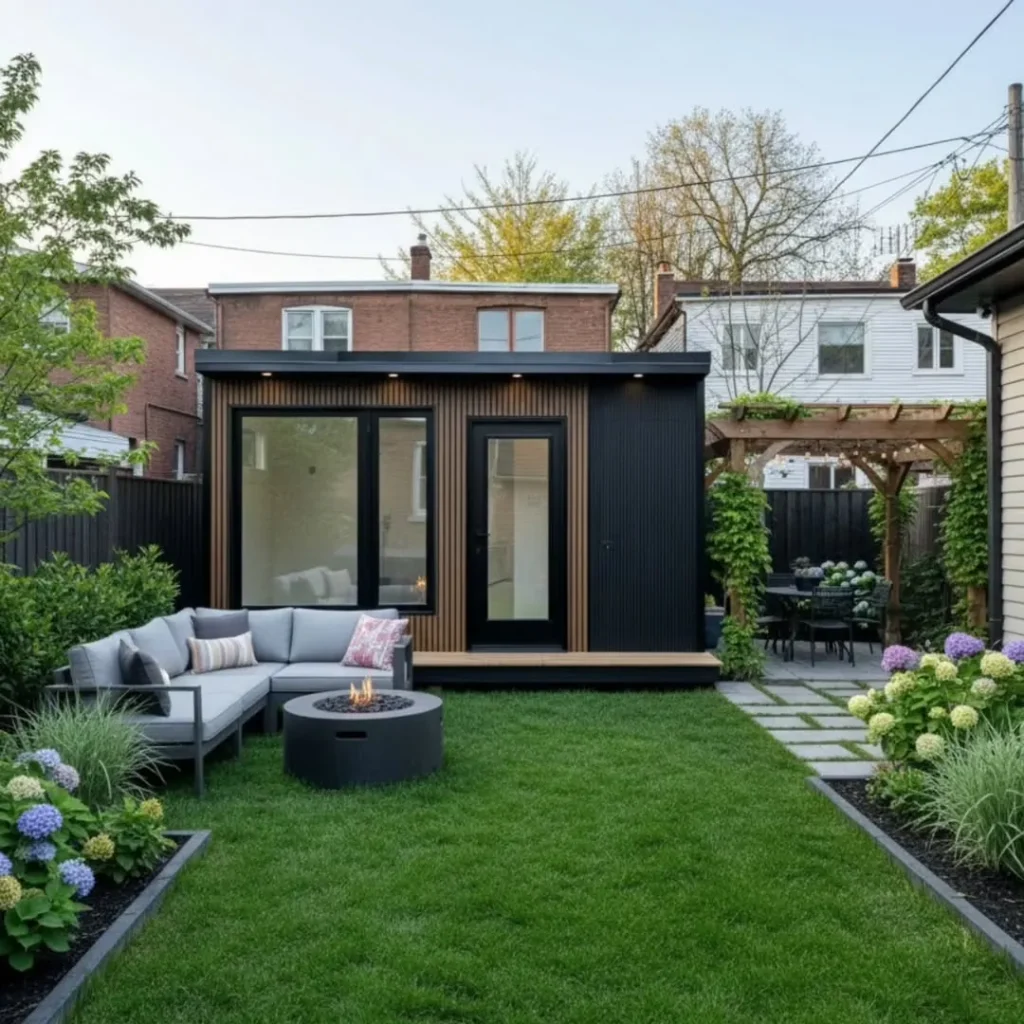
Garden Summer House Ideas can completely change how your outdoor space feels. If your backyard looks underused, plain, or missing that cozy escape feeling, these ideas will help you create something far more inviting.
This article is packed with inspiring ways to turn a garden room, patio nook, pergola, conservatory, or summer house into a place that feels calm, personal, and genuinely enjoyable to use. You will find ideas that work for different sizes, budgets, and styles, from plant-filled corners to polished outdoor lounges. In my experience, the most memorable spaces are not always the biggest ones. They are the ones that feel intentional, comfortable, and easy to step into at the end of a long day.
1. Airy Glass-Roof Garden Lounge

- The glass roof keeps the space open to daylight while still giving shelter.
- White curtains soften the structure and make the setup feel more relaxed.
- A hanging chair adds a dreamy focal point without taking up much floor space.
- Pale wood furniture keeps the whole area light and breezy.
Sunlight makes this space feel instantly uplifting, but the real success is in the balance between structure and softness. The glass roof adds protection without blocking the sky, while the curtains and pale seating keep the layout from feeling too rigid. That combination helps the garden room feel airy, calm, and comfortably styled for long afternoons outside.
What stands out here is how easy the mood feels. The furniture stays simple, the palette stays light, and the plants do a lot of the visual work. In my experience, this kind of setup works especially well when you want a summer retreat that feels elegant but still low-pressure enough for everyday use and easy weekend lounging.
2. Black Pergola Outdoor Living Space
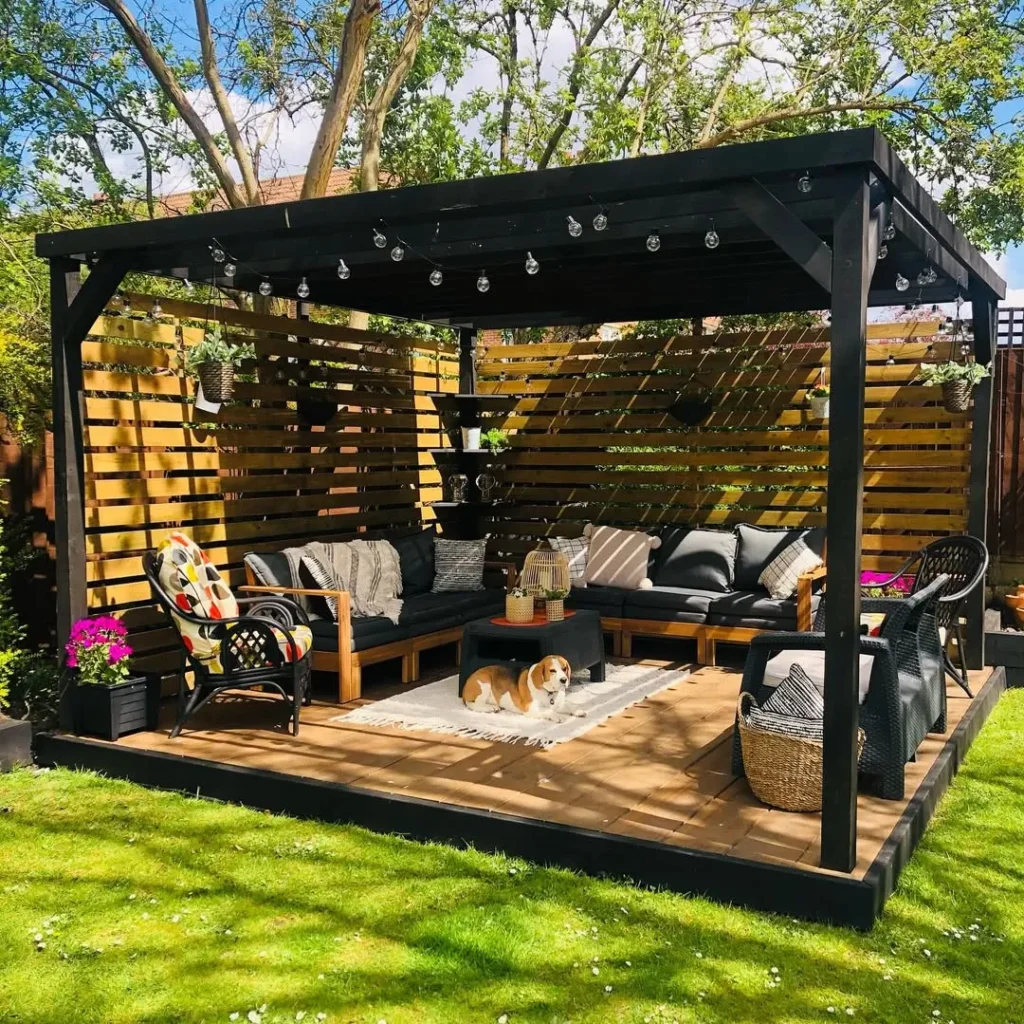
- The black frame gives the garden structure and makes the seating zone feel defined.
- Slatted walls add privacy without shutting out light and air.
- String lights bring warmth and make the space usable into the evening.
- A raised deck helps the whole setup feel more intentional and finished.
A pergola like this can completely change how a garden feels. Instead of loose furniture placed on the lawn, the space becomes a proper outdoor room with shape, comfort, and a stronger sense of purpose. The dark frame also makes the cushions, planters, and wood tones stand out more clearly, which adds depth without extra clutter.
The smartest detail here is the zoning. The deck, roof frame, and wall panels work together to create a cozy pocket that feels separate from the rest of the yard. I’ve noticed that even simple gardens feel more designed once one area gets this kind of clear structure and layered seating with evening lighting.
3. Charming Plant-Filled Garden House
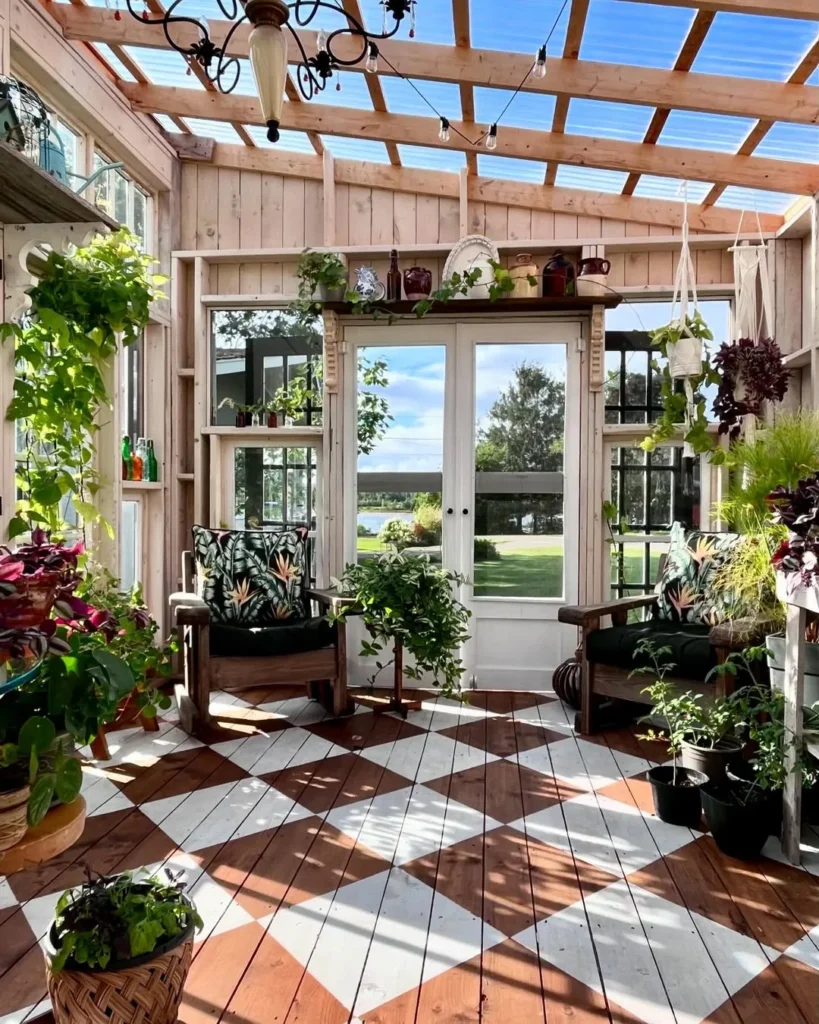
This garden house feels joyful because it lets the planting become part of the design instead of just background decor. The sunlight, painted floor, and mix of hanging and potted greenery make the room feel layered, personal, and full of life. It has that collected look people love, but it still feels comfortable and genuinely usable.
What makes this idea especially helpful is the way it uses every surface with intention. Floor pots, window shelves, and hanging baskets spread the greenery upward, which makes a compact room feel fuller without blocking movement. That is a smart approach for smaller garden rooms where visual richness and open floor space both matter.
4. Classic House Extension Summer Room

- The roof lantern brings extra daylight deep into the extension.
- Cream framing keeps the new addition looking soft and timeless.
- Wide doors improve the flow between the house and garden.
- Structured planting makes the whole setup feel more finished and calm.
A garden room like this works because it feels naturally connected to the house instead of added on as an afterthought. The matching trim, traditional glazing, and soft exterior color help the extension blend in beautifully. What the reader should copy here is the sense of continuity, because that is what makes the whole space feel more valuable and settled.
The strongest practical idea is the indoor-outdoor transition. Large doors and a clean patio make it easier to use the room for everyday meals, morning coffee, or casual hosting without a visual break. I’ve noticed that extensions feel more successful when the landscaping is simple and architectural, so the new room feels anchored rather than floating beside the house.
5. Covered Patio with Hanging Chair
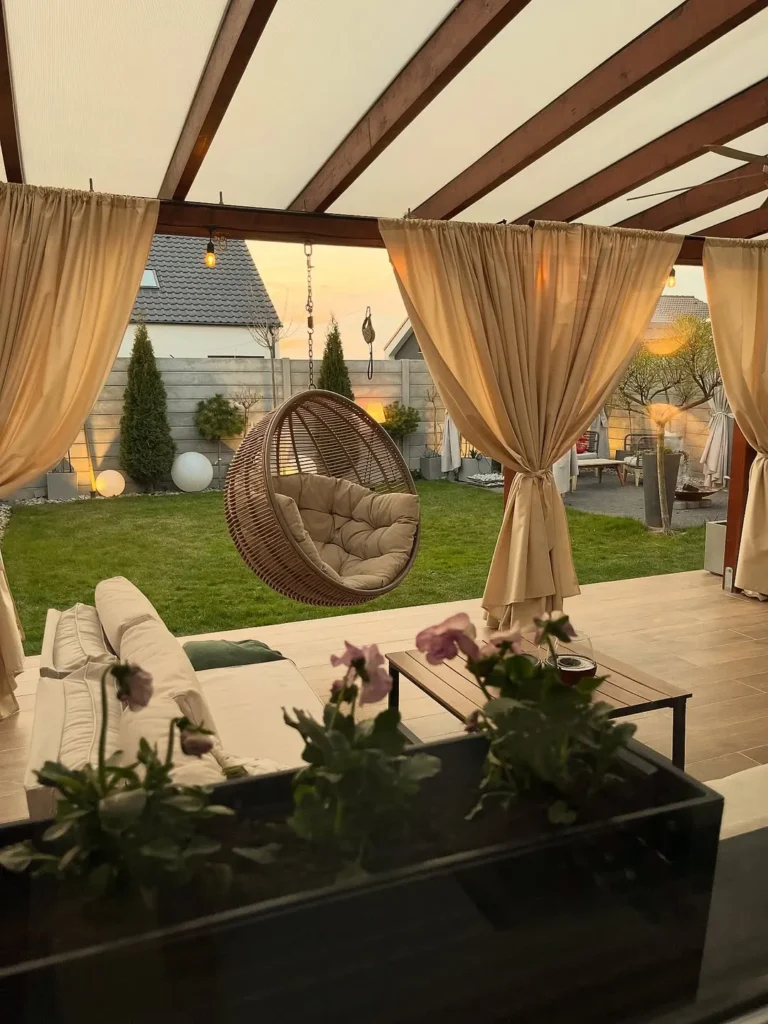
This patio feels especially dreamy because it balances shelter with openness. The roof, curtains, and lighting create a cozy frame, while the wide garden view keeps the atmosphere light and breathable. One of the easiest ways to recreate this mood is to combine soft fabric panels with just one statement seat that makes the whole area feel special.
What makes this setup useful in real homes is its flexibility from day to evening. During daylight, it works as a shaded retreat, and at dusk the warm lighting turns it into a softer entertaining spot. In my experience, curtains are one of the smartest additions for covered patios because they instantly make even simple structures feel more finished and comfortable.
6. Cozy Garden Cabin Patio Corner
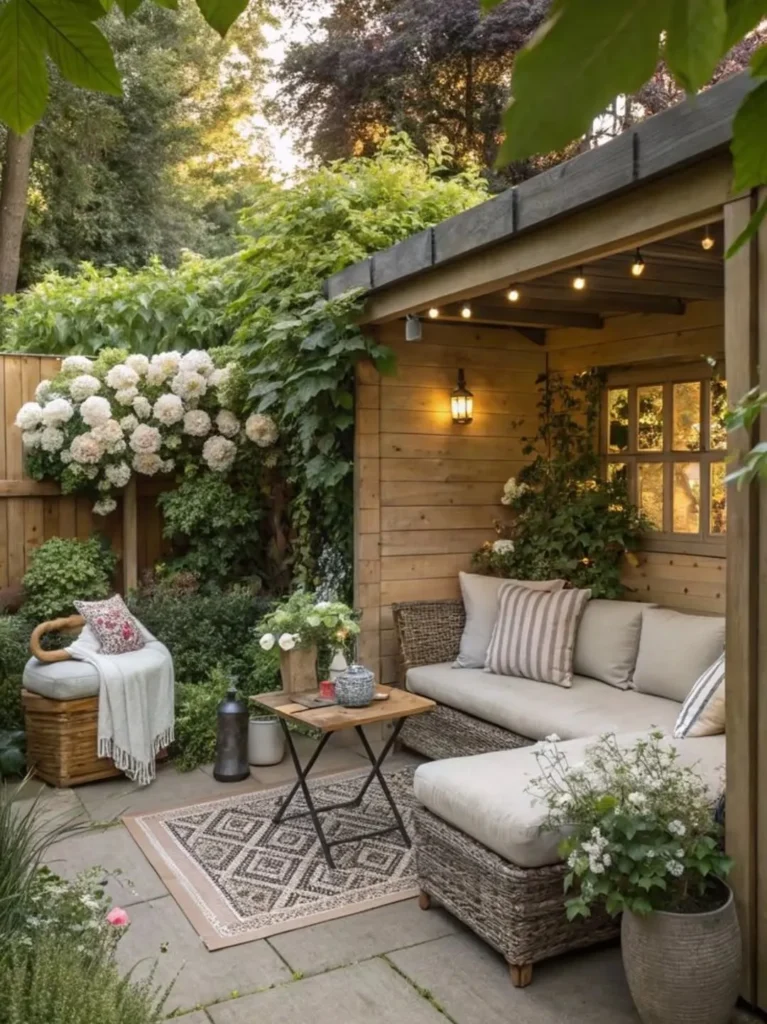
- Wood cladding gives the seating nook warmth and cottage-like charm.
- Wicker furniture keeps the corner light while still feeling cozy.
- String lights make the area feel inviting in the evening.
- Flowering plants soften the edges and help the patio blend into the garden.
This little patio corner feels welcoming because it is scaled for comfort rather than show. The tucked-away sofa, soft cushions, and layered greenery create the kind of spot people actually want to use. Instead of trying to fill the whole garden, it focuses on one intimate zone, which often makes the result feel more charming and more useful.
The practical takeaway here is to build around one sheltered seating area first. A compact nook like this is easier to style, easier to maintain, and often more enjoyable than spreading furniture across the whole yard. That is why many designers recommend starting with one cozy anchor zone, then letting planting and lighting do the rest of the mood work.
7. Flower-Filled Garden Conservatory
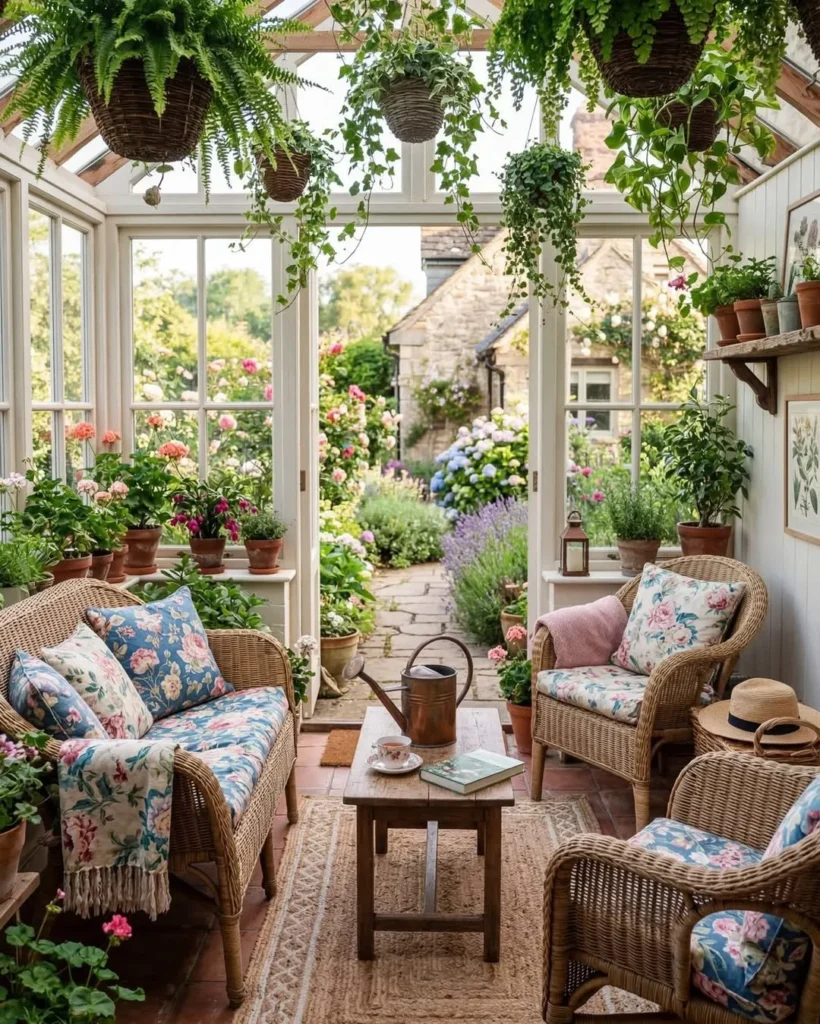
- Hanging baskets make the conservatory feel layered from ceiling to floor.
- Floral cushions bring softness and connect the seating to the garden outside.
- Wicker furniture keeps the room light and easy instead of bulky.
- Terracotta pots add warmth and help the planting feel collected over time.
This space feels like an extension of the garden rather than a separate room, and that is exactly why it works so well. The open doors, layered plants, and floral textiles create a seamless transition between indoors and out. What the reader should copy here is the repetition of natural textures, because it makes the whole room feel settled and immersive.
The most useful idea is how the planting is distributed at different heights. Hanging baskets, sill pots, and floor containers keep the room full without blocking movement or seating. In my experience, smaller conservatories feel richer when greenery climbs upward rather than staying only at ground level, because the room starts to feel wrapped in the garden.
8. Leafy Backyard Lounge with Soft Neutrals
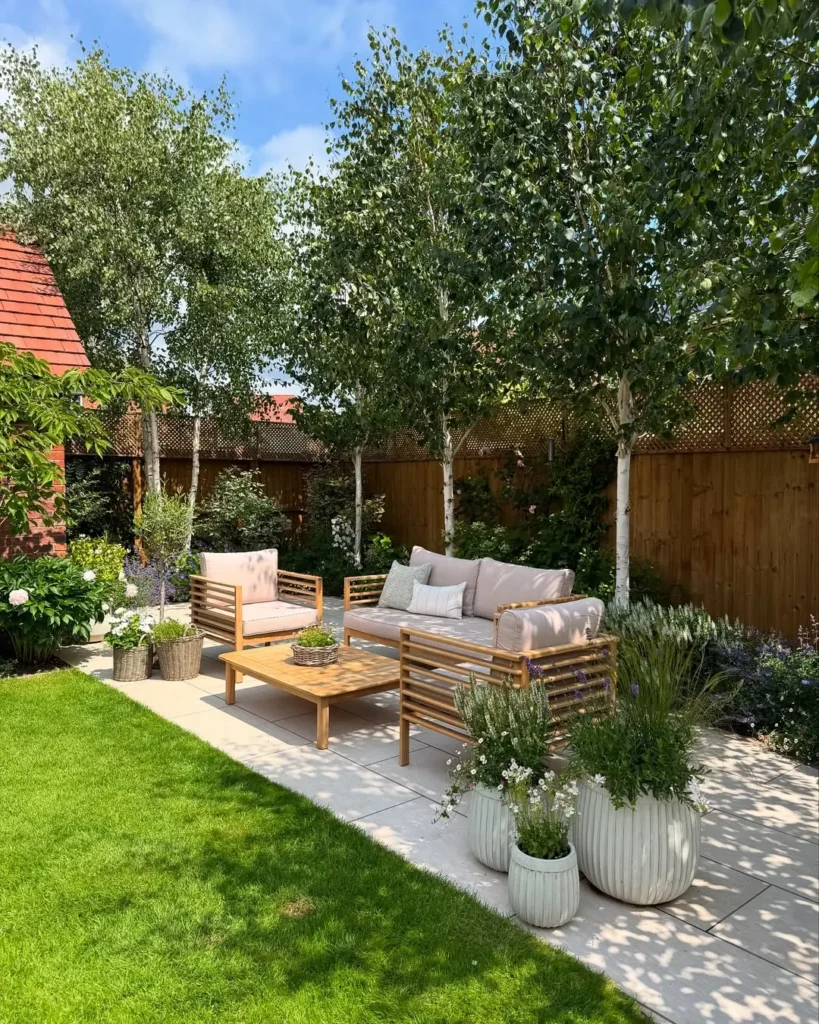
- The pale cushions brighten the patio and keep the seating feeling relaxed.
- Wood-framed furniture adds warmth without making the area look heavy.
- Large planters help define the seating zone more clearly.
- Overhead tree shade makes the patio more comfortable in strong summer light.
A setup like this proves that a simple patio can still feel thoughtfully designed. The furniture is clean and understated, but the surrounding planting gives the whole area softness and movement. I’ve noticed that when trees and shrubs are already doing a lot visually, calmer furniture choices usually make the space feel more polished and more restful.
The smartest takeaway here is restraint. Instead of crowding the patio with too many accessories, the design lets space, greenery, and light carry the atmosphere. That makes the lounge easier to maintain and easier to update seasonally with just a few pillows or planters. It is a strong option for family gardens that need comfort without a lot of fuss.
9. Lush Courtyard with Hanging Chair
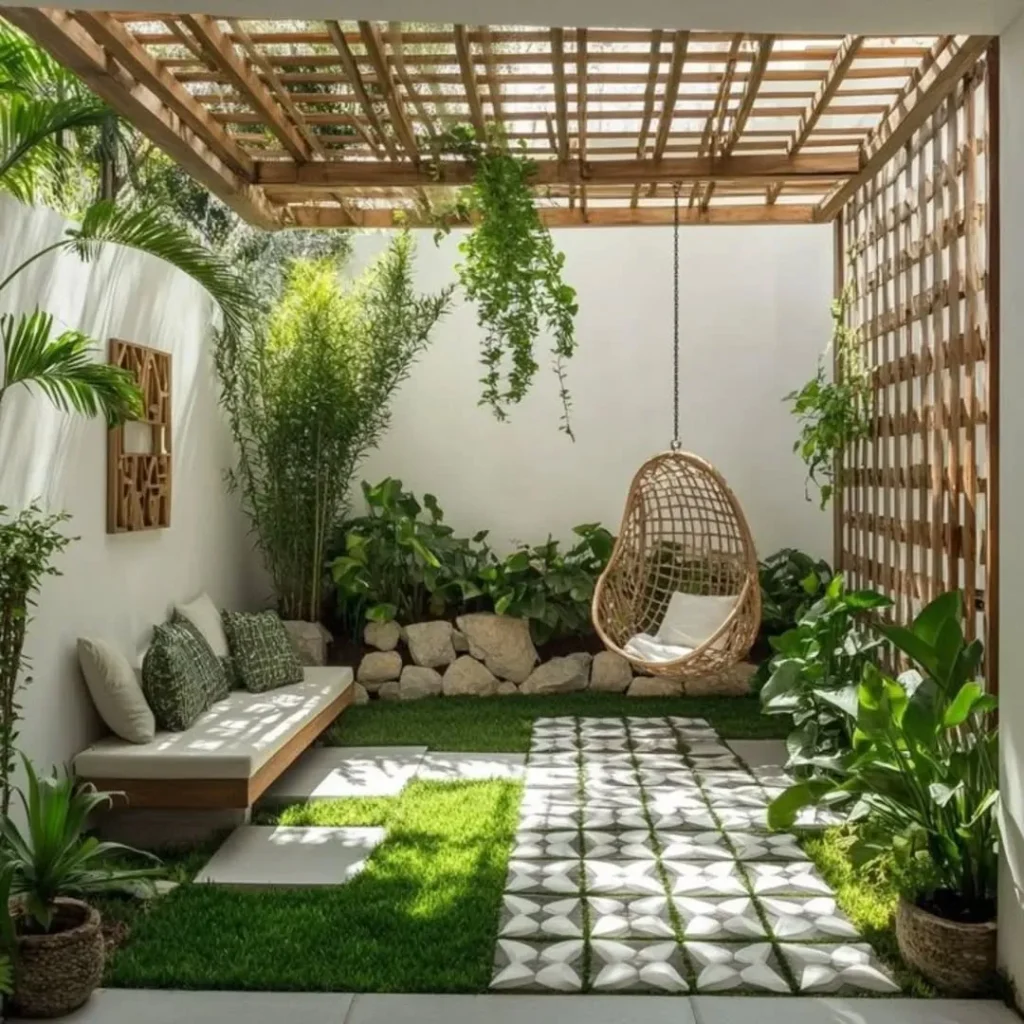
- The hanging chair creates an eye-catching focal point without using much floor space.
- Built-in seating keeps the layout neat and leaves the middle more open.
- The pergola adds light shade and gives climbing greenery a place to grow.
- Patterned stepping pavers make the small courtyard feel more designed and memorable.
This courtyard feels private, fresh, and surprisingly spacious because every element has a job. The bench uses the wall efficiently, the hanging chair adds character, and the planting softens the hard edges all around. What makes it especially effective is the balance between greenery and open floor area, so the courtyard feels lush without becoming cramped.
The best lesson here is how much personality a small outdoor space can hold when the layout is disciplined. One of the easiest ways to recreate this feel is to keep furniture to the perimeter and let the center stay visually clear. That gives the eye room to move and makes a compact garden retreat feel calmer and more intentional.
10. Luxury Garden Spa Summer House
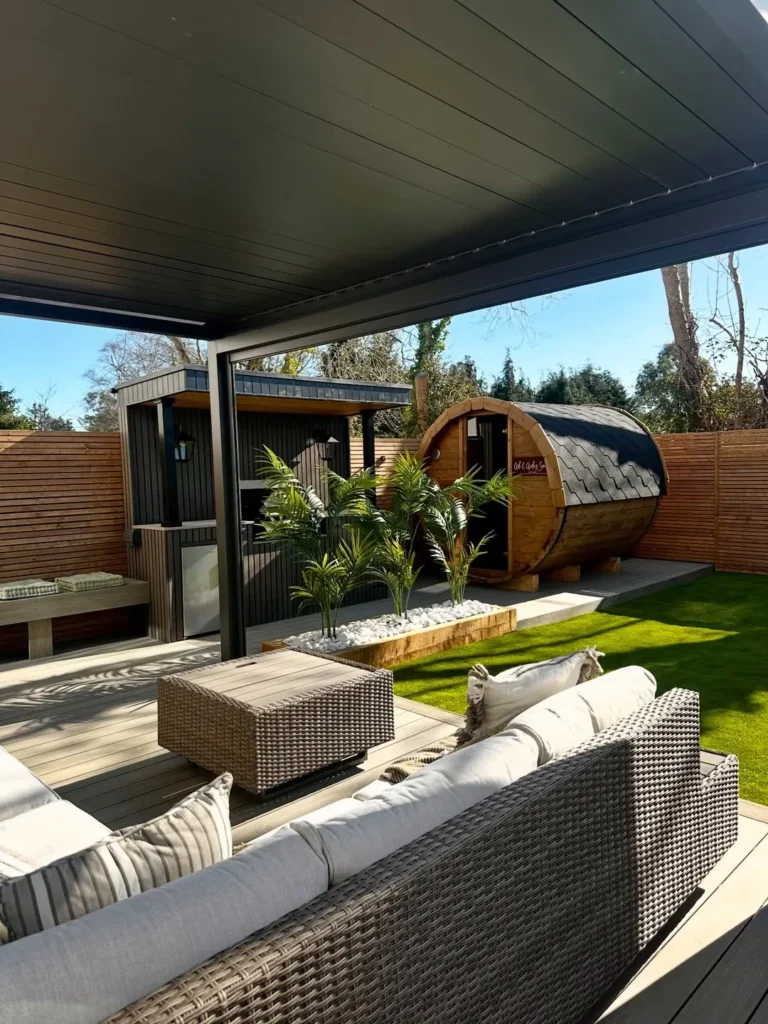
- The sauna turns the garden into a full retreat instead of just a seating area.
- Dark cladding makes the whole setup feel sharper and more contemporary.
- Woven seating softens the harder lines and keeps the deck inviting.
- The simple planting bed adds greenery without interrupting the clean layout.
This setup feels special because it gives the garden more than one purpose. Instead of only providing a place to sit, it creates a full relaxation zone with shelter, spa appeal, and strong visual structure. What makes it work is the contrast between the dark architecture and the soft textures, which keeps the space feeling modern without becoming cold.
The smartest lesson here is zoning by function. The deck handles lounging, the garden building adds utility, and the sauna becomes the standout feature. I’ve seen this work well in many homes where people want the backyard to feel more like a destination. Clear zones make even a simple garden feel more premium and more enjoyable to use.
11. Modern Pergola Garden Seating Area
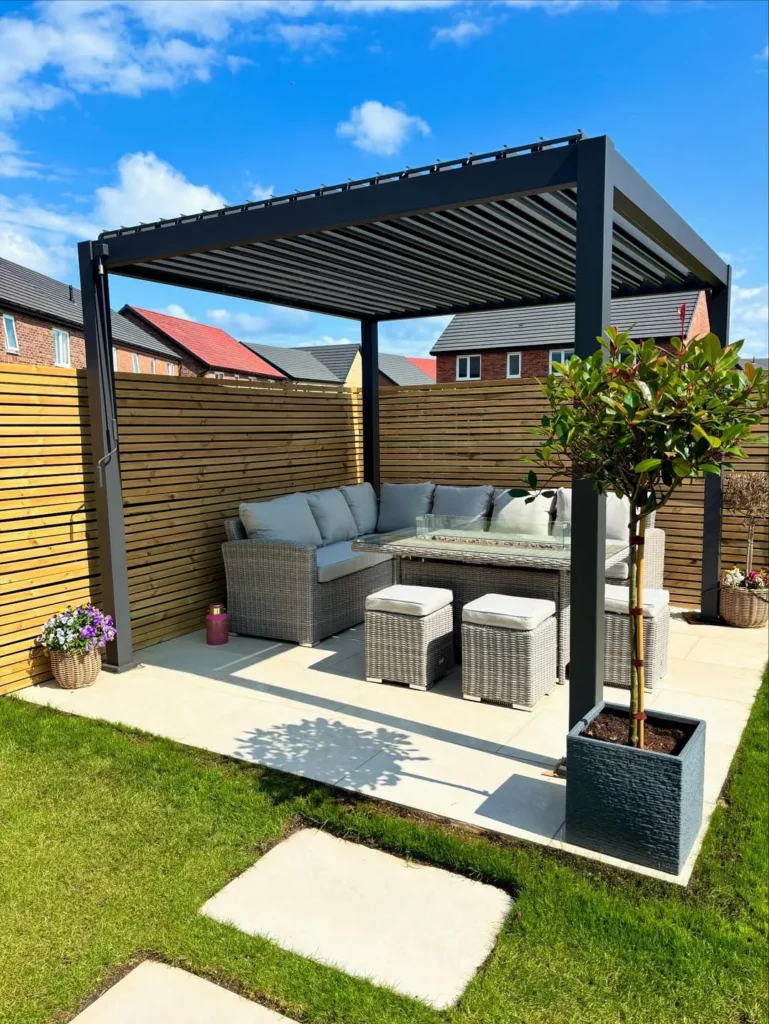
This garden seating area feels neat, usable, and easy to enjoy because everything is clearly organized. The pergola marks out the social zone, while the sectional furniture makes the space feel settled and ready for long outdoor meals or relaxed evenings. That sense of order is often what turns a basic patio into a space people actually use more often.
A big strength here is how low-fuss it looks. The materials are straightforward, the layout is simple, and the styling is minimal, but the result still feels complete. In my experience, gardens like this age well because they rely on clean structure first. That gives you flexibility to update cushions, pots, or accessories without reworking the whole area.
12. Modern Tropical Courtyard Retreat
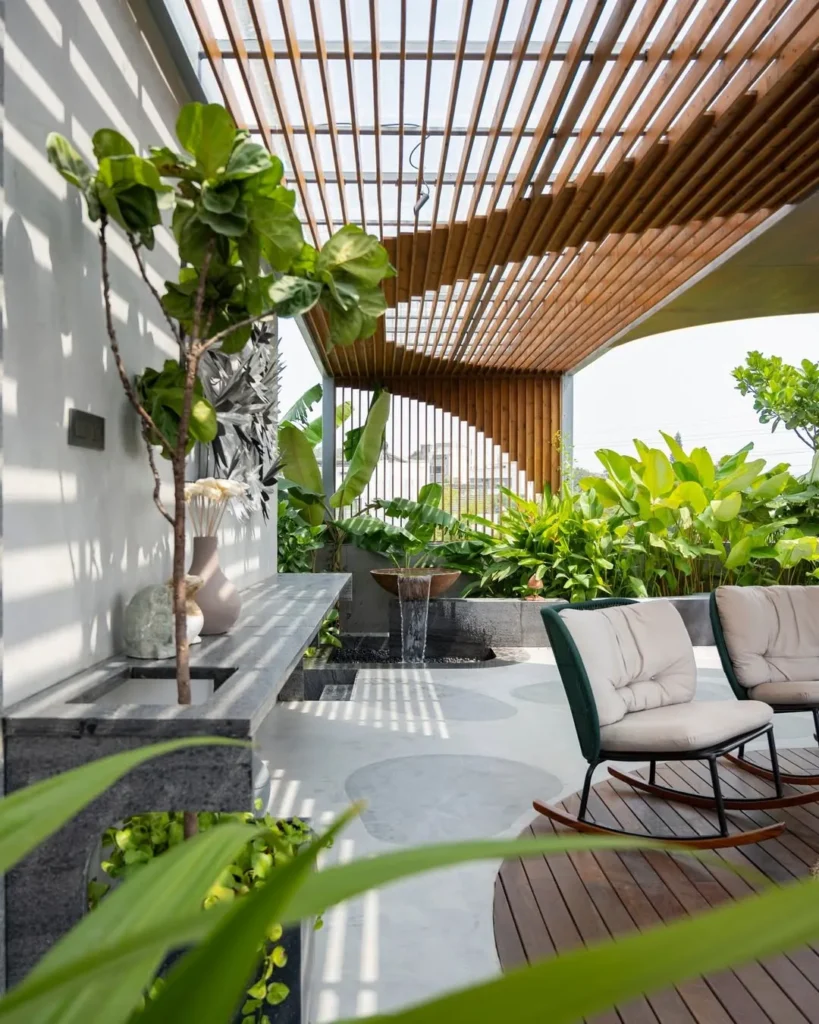
- The slatted pergola creates beautiful moving shadows through the day.
- Dense planting makes the courtyard feel private and calming.
- A small water feature adds sound, movement, and a more spa-like mood.
- Built-in surfaces keep the design clean and reduce clutter from extra furniture.
This courtyard feels cool and composed because it combines shade, greenery, and water in a very deliberate way. The slatted overhead structure filters the sunlight, which keeps the space visually dynamic without being overwhelming. What the reader should notice here is how the atmosphere comes from the materials and layout, not from lots of decorative extras.
The best practical takeaway is to mix one strong architectural feature with soft planting around it. That balance stops the courtyard from feeling either too hard or too wild. That’s why many designers recommend using greenery as part of the structure in modern outdoor spaces. It helps the retreat feel polished while still carrying the calm of a garden.
13. Rustic Greenhouse Summer House Retreat

- Long side benches give the room storage, display space, and working surface all at once.
- Dark timber framing adds warmth and stops the glass-heavy structure from feeling too bare.
- Mixed pots and older furniture make the room feel lived in rather than overly styled.
- The open center path keeps the narrow space practical and easy to move through.
This retreat works because it is not trying to be only one thing. It feels like part potting shed, part reading room, and part quiet escape, which gives it much more charm and usefulness. What the reader should copy here is the layered function. A summer house often feels richer when it can support both practical tasks and slower moments.
The smartest detail is the clear walkway running through the center. That one choice keeps the room from feeling crowded even though the edges are full of plants and storage. I’ve noticed that narrow garden rooms work better when the middle stays visually open, because the eye reads the whole space as calmer, larger, and easier to use.
14. Sunlit Glass Garden Reading Nook
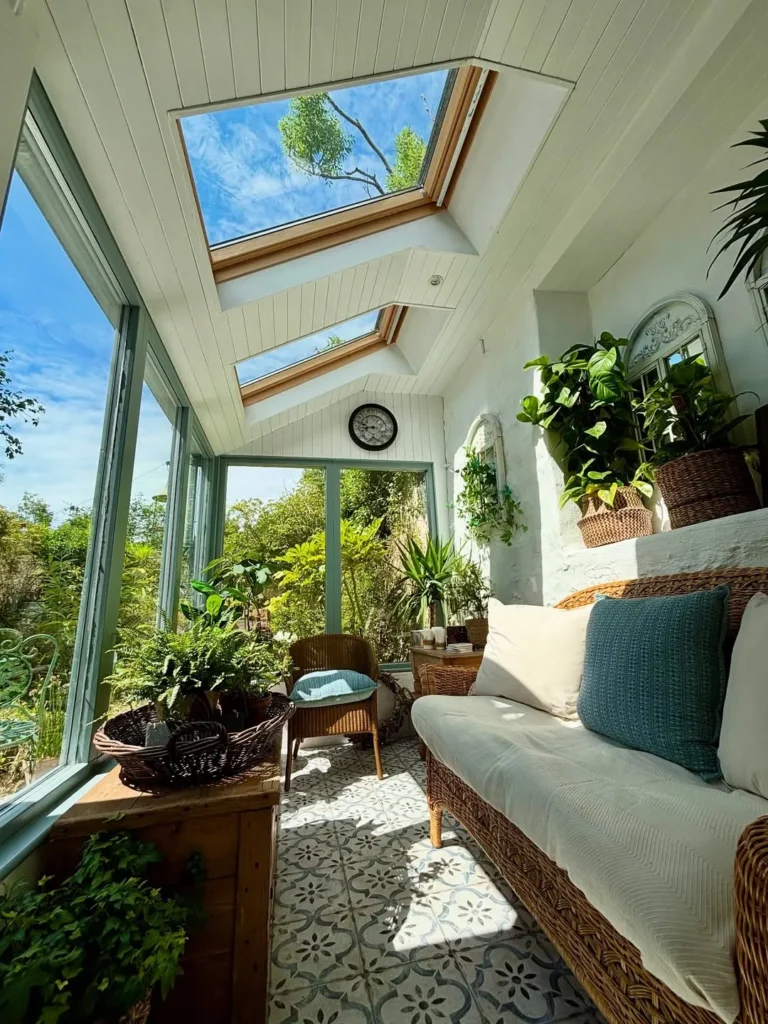
- Skylights pull sunlight from above and make the slim room feel taller.
- Patterned floor tiles add character without taking up extra space.
- Wicker seating keeps the nook cozy while still feeling light.
- Mirrors and pale walls help bounce the light around the room.
This nook feels cheerful and restful because the light is doing so much of the decorating. The skylights, full-height glazing, and pale interior surfaces all work together to keep the room bright from morning onward. One of the easiest things to borrow here is the contrast between simple walls and a more detailed floor, which keeps the design from feeling flat.
A small garden room like this works best when every element earns its place. The seating is compact, the plants soften the edges, and the visual clutter stays low. In my experience, narrow spaces benefit from one or two standout details, like patterned tiles or skylights, instead of too many accessories. That keeps the room feeling fresh, open, and easy to enjoy.
15. Timber Garden Room with Patio Views
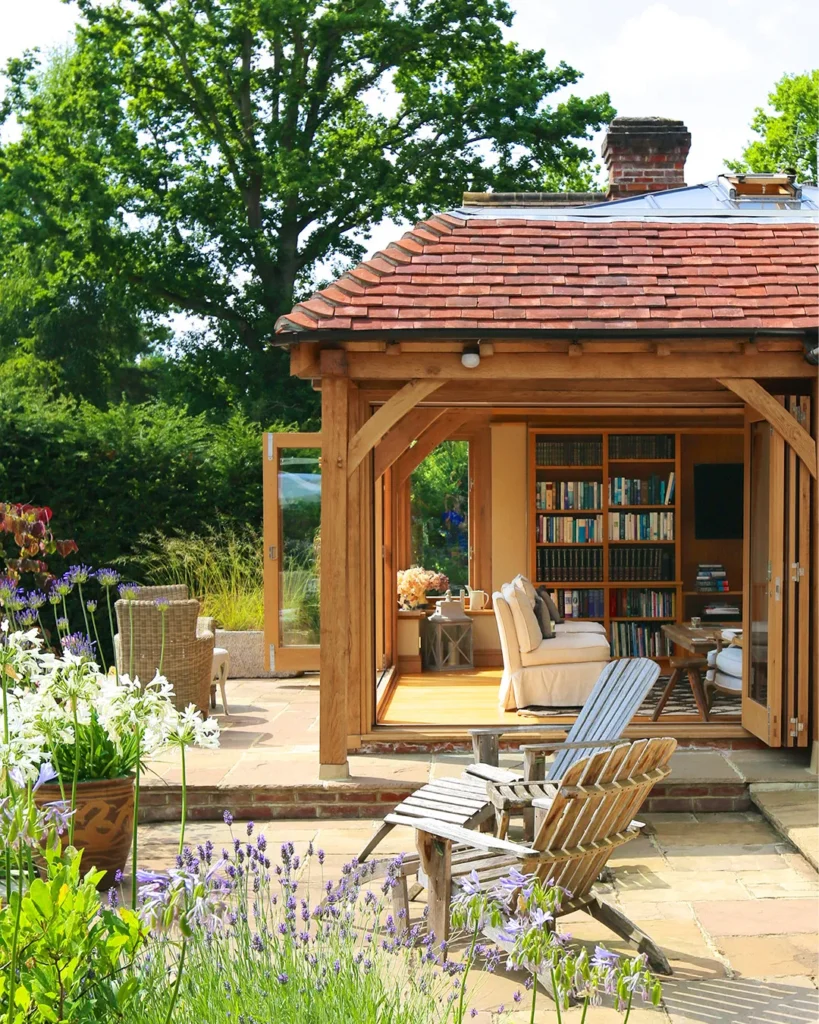
- Folding doors make the room feel connected to the patio and garden.
- Built-in shelving adds function and makes the interior feel established.
- Timber beams and warm wood tones give the room a grounded, classic feel.
- The patio seating extends the room outward without needing much furniture.
This garden room succeeds because it feels like a natural extension of daily life, not just a seasonal extra. The bookshelves, sofa seating, and open doors create a space that can shift easily between reading, hosting, and quiet lounging. What makes it especially useful is the way the outdoor terrace feels linked, so the whole area works as one larger retreat.
The practical lesson here is to think beyond the room itself. A garden house becomes more valuable when the space just outside it is also usable and inviting. That is why many designers recommend pairing indoor comfort with a simple patio zone. Even two chairs and well-placed planting can make the whole setup feel more complete and more welcoming.
How to Bring This Style into Your Space
Creating a dreamy garden escape does not require a huge structure or a picture-perfect yard. What matters most is the feeling: shelter, softness, greenery, and a reason to slow down. In my experience, the best summer house setups start with one clear purpose, then build around it with light, texture, and simple comfort that feels easy to maintain.
- Start with one anchor feature, such as a pergola, small garden room, greenhouse nook, or covered patio, so the space has a clear identity.
- Add softness through cushions, curtains, wicker, or warm wood tones to stop the structure from feeling too hard or bare.
- Use plants at different heights, including floor pots, climbing greenery, and hanging baskets, to make the area feel settled and immersive.
- Keep the layout practical by leaving a clear walking path and choosing furniture that fits the scale of the space instead of overcrowding it.
- For a lower-budget version, focus first on seating, shade, and planting, then add extras like lighting, a hanging chair, or shelving later.
The key is to create a place you will actually use, not just admire from a distance. A common mistake is adding too many decorative touches before the basics feel right. Start with comfort, shade, and a calm layout, then let the details grow over time. When the space feels inviting in real life, not just in photos, this style becomes much easier to enjoy and keep.