
22 Japandi Living Room Designs to Create a Calmer Home
Japandi Living Room Designs have become one of the most loved ways to create a calmer, warmer, and more balanced home. Soft textures, natural wood, gentle lighting, and clean layouts can completely change how a room feels without making it look cold or overly minimal.
If your living room feels cluttered, stressful, or visually busy, these ideas offer a more relaxed direction that still feels stylish and practical for everyday life. From cozy neutral seating to soft layered lighting and thoughtful furniture placement, every design in this collection focuses on comfort as much as appearance.
In my experience, the most inviting homes are usually the ones that feel simple and lived-in rather than perfectly styled. That is why these spaces work so well. They show how calming materials, low furniture, earthy colors, and carefully chosen decor can make even small living rooms feel more open and peaceful. Whether you want a full redesign or just a few easy updates, these ideas will help you create a home that feels softer, quieter, and easier to enjoy every day.
1. Japandi Living Room with Curved Sofa

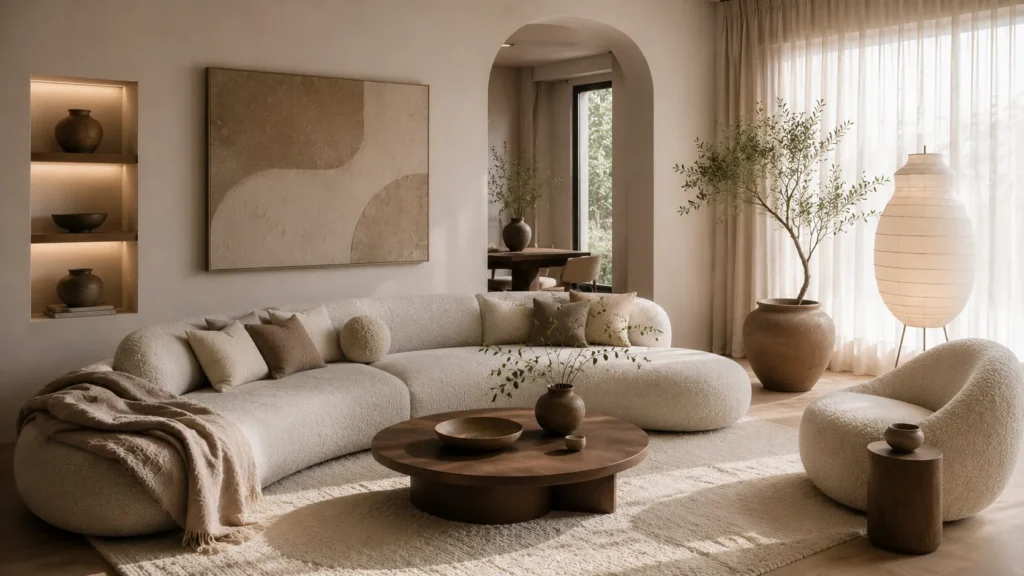
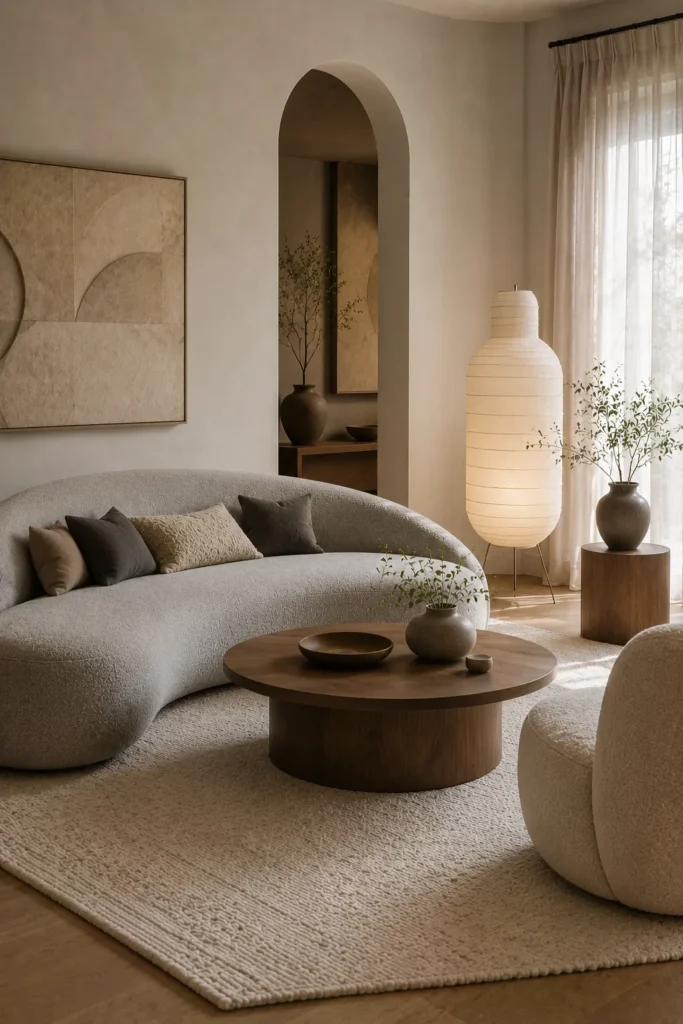
Soft curves instantly make this seating area feel calmer and more welcoming. The boucle sofa, rounded coffee table, and textured rug remove harsh visual lines, while warm wood tones keep the neutral palette from looking cold or unfinished near natural daylight.
Curved furniture works especially well in homes where you want conversation areas to feel relaxed instead of rigid. The oversized paper floor lamp also adds height without cluttering corners. Keeping decor minimal lets sculptural shapes become the main feature without overwhelming smaller layouts.
2. Bonsai Corner Japandi Living Room

- Use warm recessed lighting to highlight indoor greenery.
- Keep furniture low-profile for a grounded, peaceful look.
- Mix stone, wood, and woven textures for natural depth.
A bonsai display like this creates a quiet focal point without relying on bright colors or heavy decor. Light filtering through sheer curtains softens every surface, while layered natural materials help the seating area feel balanced and easy to unwind after long days.
Built-in shelves make styling simpler because decorative pieces already feel connected to the architecture. I’ve seen many people benefit from adding just one sculptural plant arrangement instead of filling every corner with accessories. The result feels intentional, breathable, and far less visually busy.
3. Coastal View Sitting Area Living Room
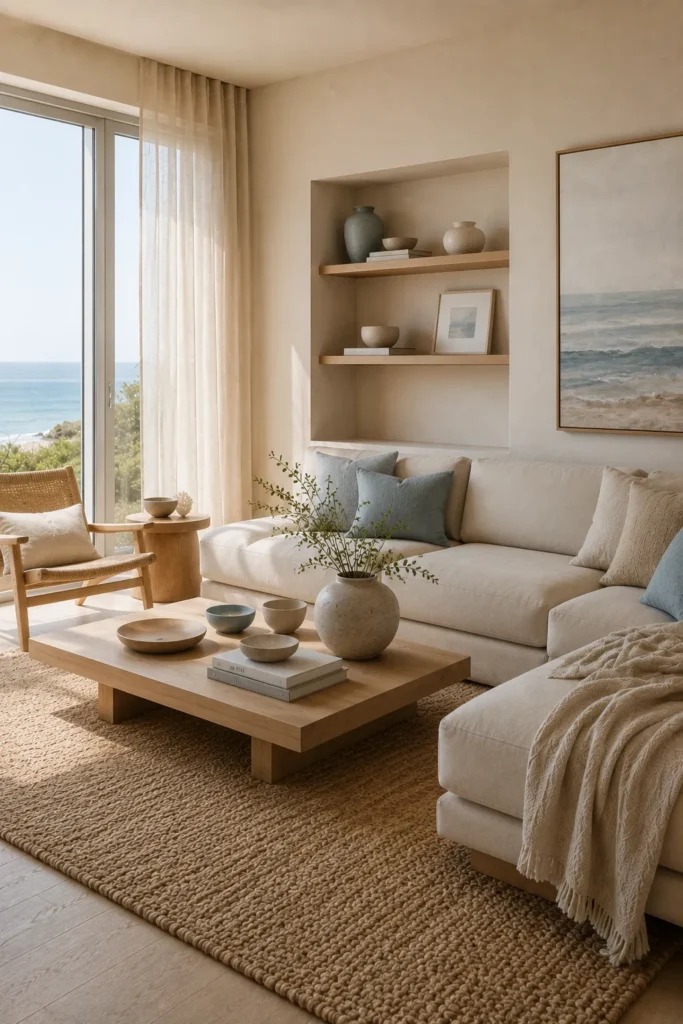
Ocean views already bring calm energy, so keeping furnishings pale and understated makes complete sense here. Soft blue pillows echo outdoor tones naturally, while woven textures and light oak furniture help the living area feel airy instead of overly coastal-themed or decorative.
Large windows become more effective when heavy curtains and bulky furniture stay out of the way. Floating shelves also add storage without visually shrinking walls. In my experience, mixing cream upholstery with sandy textures creates warmth while still allowing natural light to dominate beautifully.
4. Japandi Living Room with Soft Lighting
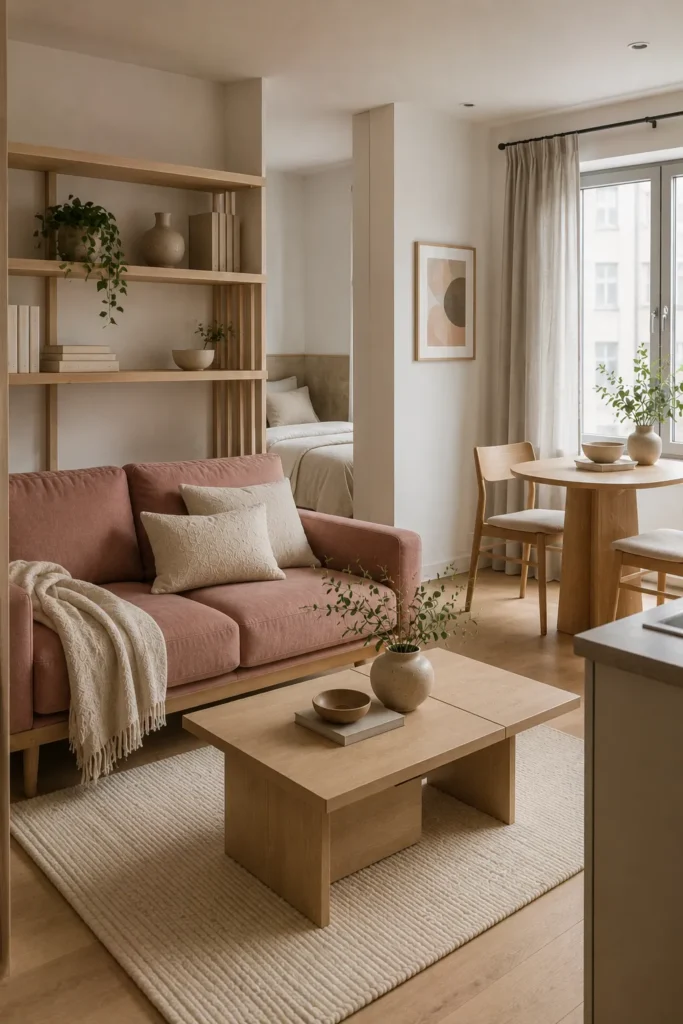
Warm shelf lighting completely changes the atmosphere once daylight fades. Cane wall panels introduce texture without visual heaviness, while neutral seating keeps the room feeling calm and balanced against darker wood finishes and layered beige textiles throughout the layout.
Ambient lighting works best when spread across multiple levels instead of relying on one ceiling fixture. That’s why many designers recommend combining shelf lighting with soft table lamps. The layered glow creates comfort during evenings and helps larger living rooms feel noticeably more intimate.
5. Cozy Paper Lantern Nook
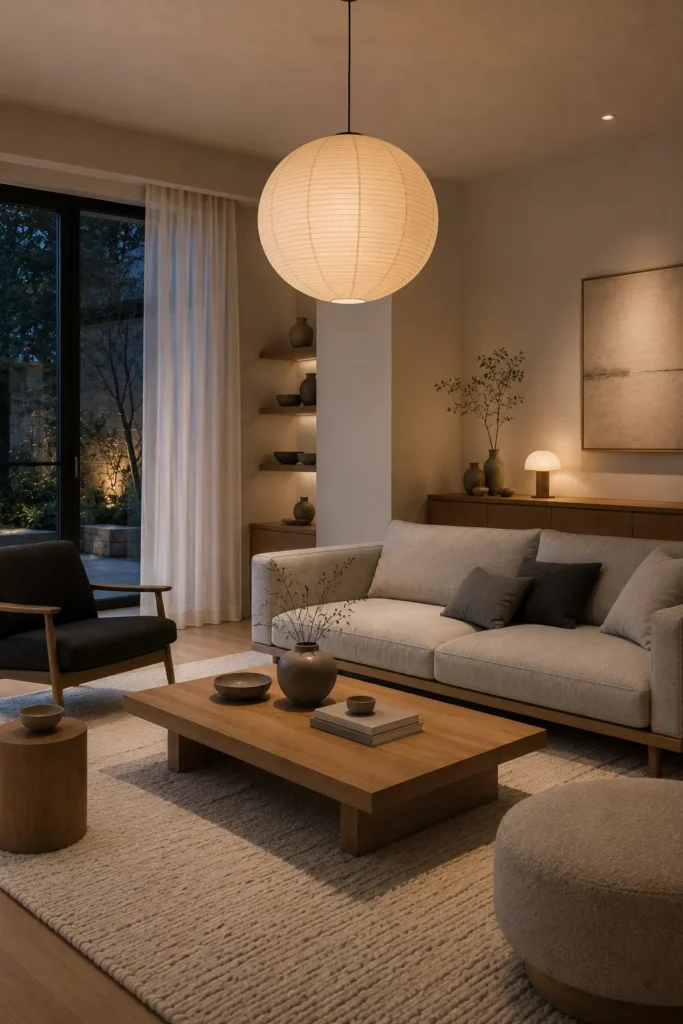
Nothing softens a minimalist living room faster than oversized paper lantern lighting. The glowing pendant immediately warms neutral furniture, while dark accent chairs and wood details prevent the palette from feeling washed out or overly delicate during nighttime use.
Simple layouts like this work beautifully in family homes because they stay visually calm even with daily activity. Low tables and soft textiles also encourage relaxed seating arrangements. Keeping accessories limited allows lighting and material texture to create most of the personality naturally.
6. Dark Wood Japandi Retreat

Deep walnut paneling gives this living area dramatic warmth without losing the clean simplicity Japandi interiors are known for. Linen seating and textured throws soften darker finishes, while hidden shelf lighting keeps built-in cabinetry from feeling visually heavy during daytime hours.
Darker wood tones often feel more luxurious when paired with soft neutral upholstery instead of bright white contrasts. I’ve noticed stone coffee tables also help anchor larger seating arrangements beautifully. The mix of matte textures here keeps everything grounded rather than glossy or overly formal.
7. Japandi Living Room with Sunken Floor

Shoji-style panels and low seating instantly create a grounded, peaceful atmosphere. Dark navy upholstery adds contrast against creamy textures, while pale wood furniture keeps the room connected to the warm natural palette instead of feeling stark or highly modern.
Low-profile furniture can make taller windows appear even larger because sightlines remain open across the room. Soft lighting near the floor also creates a calming evening mood. Avoid overcrowding spaces like this with oversized decor since simplicity is what makes the layout feel restorative.
8. Compact Japandi Studio Corner
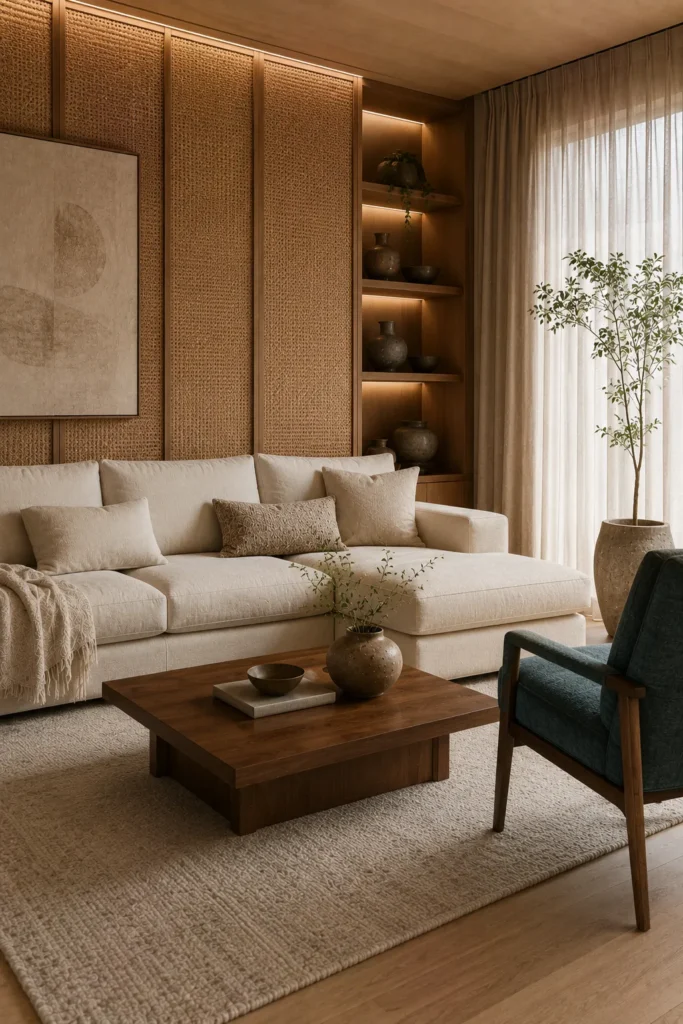
- Open shelving keeps compact layouts feeling lighter.
- Soft blush upholstery adds warmth without overpowering neutrals.
- Round dining furniture improves flow in tighter apartments.
Small apartments benefit from furniture that feels visually soft and easy to move around. The slim wood coffee table and open shelving prevent cluttered sightlines, while layered textiles add comfort that makes the compact layout feel cozy rather than temporary or cramped.
Blending living and dining zones works best when colors stay consistent across both areas. Pale woods and warm creams help separate functions without harsh visual breaks. I’ve tried similar layouts before, and lighter furniture always makes shared spaces feel noticeably more open.
9. Bamboo Art Sofa Corner
Bamboo artwork and bonsai styling give this seating area a calm organic rhythm without looking themed. Cream upholstery brightens the room beautifully, while the olive accent chair introduces muted color that feels grounded beside soft woods and woven textures.
Natural artwork often works better than bold prints in calming interiors because it blends into the palette instead of competing with it. The marble side table also adds contrast without adding clutter. Keeping accessories minimal helps every texture and material feel more intentional.
10. Japandi Living Room with Wood Beams

Exposed wood beams immediately add warmth and character across neutral interiors. Large linen seating and textured rugs keep the room feeling relaxed, while tall indoor greenery softens architectural lines and fills vertical space without making the layout feel crowded or decorative.
Open-plan homes benefit from repeated wood tones because they create continuity between living and dining zones. That’s why many designers recommend matching ceiling beams with coffee tables or storage furniture. The layered neutrals here also prevent oversized furniture from appearing visually too heavy.
11. Moody Slatted Wall Living Room

Dark walls and warm lighting give this setup a richer, more intimate feel than lighter Japandi spaces. Vertical wood slats add rhythm behind the sofa, while rust-colored seating introduces earthy contrast that keeps the palette grounded instead of overly monochrome or flat.
Layered pendant lighting works beautifully here because it softens heavier finishes and spreads warmth evenly across the room. I’ve noticed darker interiors feel calmer when furniture remains textured and neutral. The black coffee table also anchors the arrangement without visually overpowering nearby pieces.
12. Open Plan Neutral Haven
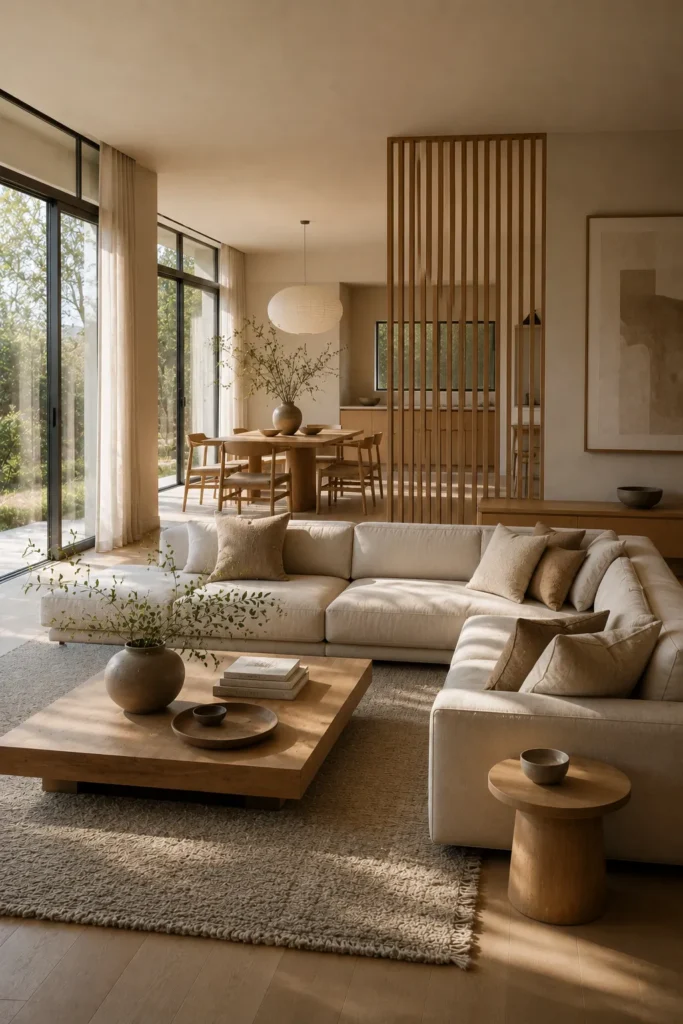
- Vertical wood dividers subtly separate zones without blocking light.
- Oversized sectionals work best when paired with low-profile tables.
- Sheer curtains help large windows feel softer and less stark.
Natural sunlight completely transforms this open-plan layout during the day. Pale woods, soft upholstery, and warm beige accents create a seamless flow between dining and living areas, helping the home feel larger while still maintaining a comfortable sense of structure and warmth.
Open spaces often become visually chaotic when every zone uses different materials or tones. Keeping furniture shapes simple solves that problem quickly. The divider here also creates privacy without making the home feel boxed in, which works especially well in modern family layouts.
13. Plant-Filled Neutral Lounge
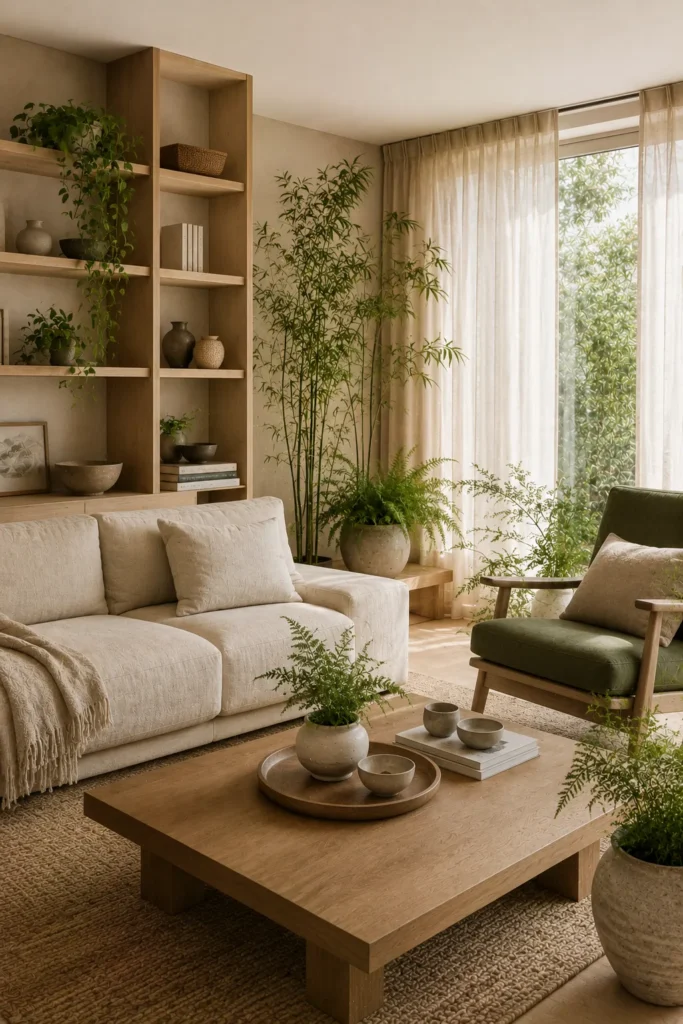
Indoor greenery instantly makes neutral interiors feel more alive and welcoming. Tall bamboo plants beside sheer curtains soften corners beautifully, while layered textures across rugs, wood furniture, and linen seating keep the room feeling warm instead of minimal to the point of emptiness.
Plants work best when grouped at different heights rather than spread evenly around the room. That approach creates a more natural rhythm and avoids cluttered styling. Open shelving also helps balance the greenery by giving decorative objects breathing space between larger leafy arrangements.
14. Serene Shoji Panel Living Room

Low seating and soft floor cushions create a peaceful atmosphere that feels quiet without looking unfinished. Shoji-inspired wall panels bring subtle structure behind the sofa, while creamy textiles and pale wood tones help sunlight move gently through the entire living area.
Minimal layouts like this often feel more comfortable when texture replaces excessive decor. Thick rugs, soft throws, and oversized cushions add warmth without crowding the floor plan. That’s why many designers recommend limiting furniture height when aiming for a calmer, more grounded environment.
15. Shoji Door Seating Corner
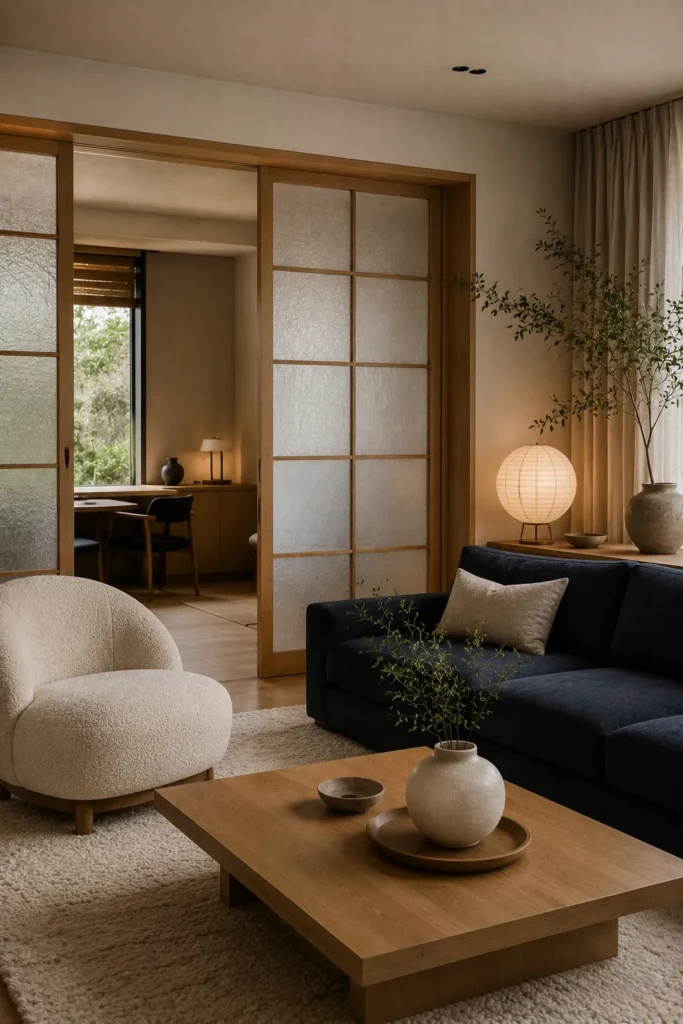
Sliding shoji-style doors bring softness and privacy without making connected rooms feel closed off. The navy sofa adds depth against pale woods and textured fabrics, while the glowing paper lamp creates a warm evening atmosphere that feels relaxed and quietly sophisticated.
Rooms with darker seating usually benefit from lighter surrounding textures to maintain balance. The boucle chair and neutral rug help achieve that beautifully here. Frosted panels also diffuse light naturally, making shared spaces feel calm instead of visually busy or sharply divided.
16. Shoji Screen Lounge Corner
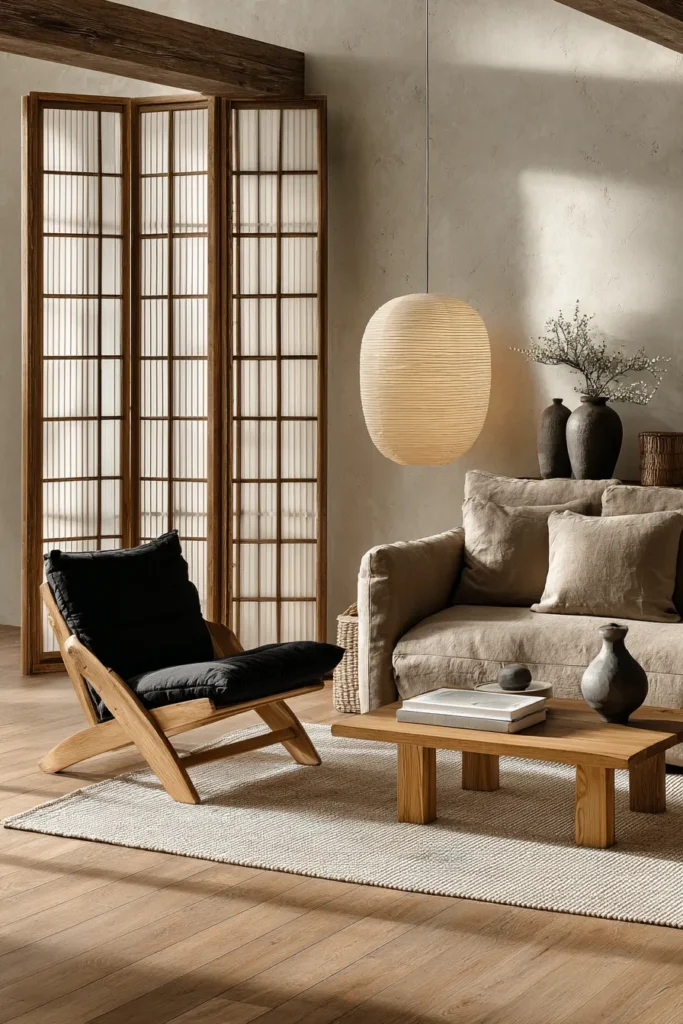
- Folding screens add privacy without permanent walls.
- Black cushions create contrast inside softer neutral palettes.
- Linen upholstery keeps heavier wood tones feeling relaxed.
Warm wood frames and soft paper textures immediately make the corner feel calm and grounded. The sculptural lounge chair introduces a slightly modern edge, while layered natural materials prevent the setup from leaning too traditional or heavily themed around Japanese influences.
Portable screens work especially well in apartments or rental homes because they separate areas without renovations. I’ve seen them used successfully behind reading corners, desks, and even dining spaces. Keeping nearby furniture low-profile helps maintain the airy feeling these screens naturally create.
17. Soft Blue Sofa Setting
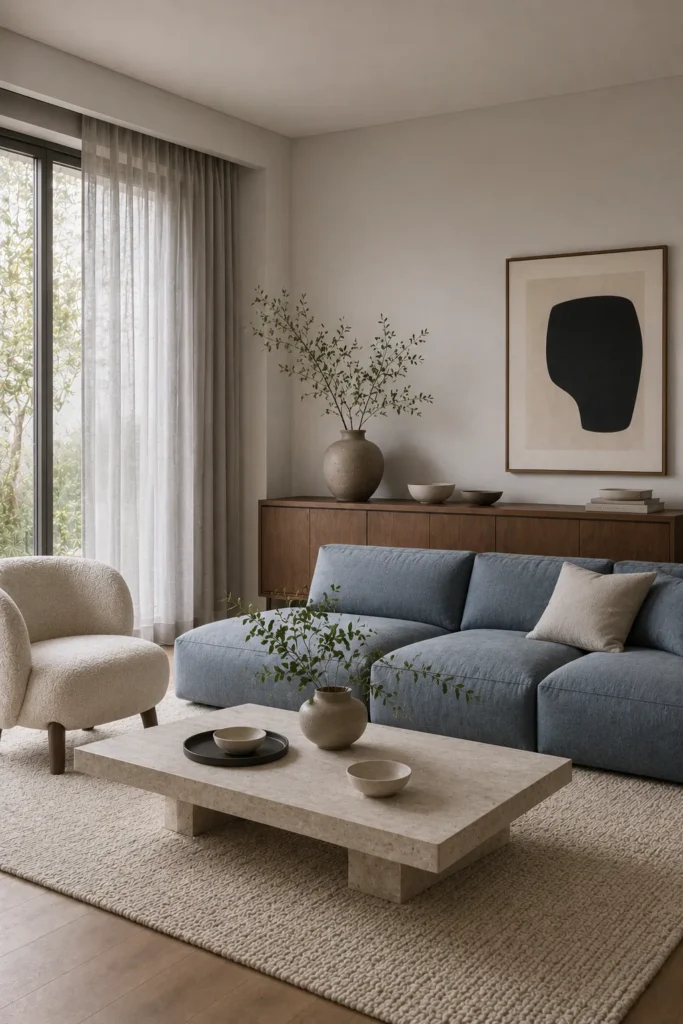
Muted blue upholstery brings subtle color into the room without disrupting the calming neutral palette. The stone coffee table adds texture and weight, while warm walnut storage underneath the artwork creates a balanced contrast that keeps the living area feeling polished yet approachable.
Soft color palettes in Japandi Living Room Designs often work better when paired with earthy materials instead of bright metallic accents. Pale rugs, ceramic decor, and natural branches help the blue sofa feel integrated rather than isolated. Avoid adding too many competing tones if you want the space to stay restful.
18. Soft Neutral Minimalist Corner
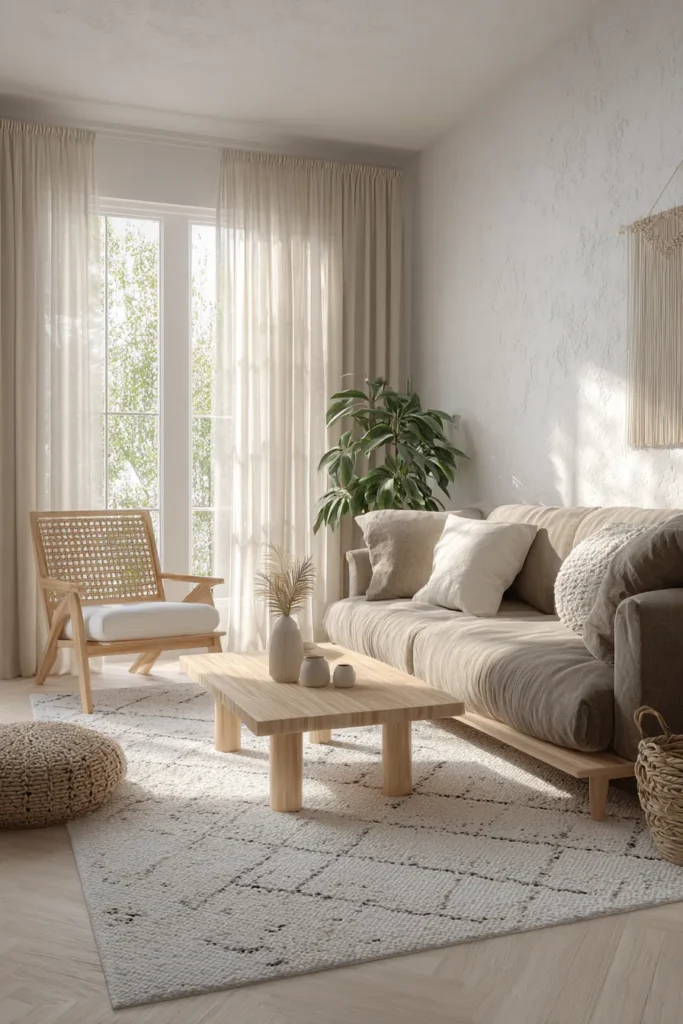
Morning sunlight gives this minimalist setup a naturally calming glow. Light wood furniture, woven textures, and soft linen seating create warmth without relying on heavy decor, while the cane chair adds subtle texture that keeps the room from feeling visually plain or unfinished.
Minimalist interiors become more inviting when different materials carry most of the personality. Textured rugs and soft throws help prevent flat-looking neutrals. In my experience, keeping wall decor simple also allows natural light and furniture shapes to stand out far more beautifully.
19. Stone Fireplace Japandi Lounge
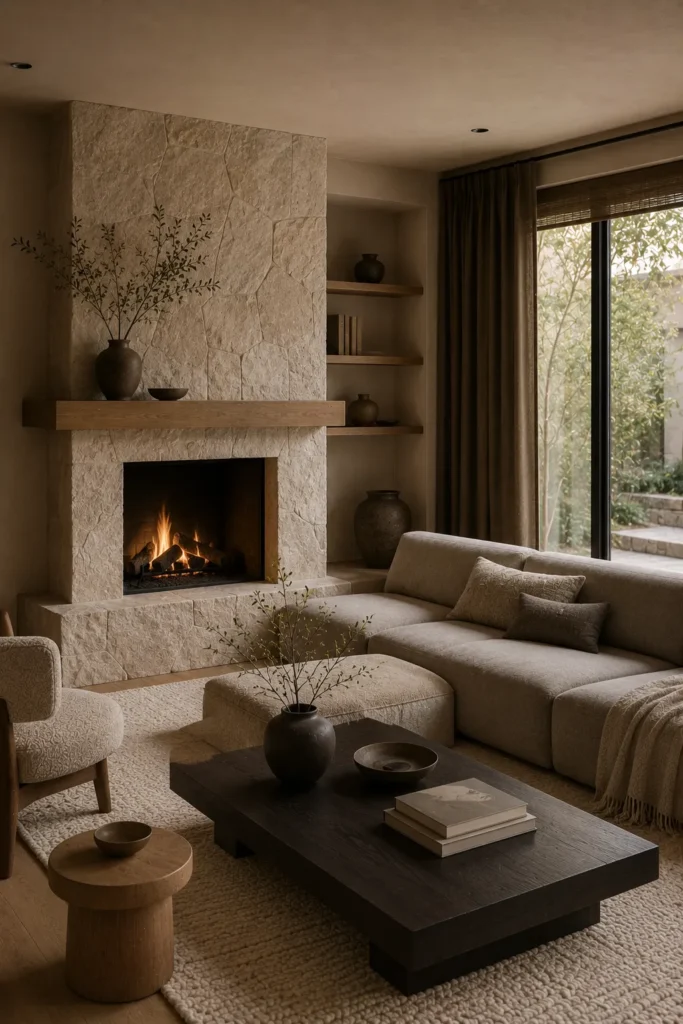
A textured stone fireplace instantly creates warmth and structure within this cozy seating arrangement. Dark wood tables and soft neutral upholstery balance each other naturally, while built-in shelves keep decorative pieces organized instead of scattered throughout the room.
Fireplaces like this work best when surrounding decor stays understated, which is why they fit so naturally into Japandi Living Room Designs. Too many competing materials can make the stone feel overwhelming. Layered earthy tones here keep everything cohesive, and the darker curtains help frame outdoor views without drawing attention away from the hearth.
20. Sunlit Bookcase Japandi Living Room
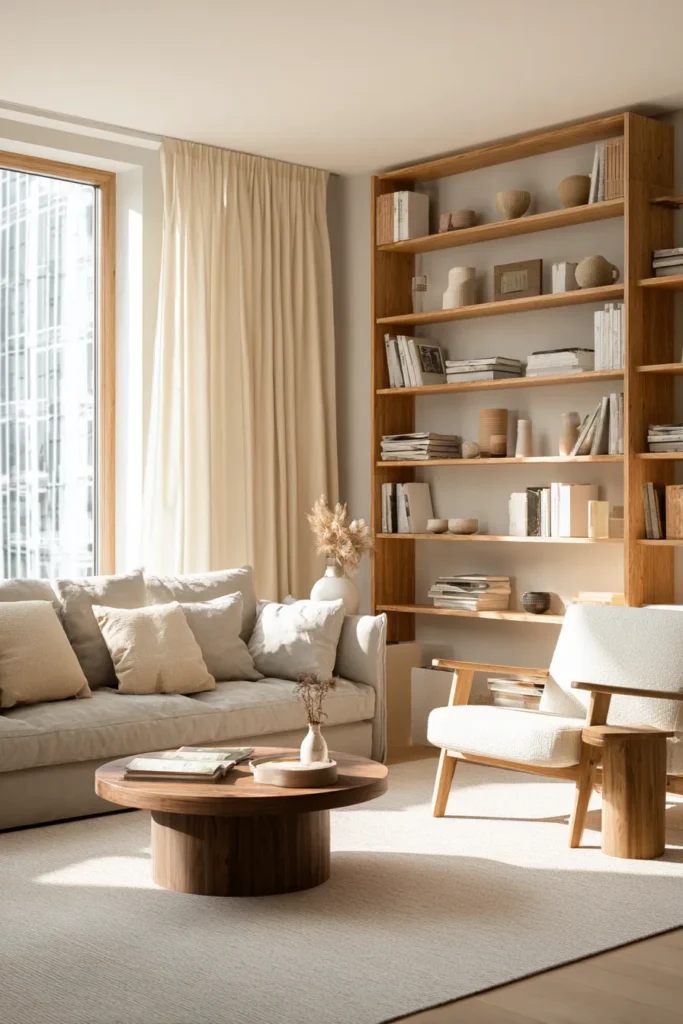
Floor-to-ceiling shelving gives the living area personality while still feeling clean and organized. Warm sunlight across pale fabrics and wood finishes creates softness throughout the room, while rounded tables and simple ceramics prevent the styling from appearing overly formal or rigid.
Open shelving usually looks calmer when books and decor share similar tones instead of strong color contrasts. That’s why neutral styling works so well here. Keeping empty space between objects also helps shelves feel curated rather than crowded, especially in smaller urban homes.
21. Textured Wood Accent Wall
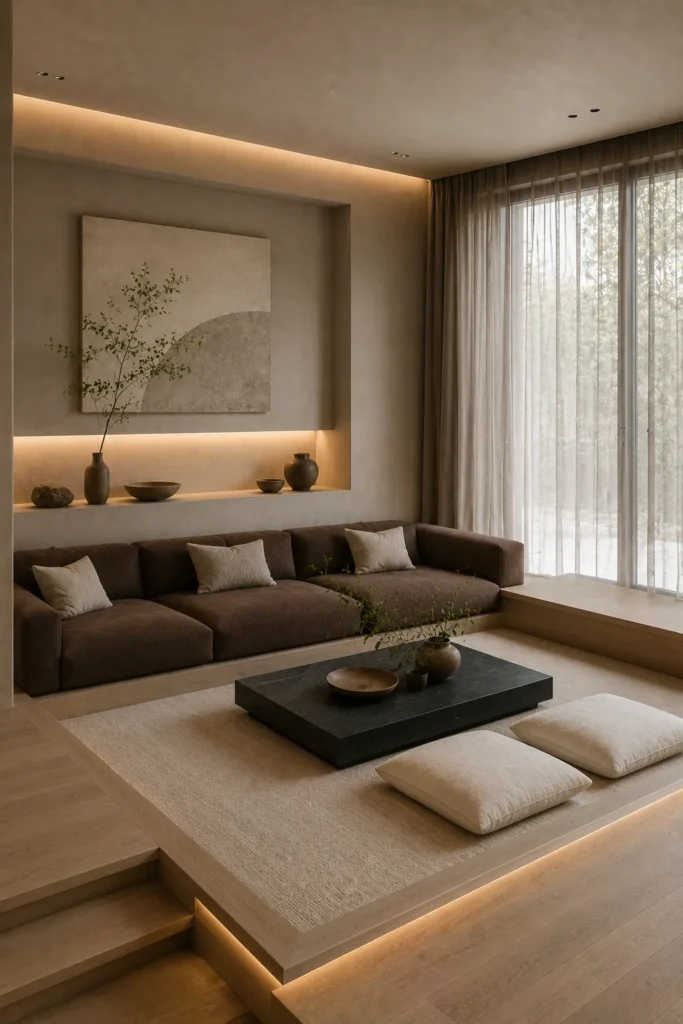
Sunken seating instantly changes how a living room feels. The lowered platform creates a grounded, cocoon-like atmosphere, while hidden lighting around the edges softly highlights textures instead of relying on harsh overhead brightness or excessive decorative pieces.
Low furniture works especially well in homes aiming for calm visual flow and open sightlines. The dark sofa and black stone table bring contrast without overwhelming the palette. Keeping nearby decor minimal also helps the layered architectural details stand out more naturally throughout the day.
22. Warm Neutral Japandi Living Room
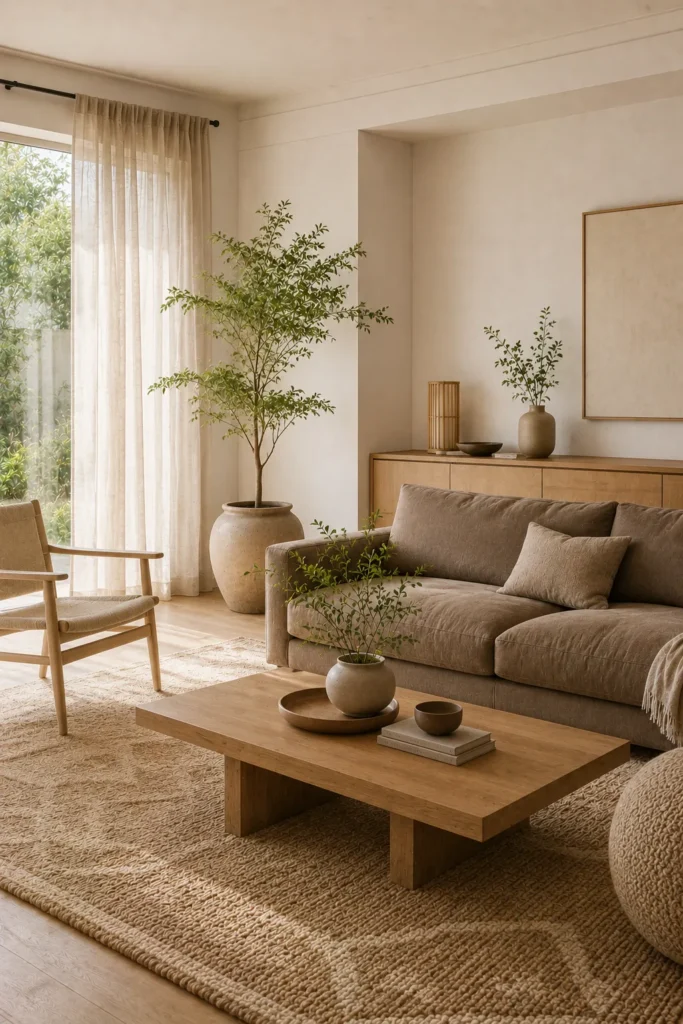
- Soft beige layering keeps the palette warm instead of washed out.
- A large indoor tree adds height without visual heaviness.
- Chunky woven rugs make clean layouts feel more comfortable.
Natural textures completely carry the mood in this final setup. Linen upholstery, pale woods, and rounded decor create softness from every angle, while the low coffee table keeps the arrangement visually open and easy to move around in during daily life.
One reason these Japandi living room designs feel so timeless is their balance between simplicity and comfort. Nothing looks overly styled or fragile. I’ve seen similar layouts work beautifully in family homes because soft neutrals hide visual noise better than stark white interiors.
How to Make This Style Work in Real Homes
- Focus on the feeling first. Aim for calm, warmth, and balance instead of copying every detail exactly.
- Choose one strong focal point, such as a low wood coffee table, textured wall, paper lantern, or sculptural sofa.
- Keep the base simple with soft neutrals, natural wood, linen, wool, stone, and clean-lined furniture.
- Add color through small accents like cushions, ceramics, greenery, art, or one deeper-toned chair.
- Use low arrangements when possible. Lower seating, coffee tables, and floor cushions make the room feel relaxed and better for conversation.
- For renters or small spaces, try woven rugs, sheer curtains, portable lamps, simple shelves, and removable wall art instead of permanent built-ins.
- Avoid overdecorating. A few thoughtful pieces usually look better than too many small accessories.
- Repeat just two or three colors and textures across the room for a polished result, such as oak, cream, black, linen, and ceramic.
A beautiful table or living room setup does not need to feel perfect. It can stay simple, personal, and easy to live with every day.