
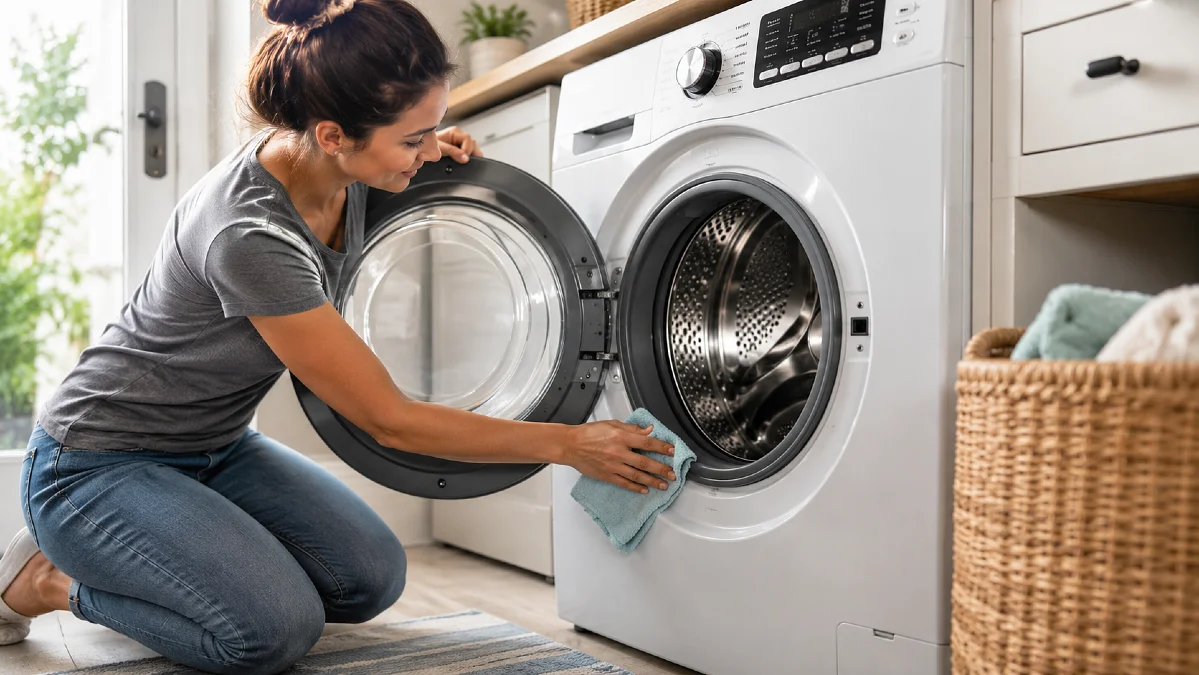
How To Clean Your Front Load Washing Machine
You open the washer expecting that clean laundry smell, but instead you get a damp, musty odor. Maybe there are dark marks inside the rubber seal too. Even worse, freshly washed towels can sometimes pick up the smell you were trying to remove.
A front load washer can look spotless while grime hides in places you rarely see. Moisture and detergent residue can collect inside the rubber gasket, dispenser, drain pump filter, and other areas.
The good news is that you can clean most of these areas without taking the washer apart. The process works best when you clean the machine in sections instead of pouring a random cleaner inside and hoping the smell disappears.
Start With the Right Cleaning Cycle
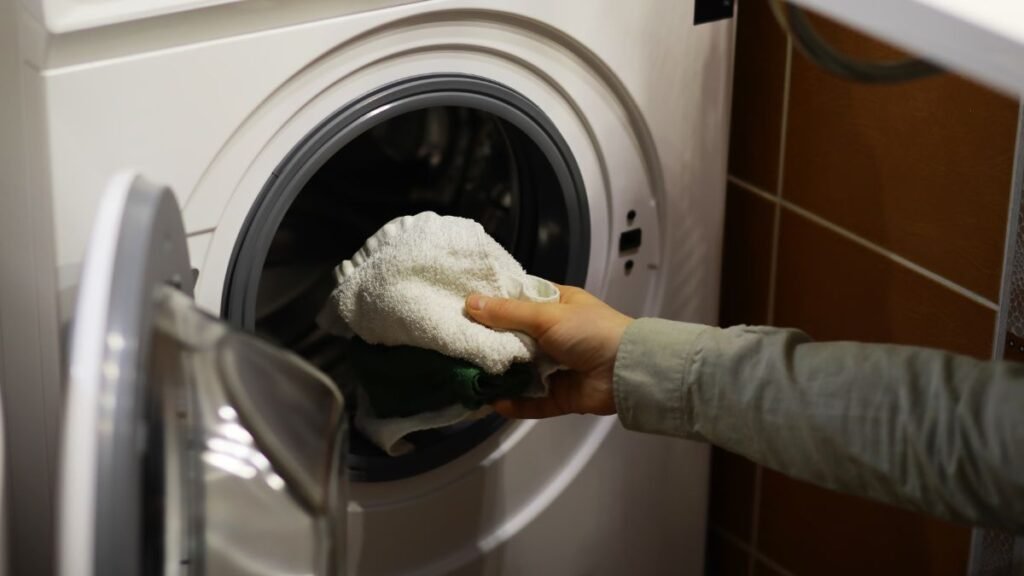
First, take everything out of the washing machine. Check the drum carefully because a sock or small piece of clothing can stay pressed against the back where it is easy to miss.
Next, find the washer’s dedicated cleaning program. Depending on the brand, it may be called Clean Washer, Tub Clean, BasketClean, Self Clean, Eco Drum Clean, or something similar.
LG recommends using its Tub Clean function for routine internal cleaning on compatible machines. Samsung also has models with Eco Drum Clean, while GE Appliances provides BasketClean and Self Clean instructions for certain washers.
Check your owner’s manual before adding anything to the washer. Some machines are designed to run their cleaning cycle with a specific cleaner. Others may call for liquid chlorine bleach, a washer cleaning product, or no added cleaner at all.
Samsung, for example, states that some Eco Drum Clean programs can clean the drum without an added cleaning agent. GE Appliances says certain BasketClean or Self Clean models can use bleach or a commercial washer cleaner.
This is why pouring two cups of vinegar into every front load washer is not a universal cleaning rule. Vinegar may be permitted for certain cleaning jobs on certain models, but you should follow the care guide for your washer before putting it through the machine.
Never Mix Your Cleaning Products
If your washer instructions call for bleach, do not add vinegar, ammonia, detergent, or another cleaning product at the same time. More cleaner does not mean a cleaner washer.
The CDC warns never to mix household bleach or disinfectants with other cleaners because dangerous vapors can be released. Finish one cleaning method completely, rinse as directed, and never create your own chemical combinations.
Clean the Rubber Gasket Where Grime Hides
The rubber gasket around the door deserves extra attention because it has several folds. Hair, lint, detergent residue, and small objects can get trapped inside these areas.
Open the door and gently pull the gasket back with your fingers. Work slowly so you can see the full inner fold without stretching or damaging the rubber.
Remove any loose debris first. You might find hair, tissue pieces, lint, coins, buttons, or other small objects hiding along the bottom.
Whirlpool recommends inspecting beneath the seal and checking for soil buildup or foreign objects. Samsung gives similar advice and recommends wiping the seal with a soft brush, towel, or damp cloth.
For light dirt, start with a damp microfiber cloth and the cleaning method listed in your washer manual. A soft toothbrush can help reach narrow grooves, but scrub gently because the gasket needs to keep a tight seal around the door.
Some manufacturers permit specific diluted cleaners for gasket care. GE Appliances says its gasket may be wiped with mild detergent, diluted bleach, or diluted vinegar, followed by warm water. Other manufacturers give different instructions, which is another reason to check your own model first.
Once the dirt is gone, wipe away the cleaning solution with clean water. Finish by drying the gasket, especially inside the lower folds where water tends to sit.
Clean the Drain Pump Filter Without Flooding the Floor
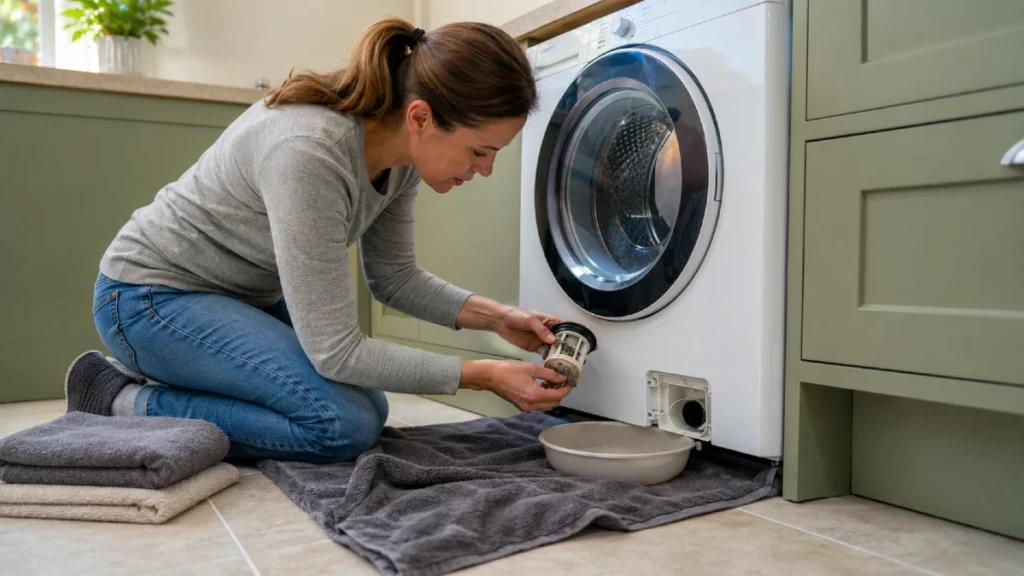
If your front load washer still smells bad after cleaning the drum and gasket, check the drain pump filter. This small part can collect lint, hair, coins, buttons, and other debris that make it through the wash.
Not every washer gives the user access to the pump filter. Before opening panels or removing anything, check your manual to confirm where the filter is and whether it is designed for owner maintenance.
On many front load machines, the access door sits near the bottom of the washer. LG and Whirlpool both publish cleaning instructions for models with accessible drain pump filters.
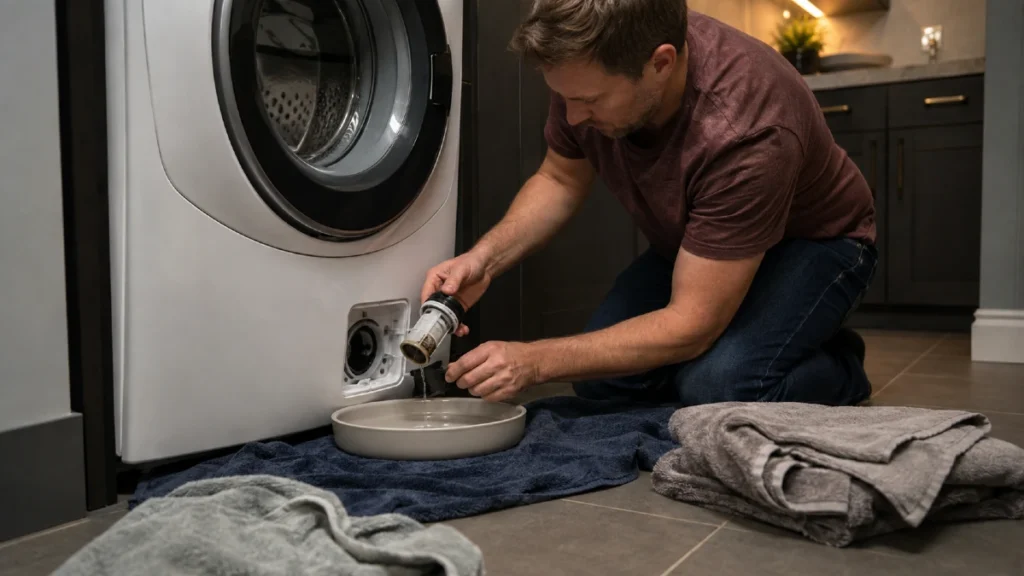
Before opening it, turn the washer off. Put several old towels on the floor and place a shallow dish or pan under the access area.
Some machines have a small emergency drain hose beside the filter. Pull it out carefully, remove its plug, and drain the remaining water into your container before unscrewing the filter.
If your machine does not have that hose, loosen the filter very slowly. Water may begin flowing as soon as the seal opens.
GE Appliances specifically recommends placing a shallow container and towels below the pump access area before turning the filter counterclockwise. Water remaining inside the washer can then drain safely into the container.
Once the filter is out, remove visible debris. Rinse it under running water and use a soft brush or sponge if residue remains. LG recommends removing lint and lost items and cleaning accumulated buildup by hand.
Before reinstalling the filter, check the opening for any obvious debris you can safely reach. Put the filter back in the same position and tighten it securely according to the manual.
If your machine has an emergency drain hose, replace its plug firmly. A loose filter or drain plug can cause leaks during the next wash.
Wash the Detergent Drawer and Hidden Dispenser Area
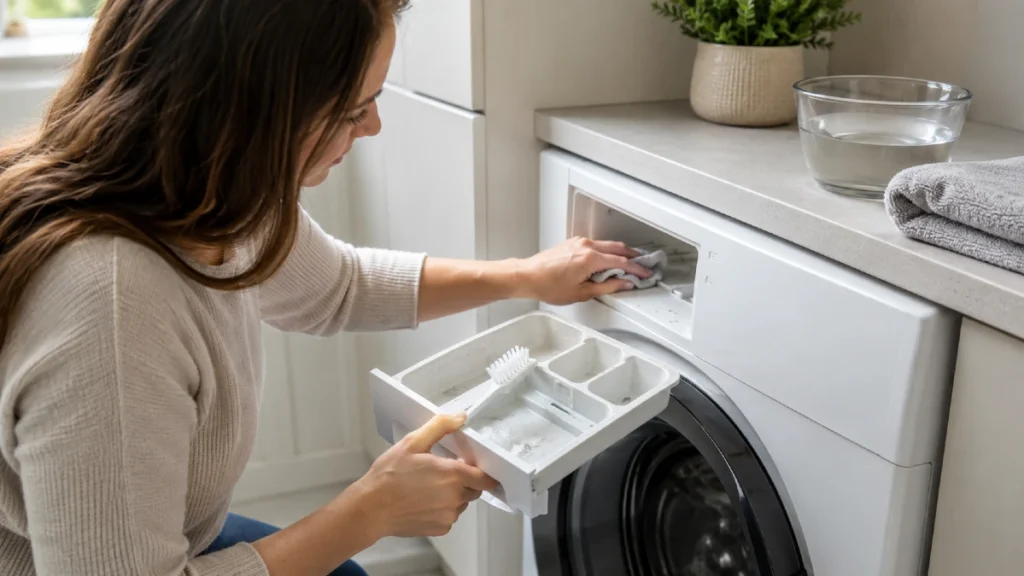
The detergent drawer can become surprisingly dirty. Liquid detergent, fabric softener, moisture, and lint can form a sticky film inside its small channels.
Pull the drawer out according to your washer instructions. Many machines have a release tab that needs to be pressed before the drawer will slide completely free.
If the drawer contains removable inserts, separate them before cleaning. This exposes the corners where softener and detergent residue often collect.
Rinse the parts with warm water. A soft toothbrush works well for small channels and corners that are difficult to reach with a cloth.
You should also inspect the empty dispenser opening. Residue can remain on the sides or farther inside even after the drawer itself looks clean.
Wipe the accessible dispenser housing with a damp cloth or soft brush. Avoid forcing tools deep into openings or spraying large amounts of liquid into electrical areas.
Once everything is clean, rinse away leftover cleaner and allow the parts to drain. Reassemble the inserts and slide the drawer securely back into position.
LG includes the detergent dispenser among the washer areas that should be cleaned along with the gasket and drain pump filter during regular machine care.
What Should You Do About Dark Gasket Stains?
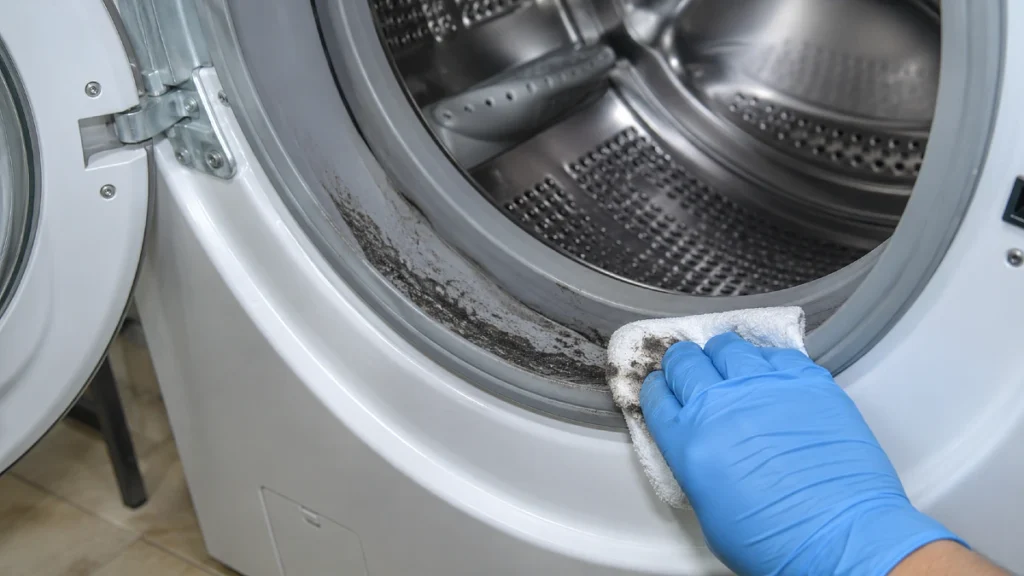
Sometimes the dirt wipes away but the dark color does not. That can happen when a gasket has been stained after sitting damp or dirty for a long period.
Start with the cleaning method recommended by the washer manufacturer. Whirlpool and Samsung both provide specific gasket cleaning instructions for visible mold, mildew, or staining, including diluted bleach procedures on certain machines.
Wear gloves when the cleaner label calls for them and keep the laundry area ventilated. Follow the stated dilution, contact time, and rinsing instructions rather than guessing how strong the solution should be.
Be especially careful if you previously used vinegar or another cleaner. Never put bleach directly over another cleaning chemical. Rinse the first product away completely and follow the manufacturer’s directions before using anything else. The CDC warns against mixing bleach with other cleaners.
A stain also does not always mean the rubber is still dirty. If the gasket has been cleaned and rinsed but discoloration remains, stronger scrubbing may simply damage the material.
Check the gasket for cracks, tears, hardened rubber, leaks, or areas that no longer sit correctly against the door. A damaged seal is a repair problem, not a cleaning problem.
Finish With the Door Glass and Outside of the Washer
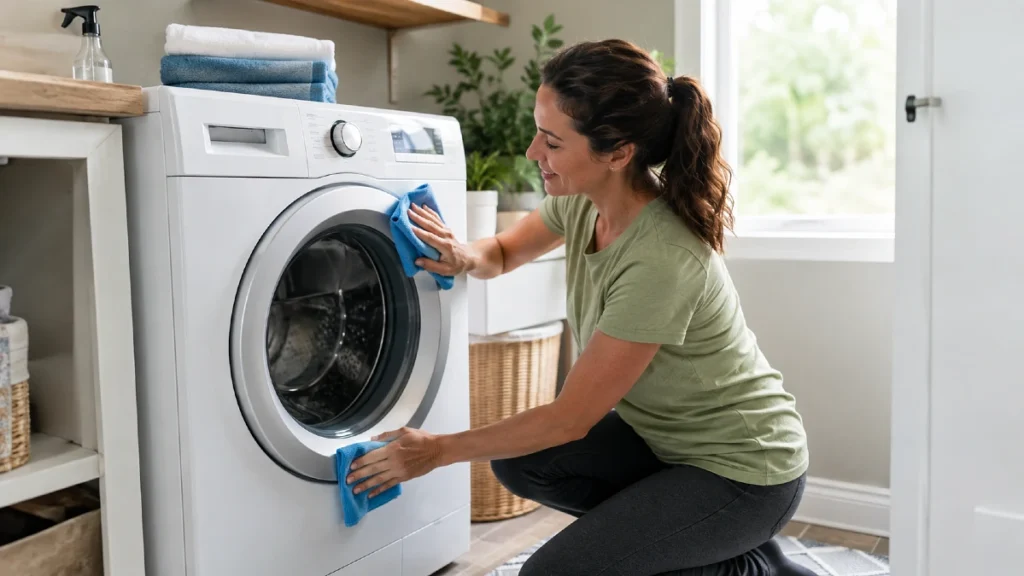
Once the hidden areas are clean, wipe the inside of the washer door. Soap film and water marks can collect along the lower edge of the glass.
Use a damp microfiber cloth and a mild product that is safe for the washer surface. Wipe the control panel gently and avoid soaking buttons, seams, or electronic controls.
Clean the sides and top of the machine too. Detergent drips and dust are much easier to remove before they harden into a sticky film.
Whirlpool includes the washer door, seal, and exterior surfaces as part of routine washing machine care. A damp cloth is suitable for several of these basic cleaning jobs.
Dry the visible surfaces when you finish. The washer should now look clean around the door, but the bigger benefit is that the hidden areas have been cleaned too.
5 Habits That Help Stop Washer Odors From Coming Back
Deep cleaning fixes the current mess. Your daily laundry habits determine how quickly it returns.
A few small changes can make front load washer care much easier.
1. Remove Wet Laundry Promptly
Try not to leave damp clothes sitting inside the washer for hours. The clothes hold moisture inside the drum and can keep the interior damp long after the cycle ends.
Move the load to the dryer or drying rack once washing is finished. LG lists prompt removal of wet laundry as one of its routine habits for controlling washer odors.
2. Wipe the Gasket After Washing
Keep a small microfiber cloth in the laundry room. After the final load of the day, wipe visible water from the glass and the lower gasket folds.
Whirlpool recommends drying the gasket after washing as part of odor prevention. LG also recommends wiping the gasket and drum after use.
3. Give the Washer a Chance to Dry
Many front load washer care guides recommend leaving the door or detergent drawer open for a period after use so trapped moisture can escape. LG specifically advises keeping the door and detergent drawer open for a few hours after a cycle.
Check your owner’s manual first because washer designs differ. Some newer machines have built in ventilation or drying systems with their own instructions.
4. Stop Pouring in Extra Detergent
More detergent can seem like an easy way to get cleaner clothes, but too much can leave residue behind. That residue can contribute to odors and poor rinsing.
Whirlpool warns that excess detergent can cause residue buildup, oversudsing, longer cycles, and poor rinsing. High efficiency washers should also use detergent made for HE machines.
Follow the detergent label and washer instructions instead of filling the dispenser automatically to the top. The correct amount can change with detergent concentration, load size, and soil level.
5. Run the Washer’s Cleaning Program Regularly
Do not wait until the washer smells terrible before cleaning the drum. Run the dedicated machine cleaning program at the interval recommended in your manual.
LG recommends a monthly Tub Clean routine for compatible washers and includes the gasket, dispenser, and drain pump filter in monthly machine care guidance. Other brands use different schedules, so the manual for your machine should make the final call.
How Often Should You Clean a Front Load Washer?
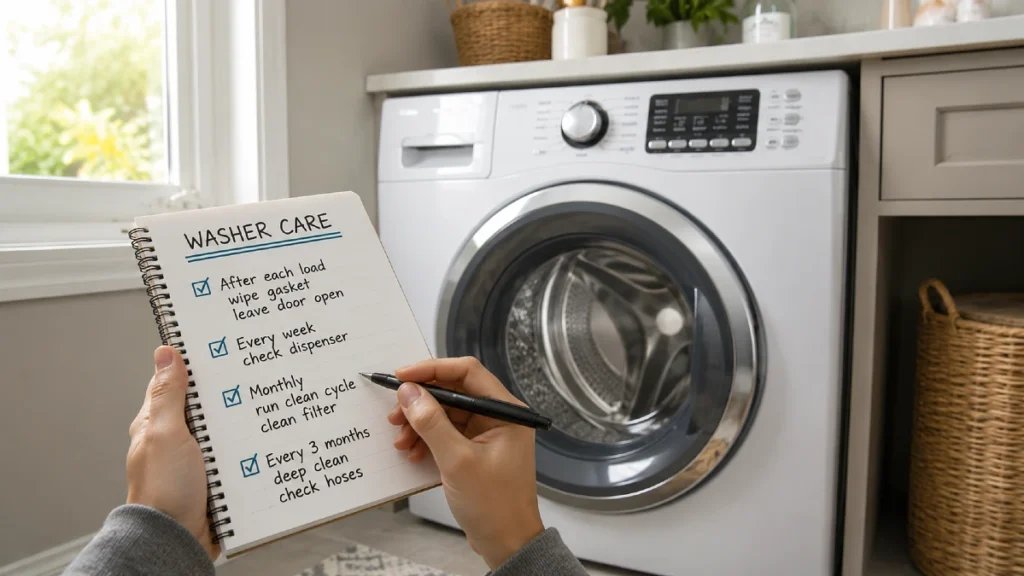
There is no single schedule that fits every washer. How often cleaning is needed depends on the machine, how frequently you wash clothes, detergent use, water conditions, and how quickly the washer dries between loads.
A simple routine can still make the job easier:
- After laundry: Remove wet clothing and deal with visible moisture around the gasket.
- Regularly: Check the dispenser for detergent or softener residue.
- At the manufacturer’s recommended interval: Run the dedicated washer cleaning cycle.
- Periodically: Inspect and clean an accessible pump filter according to the manual.
- Whenever odor appears: Check the gasket, dispenser, drum, and filter instead of covering the smell with fragrance.
Whirlpool recommends periodic drain pump filter cleaning on machines with accessible filters and notes that frequency can depend on use and accumulated debris. LG also recommends regular filter care as part of front load washer maintenance.
The goal is to deal with moisture and residue before they turn into a much bigger cleaning job.


