
20 Mudroom Entryway Ideas to Keep Your Home Organized
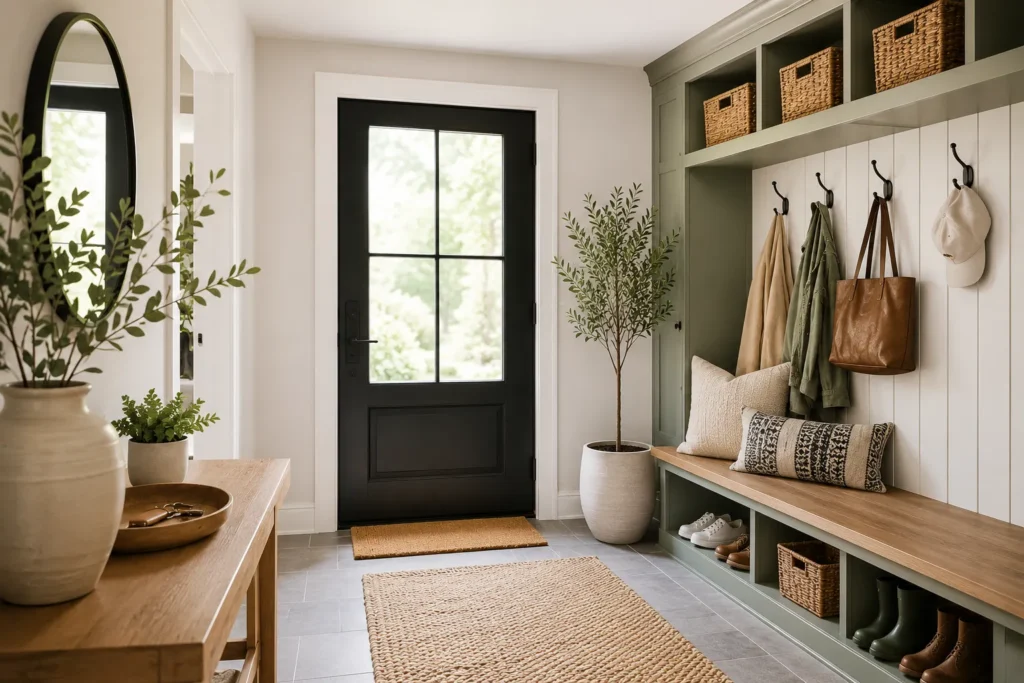
Busy entryways can make even a beautiful home feel messy and stressful. These Mudroom Entryway Ideas are designed to bring order, comfort, and style into one of the hardest-working spots in the house.
From built-in benches to clever storage walls and cozy drop zones, every idea in this collection focuses on real-life function without sacrificing warmth or personality. Whether you have a large family mudroom or a narrow hallway near the back door, small layout changes can completely improve how your home feels day to day.
I’ve noticed that the most successful entry spaces are rarely the fanciest ones. Instead, they combine simple storage, durable materials, and thoughtful details that make daily routines easier. You’ll find inspiration for modern, farmhouse, colorful, and classic styles while also picking up practical ideas that actually work in lived-in homes.
If shoes pile up near the door, coats constantly end up on chairs, or your entry feels unfinished, these ideas can help you create a space that feels calmer, cleaner, and far more welcoming.
1. Black and White Entryway with Window Bench

Clean lines and soft contrast make this entry setup feel polished without looking cold. Large black-framed windows bring in natural light, while the long built-in bench adds practical seating that works well for busy mornings, grocery drops, or pulling on shoes before heading out.
Slim drawers under the bench help reduce visible clutter, which keeps the narrow layout feeling open and calm. Floral wallpaper adds just enough pattern without overwhelming the walls. I’ve noticed entryways like this work best when the color palette stays limited to two or three tones with one softer accent.
2. Blue Built-In Mudroom with Checkered Floor
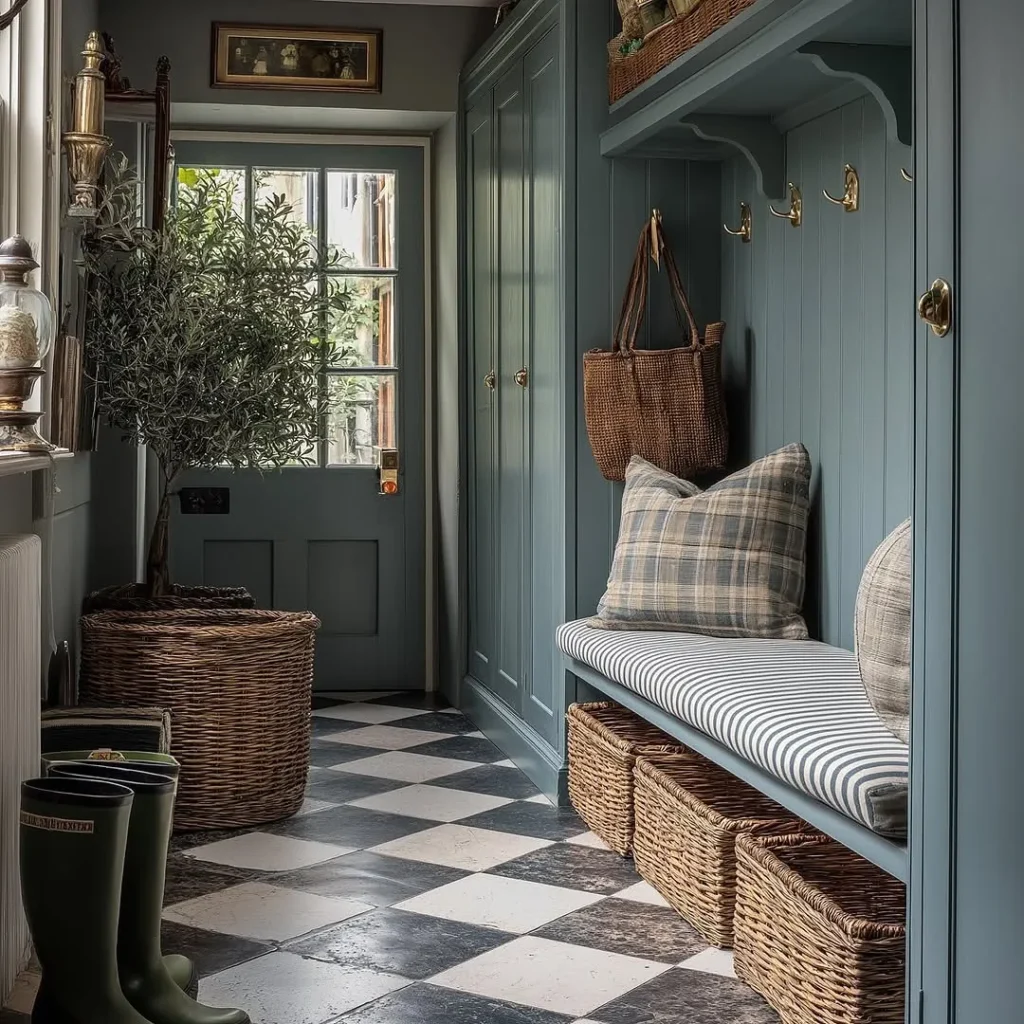
Rich blue cabinetry gives this mudroom a cozy, collected look that instantly feels welcoming. Woven baskets tucked below the bench create hidden storage without making the area feel overly structured, while the black-and-white floor pattern brings energy and movement into an otherwise compact hallway.
Hooks placed at different heights make daily routines easier for families, especially in homes where coats and bags pile up quickly. Soft striped cushions prevent the built-ins from looking too heavy. Keeping natural textures like wicker and wood nearby also helps darker paint colors feel warmer and easier to live with.
3. Built-In Corner Bench with Wood Seat
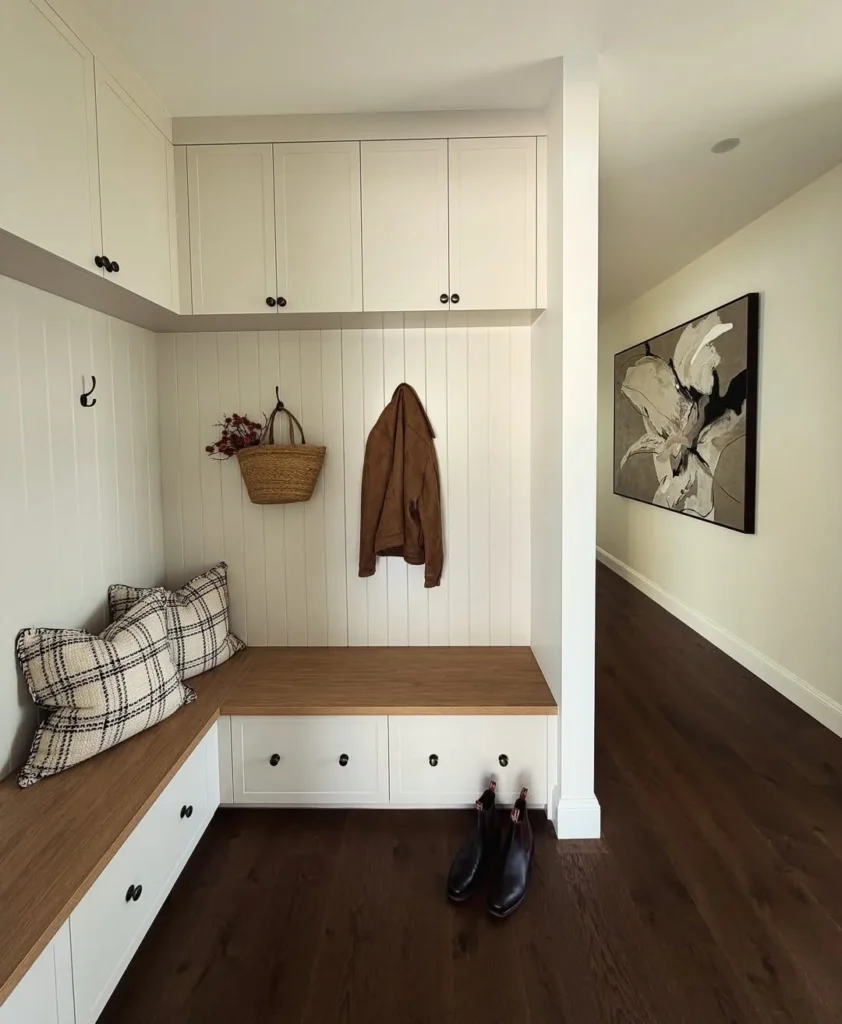
Corner seating can completely change how an entry functions, especially in smaller homes where every wall matters. White cabinetry keeps the design bright and clean, while the wood bench introduces warmth that prevents the built-ins from feeling too flat or overly formal.
Upper cabinets are useful for storing seasonal items that usually create clutter near the door. Plaid pillows soften the sharper lines and add a relaxed feeling without making the area look busy. That balance works especially well in modern homes where minimal storage solutions sometimes end up feeling too plain or unfinished.
4. Charcoal Storage Wall for a Tidy Entry

Dark built-ins create a dramatic first impression while hiding everyday mess surprisingly well. Tall cabinets, deep cubbies, and lower drawers provide dedicated zones for shoes, jackets, bags, and outdoor gear, which helps larger households stay organized without leaving everything visible near the entrance.
Warm brass hardware keeps the charcoal finish from feeling too heavy or severe. A vintage-style rug also softens the strong cabinetry and adds texture underfoot. In my experience, darker mudrooms work best when paired with lighter walls nearby so the storage wall feels intentional instead of visually overpowering.
5. Classic White Mudroom with Lantern Lights

Bright white cabinetry paired with lantern-style lighting gives this mudroom a timeless look that still feels practical for everyday use. Open upper shelves hold baskets neatly, while wood bench tops add warmth that breaks up the clean painted surfaces in a subtle, natural way.
Long bench seating makes the narrow layout more functional for multiple people at once, especially during busy mornings. Brick flooring introduces texture and durability without feeling harsh. That combination works beautifully in family homes because it balances elegance with materials that can actually handle daily wear and muddy shoes.
6. Dark Wall Bench with Baskets and Round Mirrors

Bold wall paneling instantly gives this entry more character without relying on too many decorative pieces. Round mirrors help reflect light across the darker paint, while woven baskets below the bench add useful storage that still feels relaxed and approachable rather than overly polished.
Leather and striped pillows bring warmth into the darker palette and stop the bench from feeling stiff. I’ve seen this style work especially well in older homes where architectural details already exist. Keeping accessories simple allows the wall treatment and natural textures to remain the strongest visual features.
7. Family Mudroom with Open Cubbies and Hooks

Open storage can make daily routines feel far less chaotic when every item has an easy-to-reach spot. Hooks along the wall create simple grab-and-go access for coats and backpacks, while lower baskets help contain smaller items that usually end up scattered across floors.
Soft gray cabinetry keeps the room calm and bright without looking stark. Large floor tiles also make cleaning easier after rainy days or outdoor activities. One helpful detail here is the upper shelf storage, which keeps less-used pieces nearby without crowding the seating area or making the room feel visually overloaded.
8. Farmhouse Mudroom with Brick Herringbone Floor

Brick herringbone flooring immediately gives this mudroom a grounded farmhouse feel that looks both practical and inviting. Warm wood tones across the bench seating and central table prevent the larger layout from feeling empty, while muted green cabinetry keeps the room soft instead of overly rustic.
A center worktable adds extra function beyond storage, especially in larger utility-style mudrooms where folding laundry, sorting bags, or arranging flowers often happens. I’ve noticed spacious layouts like this feel best when open floor areas stay uncluttered and most storage remains built into the walls.
9. Farmhouse Utility Room with Central Worktable
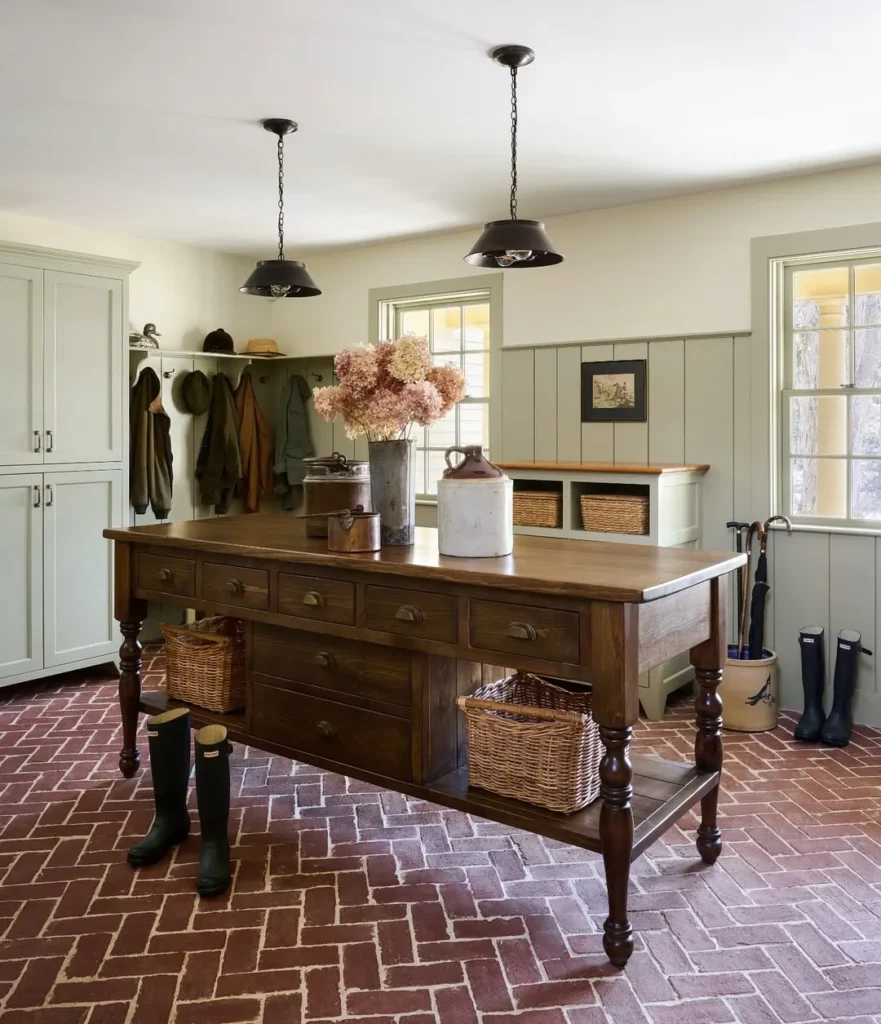
Large utility-style mudrooms become far more useful when they include a strong focal piece like this oversized wooden worktable. Deep drawers provide hidden storage, while baskets underneath keep bulkier everyday items organized without needing extra cabinets along every wall.
Soft green paneling and brick flooring create warmth that helps the practical layout feel comfortable rather than industrial. Hanging lights above the table also visually define the center area. Keeping decorative accessories minimal allows the natural wood texture and earthy materials to carry most of the visual interest.
10. Floral Wallpaper Hall Tree in Sage Blue

Soft sage cabinetry paired with floral wallpaper creates an entry that feels charming without becoming overly decorative. Open cubbies and bench seating keep the layout functional, while warm wood surfaces add balance against the cooler paint tones and patterned walls near the doorway.
Wallpaper works especially well in smaller entryways when cabinetry remains simple and structured. Shoes tucked neatly below the bench help maintain a cleaner look, which is important when using stronger visual details nearby. These Mudroom Entryway Ideas also show how muted colors can keep the entire setup feeling calm, organized, and easy to live with.
11. Light Gray Entryway with Bench Storage
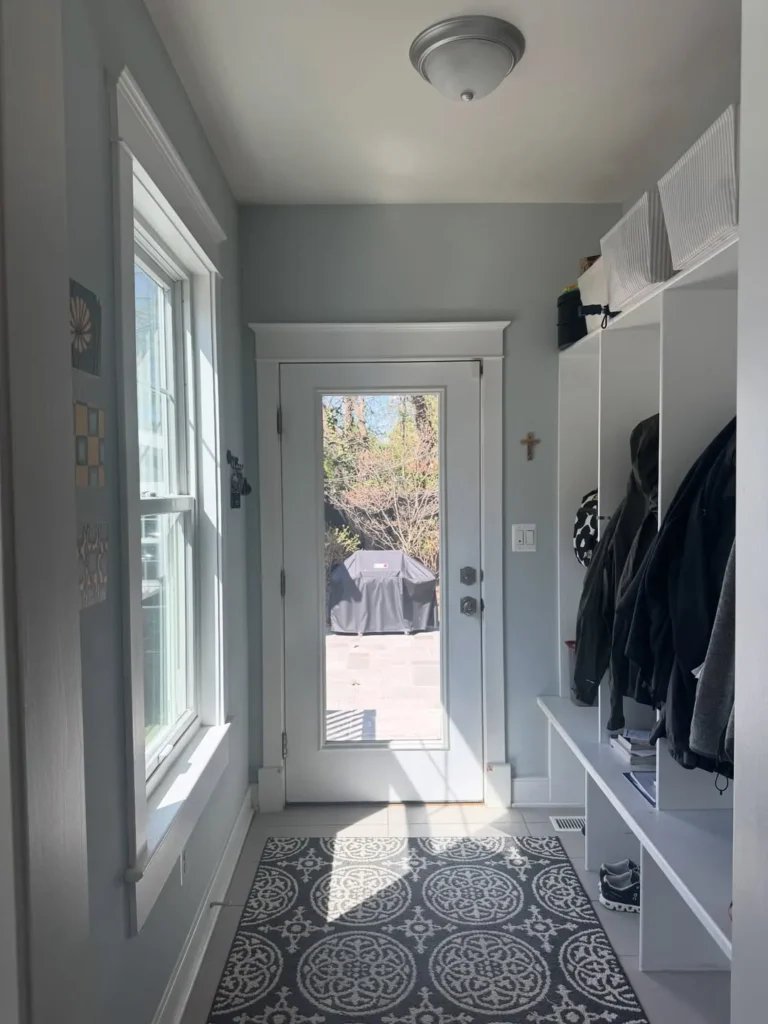
Natural light completely changes the feel of this narrow entry hall. Pale gray walls keep the space airy, while the slim built-in bench provides practical storage without making the walkway feel crowded or difficult to move through during busy parts of the day.
Open cubbies work well here because shoes stay accessible instead of piling near the door. The patterned runner also softens the long layout and adds visual interest underfoot. Keeping upper storage simple and closed helps smaller entryways feel calmer, especially when coats and backpacks are already visible.
12. Minimal Mudroom with Wood Ceiling
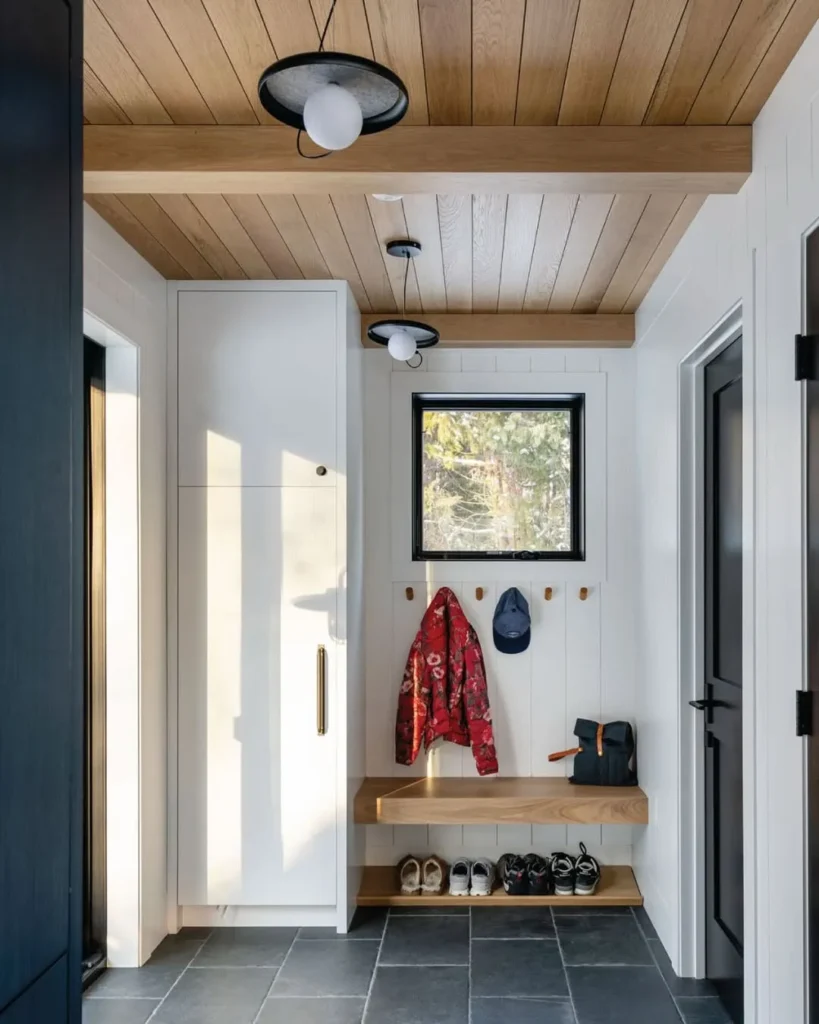
Warm wood ceilings instantly make this clean mudroom feel more inviting and architectural. White walls and cabinetry prevent the darker floor tiles from feeling heavy, while the floating bench keeps the room visually open instead of weighed down by oversized storage pieces.
Hooks placed directly above the bench create an easy everyday drop zone that works especially well for smaller families. I’ve seen minimal layouts like this stay organized longer because there are fewer surfaces for clutter to collect. Limiting decorative items also keeps the natural materials standing out beautifully.
13. Moody Hallway Entry with Built-In Cabinets
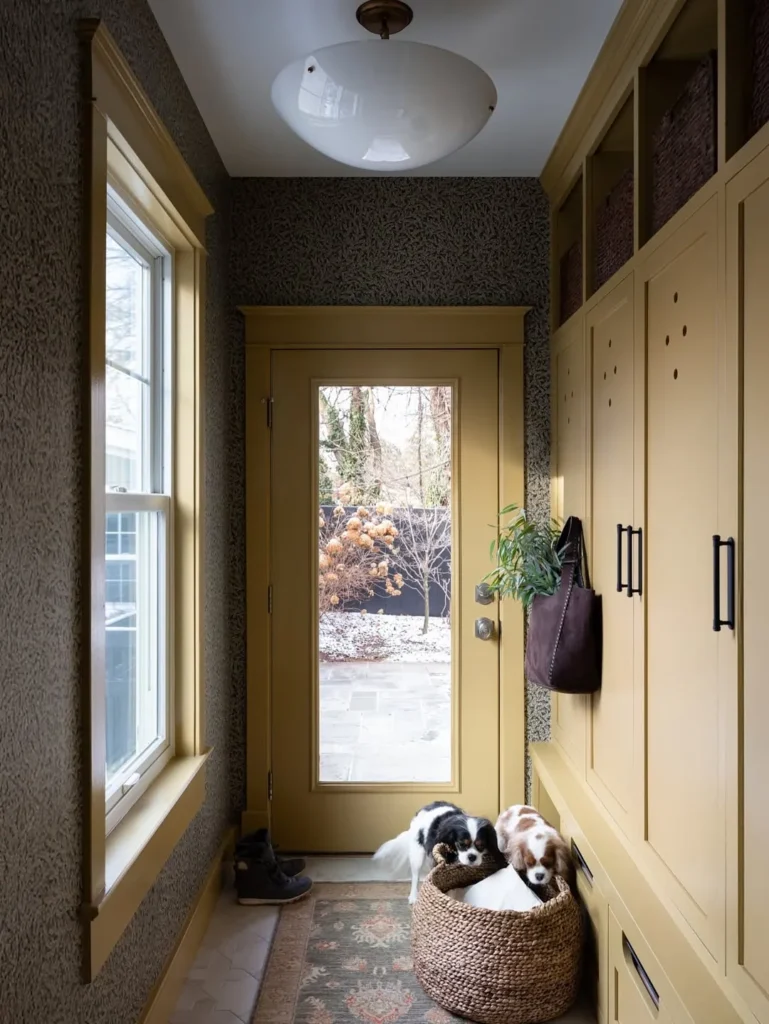
Soft olive cabinetry and patterned wallpaper give this hallway entry a cozy, layered look that feels thoughtful without appearing overly styled. Tall built-ins maximize vertical storage in a narrow footprint, which is especially useful when floor space is limited but everyday storage needs remain high.
Warm trim color around the windows and door adds depth that balances the darker wall pattern. A woven basket near the entrance keeps pet supplies or seasonal accessories contained in a relaxed way. That combination of texture and muted color helps moody spaces feel welcoming rather than closed off.
14. Navy Drop Zone with Wood Bench
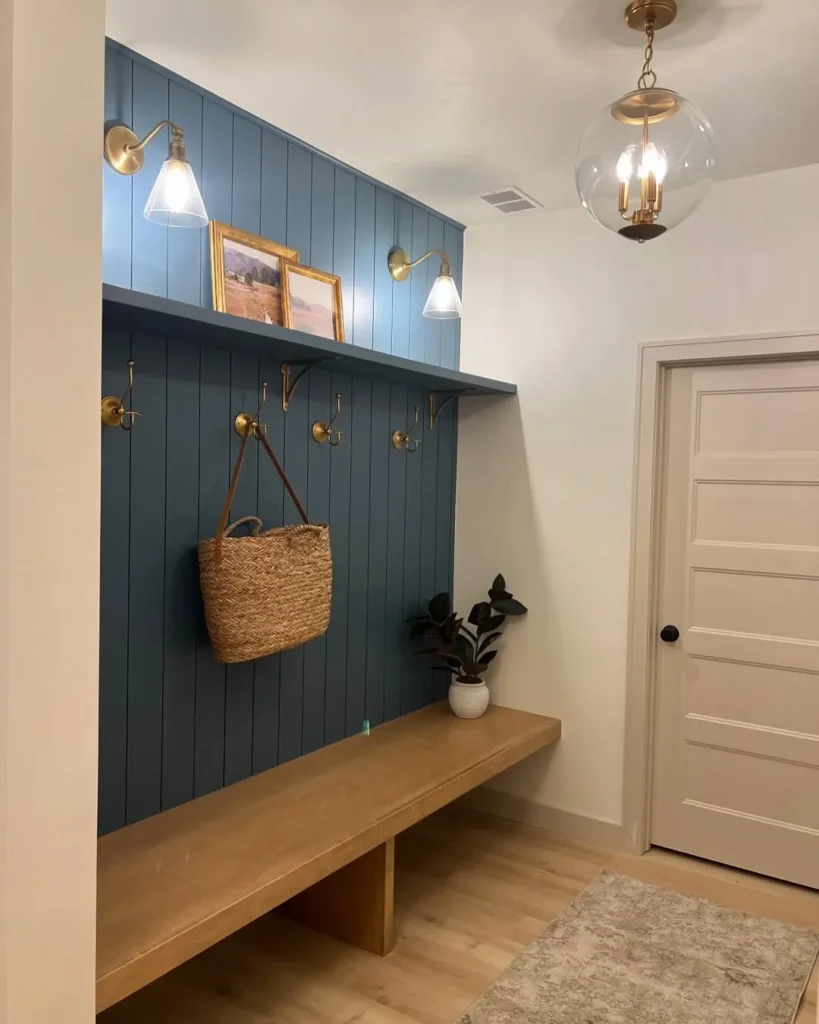
Deep navy paneling creates strong contrast against the lighter walls and instantly defines this drop zone from nearby spaces. Brass hooks and lighting warm up the cooler paint color, while the long wooden bench keeps the design grounded and practical for daily routines.
Open wall hooks make jackets and bags easy to reach without needing bulky cabinetry nearby. Glass lighting also prevents the darker wall from feeling visually heavy. In my experience, rich paint colors work best in entry areas when natural wood tones are included to soften the overall mood.
15. Olive Green Entry Nook with Desk Corner

Muted olive cabinetry gives this entry a relaxed and collected feel that works beautifully with natural wood finishes. Bench seating, upper cabinets, and a nearby desk corner combine storage with function, making the layout useful for both organization and quick everyday tasks.
Warm lighting keeps the darker cabinetry from feeling flat, especially against the white wall paneling nearby. A small woven basket and patterned pillows add softness without cluttering the built-ins. That balance matters because compact entry areas can quickly start looking crowded when too many accessories are layered together.
16. Plum Storage Room with Brass Hardware

Rich plum cabinetry makes this storage-heavy mudroom feel bold and elegant while still staying highly functional. Brass hardware stands out beautifully against the darker paint, and the mix of drawers, shelves, and hooks creates dedicated storage zones that help reduce everyday mess.
Brick flooring adds texture and durability that suits busy households with outdoor gear or wet shoes. Dried florals and woven baskets also prevent the darker palette from feeling too formal. I’ve noticed dramatic colors like this look best when paired with natural materials that soften sharp contrasts.
17. Powder Blue Entry Nook with Round Window
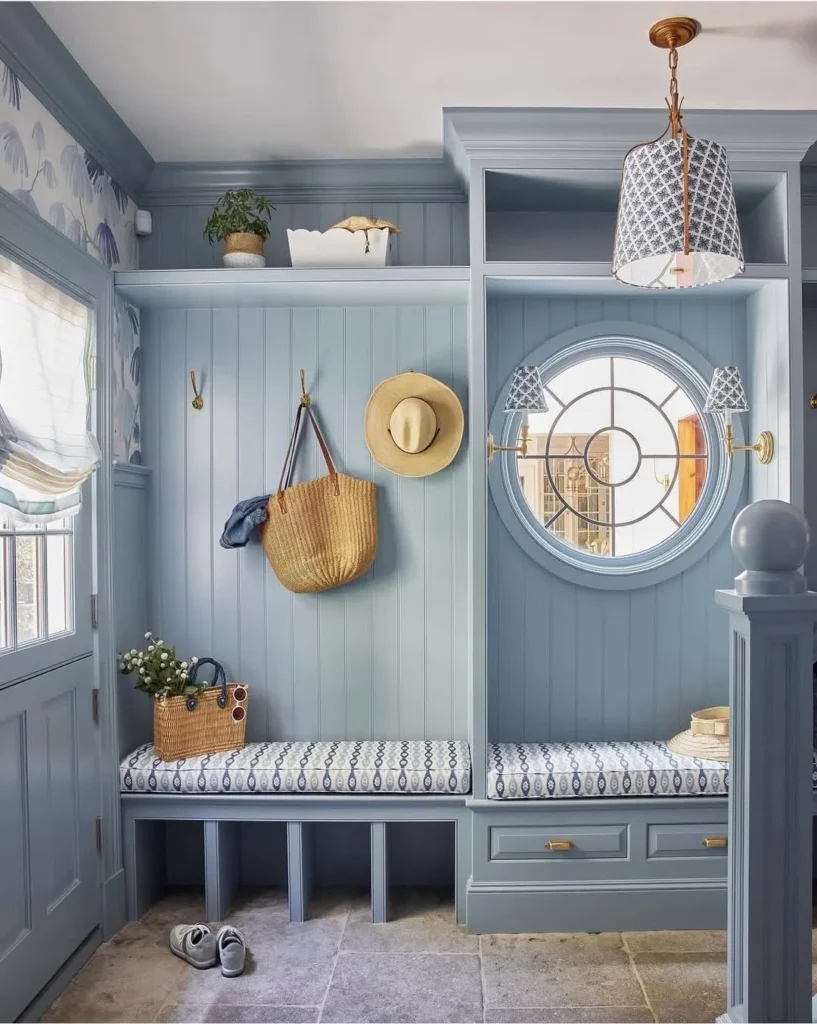
Soft powder blue paneling gives this entry nook a calm, polished atmosphere that feels bright without relying on stark white finishes. The round mirror detail creates a custom built-in look, while patterned cushions and woven bags add texture that keeps the seating area from feeling too plain.
Wall sconces beside the mirror provide balanced lighting and help highlight the architectural details. Open lower cubbies also keep shoes neatly tucked away without blocking the airy design. Smaller mudrooms often benefit from lighter paint colors because they reflect more light and make narrow walls feel wider.
18. Rustic Shiplap Entry Corner with Wooden Bench
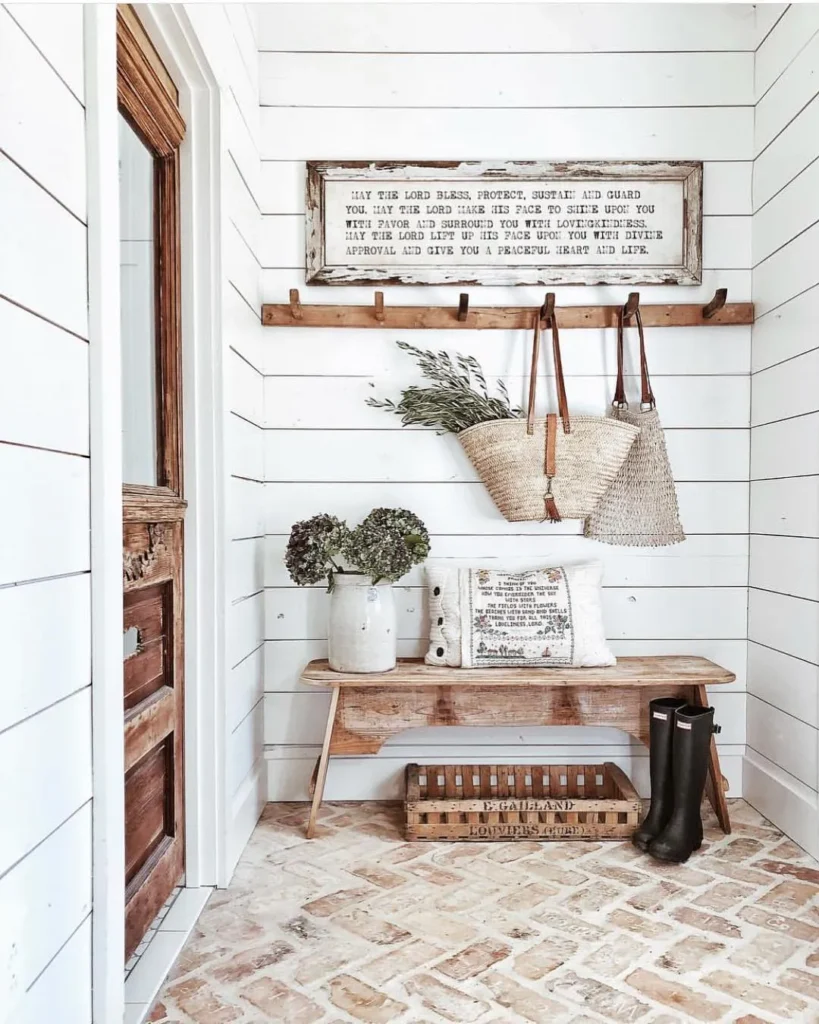
White shiplap walls paired with rustic wood accents create an entry corner that feels warm, relaxed, and easy to maintain. Simple wall hooks provide everyday practicality, while the aged wood bench introduces character without needing oversized furniture or complicated built-ins.
Brick flooring adds texture that naturally hides dirt and wears better than smoother surfaces. Decorative baskets and greenery soften the sharper lines and make the corner feel lived in rather than staged. Keeping accessories neutral also helps rustic spaces avoid looking overly themed or visually crowded.
19. Soft Taupe Mudroom with Classic Millwork

Soft taupe cabinetry gives this mudroom a calm, elegant appearance that feels timeless instead of trend-driven. Paneled walls and detailed millwork add structure throughout the room, while woven baskets and wood surfaces introduce warmth that prevents the palette from looking too flat.
A central table helps break up the larger layout and creates extra workspace for sorting bags, laundry, or seasonal items. That approach works especially well in spacious mudrooms where too much empty floor area can make the room feel unfinished or disconnected from the rest of the home.
20. Tall Cabinet Drop Zone with Woven Baskets

Tall cabinetry instantly improves storage capacity while keeping the entry looking clean and uncluttered. Woven baskets placed inside open shelving soften the modern lines and make everyday items easier to organize without leaving smaller accessories exposed near the doorway.
Dark flooring grounds the lighter cabinetry and adds contrast that helps the room feel balanced. A simple bench beside the hooks creates enough seating without crowding the compact layout. I’ve seen storage walls like this work especially well in family homes where hidden organization matters more than decorative styling.
How to Make This Style Work in Real Homes
- Focus on the feeling first, not every detail. Choose the mood you want, such as calm, cozy, elegant, or welcoming, then build around that.
- Start with one strong focal point. A beautiful table, statement centerpiece, textured runner, or simple floral arrangement can guide the whole look.
- Keep the base simple with neutral linens, clean dishes, or natural wood. This helps the table feel polished without looking crowded.
- Add color through small accents like napkins, candles, flowers, fruit, or glassware. These are easy to change for seasons or special occasions.
- Choose low arrangements when people will be sitting together. Short florals, bowls, candles, or greenery keep conversation easy across the table.
- For rentals or small spaces, use removable decor, trays, folded fabric, portable lamps, or compact centerpieces instead of permanent changes.
- Avoid overdecorating. Leave enough open space for plates, serving dishes, and everyday use so the setup still feels comfortable.
- Repeat two or three colors and textures for a finished look. For example, wood, linen, and greenery can make a table feel warm without much effort.
A beautiful table does not need to feel complicated. With a few thoughtful choices, it can still feel simple, personal, and easy to live with.